Neighbor News
Author Christopher Newell Explores the American Revolution Through Indigenous Perspectives
An author talk at Stanley-Whitman House launching America250 programming


FARMINGTON, CT — Whose Revolution are we remembering—and whose stories have been left out? On Sunday, February 22, 2026, at 2:00 PM, Stanley-Whitman House invites audiences to reconsider the American Revolution through Indigenous and inclusive perspectives.
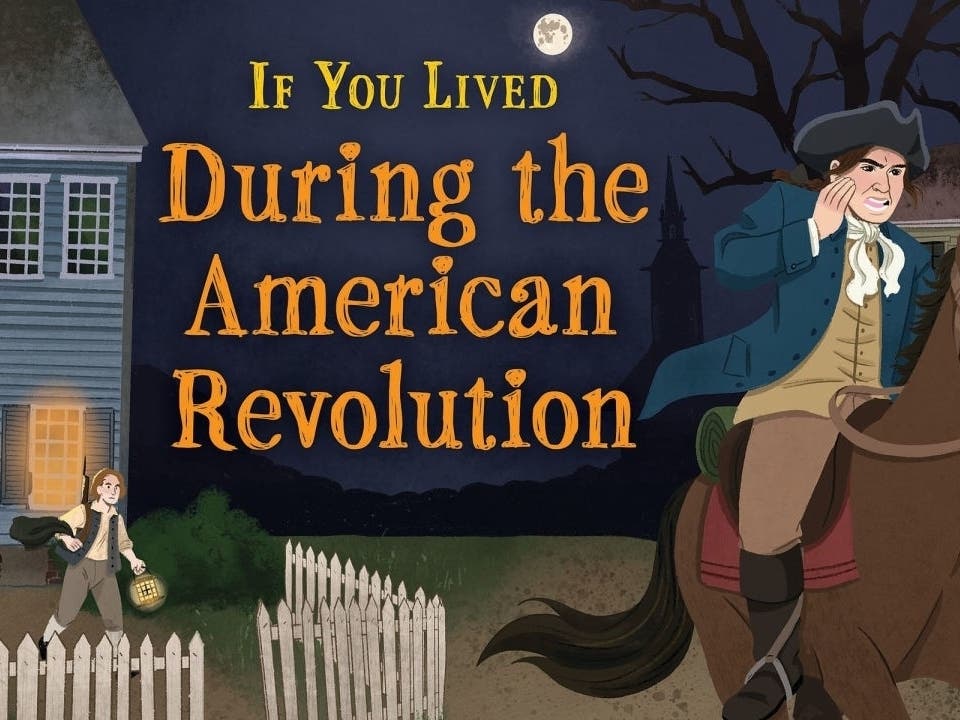
Presented as part of the museum’s America250 programming, this author talk features Christopher Newell (Passamaquoddy Tribe), a public historian, educator, and culture bearer whose work challenges familiar narratives of the nation’s founding. Drawing from his recently published Scholastic book, If You Lived During the Time of the American Revolution, Newell explores the Revolutionary era not as a single, unified story, but as a period shaped by competing interests, unequal power, and profoundly different experiences across communities.
Rather than centering only well-known patriots and events, Newell situates the Revolution within its deeper historical roots—including the French and Indian War, British imperial policy, westward expansion, and long-standing conflicts over land and sovereignty. Through a question-and-answer format designed to encourage curiosity and critical thinking, both the book and this program examine how Indigenous nations, enslaved and free Black people, women, and colonial settlers navigated the upheaval of revolution—and how independence ultimately delivered uneven outcomes, marked by contradiction as well as possibility.
Find out what's happening in Farmingtonfor free with the latest updates from Patch.
During the program at Stanley-Whitman House, Newell will read selected passages from the book and discuss his research and writing process, reflecting on how the work came together as both scholarship and a teaching tool for young readers and families. He examines the difficult choices faced by diverse communities during the Revolutionary era—choices shaped by survival, coercion, alliance, and resistance—and invites audiences to move beyond simplified narratives to engage the Revolution as a lived, contested moment whose consequences continue to shape the present.
“Chris doesn’t offer easy answers, and that’s precisely why his work matters,” said Andy Verzosa, Executive Director and Curator of Stanley-Whitman House. “He asks us to slow down, to listen, and to understand the Revolution not as a finished story, but as an ongoing one. His perspective reminds us that the founding of this country was experienced very differently depending on who you were—and that those differences still matter.”
Find out what's happening in Farmingtonfor free with the latest updates from Patch.
Newell also reflects on the complexity of Revolutionary-era leaders and alliances, including the varied and often fraught relationships between Native nations and the emerging United States. By foregrounding Indigenous diplomacy, land loss, and sovereignty, he reframes familiar figures and events within a broader moral and historical context—one that challenges audiences to reconsider what independence meant, and for whom.
Christopher Newell has maintained a longstanding relationship with Stanley-Whitman House, returning multiple times during Verzosa’s tenure as director for public programs and conversations. The museum was the first to host a public talk for Newell’s earlier Scholastic book, If You Lived During the Plimoth Thanksgiving, and his in-person appearances remain rare. “Chris is not only an author,” Verzosa noted. “He is a culture bearer and educator whose work is grounded in lived Indigenous knowledge. When he speaks, history becomes personal, ethical, and immediate.”
This author talk marks the opening of Stanley-Whitman House’s America250 programming in 2026. As the nation observes the 250th anniversary of the Declaration of Independence, the museum is using the Semiquincentennial as an opportunity to foster thoughtful, inclusive dialogue about early American history—centering voices that have too often been marginalized or excluded.
This program reflects Stanley-Whitman House’s commitment to blending scholarship with public engagement and creating spaces where history is not only presented, but questioned and discussed. Through conversation, research, and community exchange, the museum uses its America250 programming to bring the past into clearer focus—and to consider how the nation’s origins continue to shape the world we inhabit today.
Event Details
Sunday, February 22, 2026 — 2:00 PM
Stanley-Whitman House37 High Street, Farmington, CT
Admission is free with a suggested donation.
Seating is limited.
To reserve, visit www.s-wh.org or call (860) 677-9222.
About the Author: Christopher Newell is a citizen of the Passamaquoddy Tribe, a public historian, educator, author, and musician. He serves as Director of the Native American Cultural Program at the University of Connecticut and previously served as Executive Director of the Abbe Museum in Bar Harbor, Maine. Newell is widely recognized for his work in Indigenous public history and education, and in recent years has collaborated with world-renowned cellist Yo-Yo Ma on projects that blend Wabanaki music, language, and storytelling with classical performance
About Stanley-Whitman House: Located in the heart of historic Farmington, Stanley-Whitman House is a ca. 1720 National Historic Landmark and living history center that explores the complexity of colonial life through research, storytelling, and the arts. Its America250 programming honors not only well-known patriots, but also underrepresented voices—including women, Indigenous peoples, and African Americans—whose stories are essential to understanding the American founding.