Health & Fitness
The Day I Witnessed My Mother Having A Stroke
My basic knowledge and quick thinking probably helped save my mother's life.

By Linda Ziac
March 10, 2015
The Caregiver Resource Center
Find out what's happening in Greenwichfor free with the latest updates from Patch.
I still remember the morning my client cancelled their 10:00 appointment, so I decided to stop by to surprise my mother.
You can imagine the flood of emotions I experienced when I opened the door to hear my mother’s slurred speech and jumbled use of words. Fortunately, I recognized the signs, and with some preliminary screening, I got my mother to the emergency room as quickly as possible.
Find out what's happening in Greenwichfor free with the latest updates from Patch.
WHAT REALLY HELPED
• My mother and I had already talked about all the “what ifs” of her getting older, including TIAs and stroke.
• I was aware that my mother had a previous TIA.
• I carried a copy of my mother File of Life in my wallet with her medical history, medications, doctor contact info, etc.
• I was my mother’s designated power of attorney and healthcare agent.
Although my mother’s speech was still garbled when we arrived at the ER, she was calm knowing that I was fully aware of her wishes, and I had all the necessary information for the doctors to begin treatment.
Fortunately, my mother received excellent care in the hospital and short term rehab, and she made a full recovery.
This experience is one of the reasons I write these articles, and encourage readers to become educated consumers for themselves and their families,
UNDERSTANDING A STROKE
According to the American Heart Association, a stroke occurs every 45 seconds.
Strokes affect about 500,000 people each year in the United States, resulting in nearly 130,000 American deaths.
There is good news however.
The incidence of stroke has declined more than 50% over the past 20 years, as we have become more aware of healthy lifestyle changes that can reduce the risks.
In addition, we’re learning new ways of preventing the damage caused by strokes.
WHAT IS A STROKE?
A stroke is what happens when the blood supply to a portion of the brain is blocked.
Without a blood supply, brain cells are deprived of oxygen and begin to die.
There are two kinds of strokes.
An ischemic stroke occurs when a blood clot lodges in an artery of the brain. The blood clot may have traveled from elsewhere in the body or it may have formed in the brain artery itself as a result of atherosclerosis, or hardening of the arteries.
A hemorrhagic stroke occurs when there’s a hemorrhage or bleeding in the brain. This bleeding may be a result of high blood pressure, or less commonly an aneurysm - a weakened blood vessel wall that eventually bursts. Rarely, a stroke can be caused by low blood pressure that is itself a result of a major injury or illness.
WHO IS AT RISK FOR A STROKE?
• Those most at risk for strokes are older adults with high blood pressure.
• Smoking, diabetes, excess weight and a sedentary lifestyle may all increase your risk of stroke.
• Anyone who’s at risk for heart disease is also at risk for stroke.
• Use of drugs such as cocaine and steroids increases the risk of stroke in younger adults.
• Other possible risk factors for strokes include stress, migraine headaches, use of oral contraceptives in women who smoke or have a history of clotting disorders, and hereditary disorders.
HOW STROKES AFFECT HEALTH
When brain cells die as a result of stroke, the functions that are controlled by that part of the brain are impaired. For instance, if the stroke affects the part of the brain that governs speech, the person may lose the ability to speak.
How a stroke affects health depends on the type and degree of damage to the brain.
A massive stroke with severe neurological impairment can result in death.
Nearly 1/3 of all strokes are fatal within the first 30 days.
About 70% of those who survive a stroke experience some degree of impaired function.
HOW YOU CAN HELP IF YOU SUSPECT SOMEONE IS HAVING A STROKE
Keep in mind that a stroke is a medical emergency and that every minute counts when a person is having a stroke.
A stroke is the interruption of the flow of blood to any area of the brain, and the longer blood flow is restricted, the greater the damage.
The sooner a person receives medical treatment for a stroke, the greater the chance of saving a person’s life, and improving their chances for a successful recovery.
1. Be aware of the warning signs of stroke
Keep in mind that a person who is having a stroke may be conscious or unconscious.
A Sampling of Stroke Symptoms
• sudden weakness, paralysis or numbness in the face, arm and leg; particularly on one side of the body
• sudden difficulty swallowing
• loss of speech, trouble talking, or difficulty understanding speech
• sudden blurring or loss of vision; usually in only one eye, or unequal pupil size
• unexplained fall, dizziness or loss of balance
• a sudden severe headache, or a new type of headache
• a loss of bladder and/or bowel control
• drowsiness, confusion or loss of consciousness
2. Quickly test a person you suspect of having a stroke
Keep in mind that time is of the essence.
Here are some examples of ways to check a person for a possible stroke.
• Ask the person to repeat something you say. Is their speech slurred?
• Ask the person to smile. Is their face drooping on one side and showing signs of lost muscle control?
• Ask the person to close their eyes and raise their arms. Is the person able to raise both arms to the same height? If no, a stroke often leads to arm weakness.
• Ask the person to hold both of your hands and squeeze. Do you find there is a weakness in one hand squeeze over the other?
3. If there are any signs that indicate a stroke, or you are uncertain, don’t hesitate –
Call 911
Don’t attempt to drive the person to the hospital yourself.
Emergency medical personnel are trained to evaluate and treat a person who may be having a stroke.
Remember that time is of the essence!
WHEN YOU CALL 911
• Speak calmly and clearly
• Give the name, address, phone # & location of the person in need of help (e.g. 43 West Main Street – basement off the kitchen)
• Describe in detail the nature of the problem (e.g. person is slurring their speech, right side of face is dropping, bruise on the right temple)
• If you are on a roadway identify the road name, north or south, as well as an identifying a landmark of your location (e.g. McDonald’s across the street)
• Stay on the phone until the dispatcher tells you to hang up
• If you are a friend or family member, you can help provide medical personnel with other important information
4. No food or drink
It is important not to provide a person who may be having a stroke with food or drink, until they have been tested and treated by a medical professional.
Statistics show that more than 1/3 of people affected by a stroke have swallowing problems, which may lead to choking or aspiration.
5. Keep notes
If known, quickly take a few notes such as the time that the symptoms began, what symptoms you observed, and how the symptoms have progressed.
6. Stay Calm
It’s important that you remain calm and do your best to keep the person calm, and reassure them that help is on the way.
Ask the person if they’re comfortable, and do whatever you can to keep the person as safe and comfortable as possible.
Look for my article tomorrow, in which I will discuss how a stroke is diagnosed, as well as available treatment for strokes.
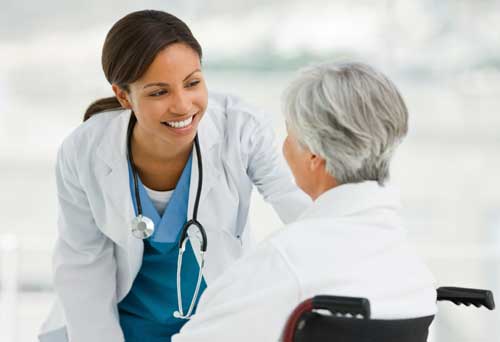
Photo from Microsoft
The information in this article is provided as an information resource only, and is not to be used or relied on for any diagnostic or treatment purposes. This information is not intended to be patient education, does not create any patient provider relationship, and should not be used as a substitute for professional diagnosis and treatment.
The appearance of hyperlinks does not constitute endorsement by The Caregiver Resource Center (TCRC). TCRC does not promote, support, condone, advocate, or abide by any third party web site, sentiment, or the information, products or services contained therein. TCRC does not exercise any editorial control over the information you may find at these sites and other Internet locations. TCRC does not affiliate with or contract with any third party websites, associations, parties, or proxies, except where clearly designated and subsequently confirmed by an authorized representative of TCRC.
Please consult your health care provider for an appointment, before making any healthcare decisions or for guidance about a specific medical condition.
____________________________________________________________________________
Linda Ziac is the owner and founder of The Caregiver Resource Center. Linda founded her company in October 1990, and provides concierge case management and advocacy services for seniors, people with special needs and families.
Linda’s professional career spans 39 years in the health and mental health field as a CT Licensed Professional Counselor, CT Licensed Alcohol and Drug Counselor, Board Certified Case Manager, and Board Certified Dementia Practitioner.
Linda’s role is to work with the client, their family and healthcare professionals to help assess, plan for and implement ways to allow for their greatest degree of health, safety, independence, and quality of life. We are often asked to help when a person is taken to the ER, is in the hospital, or there is a need to help assess and implement a plan to address a person’s day to day needs.
This process involves identifying a client’s abilities and needs, and helping to design a care plan (road map) that is composed of a spectrum of services, that best meets the unique needs of that particular client. A client and their family select the services that they want, and they only pay for those services.