Community Corner
Letter: Those Who Suspect Gluten Intolerence Should Seek Blood Test
Going on a gluten-free diet isn't the first step if one has symptoms of celiac disease: consult a professional.
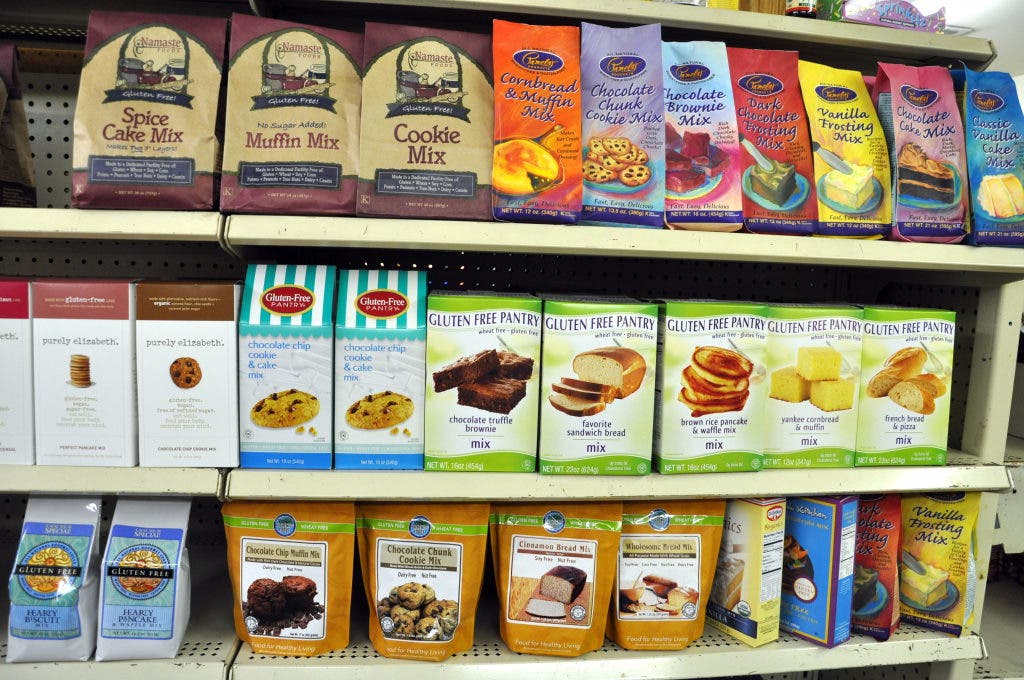


Editor's note: This is submitted in response to blogger Alicia Yost's Sept. 17 item, Reducing Your Gluten Intake Could Improve Your Health.
To the Editor:
I've been gluten-free for three years after my diagnosis with celiac disease — and I had some thoughts on Alicia Yost's post.
Find out what's happening in Middletownfor free with the latest updates from Patch.
I'm just an armchair expert on gluten and celiac disease, and you should of course do your own research, but it sounds like your doctor gave you some misinformation. Trying a gluten-free diet is the last resort for diagnosis, not the first — in fact, it can make subsequent testing inaccurate for months.
I think the current thinking is that after a simple and accurate blood test for the celiac genes, you move on to a blood test for antibodies to show if your body is fighting with gluten.
Find out what's happening in Middletownfor free with the latest updates from Patch.
Finally, the gold standard test for diagnosis is an endoscopy to reveal damage to the intestines, though it takes an experienced doctor to perform this test correctly. After all that, you start a gluten-free diet, ideally with the help of a nutritionist. The Celiac Disease Center of Columbia University is a good source for information on all this.
The basic issue with celiac disease is that it causes malnutrition — some of us have a gene that gets triggered (somehow) and causes our bodies to treat gluten like an invader, and our own immune systems attack our intestines. Over time, this means that no matter how healthy your diet, your body is not able to get enough nutrients.
Once gluten is removed from the diet, your body heals and in most cases, people recover from the malnutrition. Part of the challenge in diagnosis is that malnutrition causes different problems in people — many of which you listed in your post, but there are lots of others, too.
And some people have stomachaches and trouble gaining weight — but others have no sign at all that gluten is causing them problems until other diseases develop because of their nutritional deficiencies. Sometimes the problems begin at birth — sometimes decades later.
But some people feel that gluten might be making them sick even without taking all those tests — so why not just stop eating gluten, just in case?
Because wheat, barley and rye (the sources of gluten) are powerhouse grains nutritionally — and are used in a huge variety of foods in our culture. Although a diet that is naturally free of gluten can be quite healthy (there's no gluten in veggies, fruits, dairy, meat, beans, legumes, and other grains like rice and quinoa), eating "gluten-free" baked goods frequently can be a nutritional train wreck, since fat and refined substitute grains are typically used to hold together products that would ordinarily rely on — well — gluten!
And the main reason not to go gluten-free without a diagnosis is that you might delay treatment for some other condition which produces similar symptoms.
I understand that there is a lot of debate and discussion these days about gluten allergies, gluten intolerance and actual celiac disease, and I think we just have to live with some ambiguity about whether these will all turn out to be the same condition as research progresses. One thing we know for sure: for some reason, celiac is on the rise, and it's not just a case of more awareness.
One more tip: For those with celiac, the tiniest amount of gluten (1/4 teaspoon) can damage the intestines, even though the person might not feel any reaction at all. So the healthiest choice is to follow a near-religious level of caution — no sharing the peanut butter jar or stick of butter, because they might have bread crumbs. No sharing the toaster or pasta strainer — and you can't just take the croutons off your salad! Even more reason to be sure that a gluten-free diet is required before committing to it.
The good news is that the anticipation of going gluten-free is a lot worse than the reality. If you've got celiac, the growing good health that you experience while gluten-free is worth all the trouble.
Alicia, I hope you and your family find your way to good health — and if you have to stay on the gluten-free diet, at least there are more options in the stores and restaurants than there have ever been before!
Jen Alexander, Middletown