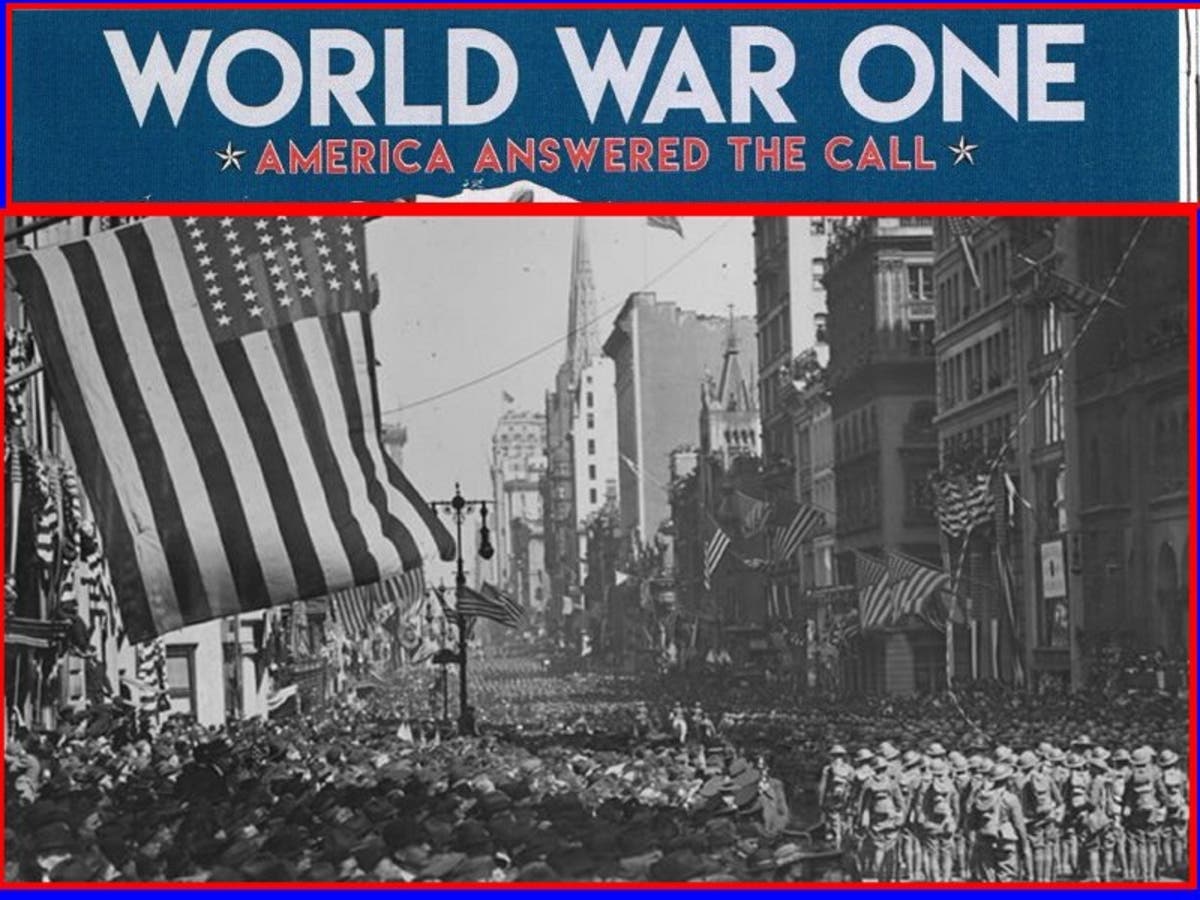
1918 Battle of Belleau Wood begins!
The first large-scale battle fought by American soldiers in World War I begins in Belleau Wood, northwest of the Paris-to-Metz road.
In late May 1918, the third German offensive of the year penetrated the Western Front to within 45 miles of Paris. U.S. forces under General John J. Pershing helped halt the German advance, and on June 6 Pershing ordered a counteroffensive to drive the Germans out of Belleau Wood. U.S. Marines under General James Harbord led the attack against the four German divisions positioned in the woods and by the end of the first day suffered more than 1,000 casualties.
Find out what's happening in Middletownfor free with the latest updates from Patch.
1917 British War Cabinet holds emergency meeting in London
On this day in 1917, early in the fourth summer of World War I, British Prime Minister David Lloyd George calls an emergency meeting of his War Cabinet in London to discuss plans for an upcoming British offensive against the Germans on the Western Front.
Find out what's happening in Middletownfor free with the latest updates from Patch.
With Russia wracked by revolution and mutinies spreading within the French army after the disastrous Nivelle Offensive in the spring of 1917, the British planned their own offensive, led by General Douglas Haig, to begin that June 10. One prominent member of the cabinet, South African Defense Minister Jan Smuts, had been advocating the earliest possible launch of the offensive, arguing that to delay would mean the Germans would “have time to recover their spirits?. If we could not break the enemy’s front we might break his heart.”
At the War Cabinet meeting on June 8, Lloyd George and his ministers heard Smuts’ argument; the prime minister, however, proposed that the offensive be postponed, and that Britain consider “the possibility of a separate peace with Austria,” the purpose of which would be to isolate Germany and put pressure on the kaiser to end the war. Why should Britain alone seek to bear the entire burden of the war, Lloyd George reasoned, when “the French were finding it difficult to go on, and their reserves physically and mentally exhausted?”
Smuts urged his colleagues to consult Haig, then in the field, on the viability of the offensive. When the general expressed a vague hopefulness, he was summoned to London to explain in detail his outlook. Arriving on June 19, Haig explained to Lloyd George and other skeptics his belief that Germany was on the verge of exhaustion and that with one more massive push, the Allies could win the war within the year. Lloyd George gave in, and the British offensive–later known as the Third Battle of Ypres–was scheduled for the final day of July.