Health & Fitness
CT State Standardized Tests and 7 Reasons Why They Should Go The Way of the Dinosaur
A look into CT State Standardized testing and 7 reasons why it is ineffective.
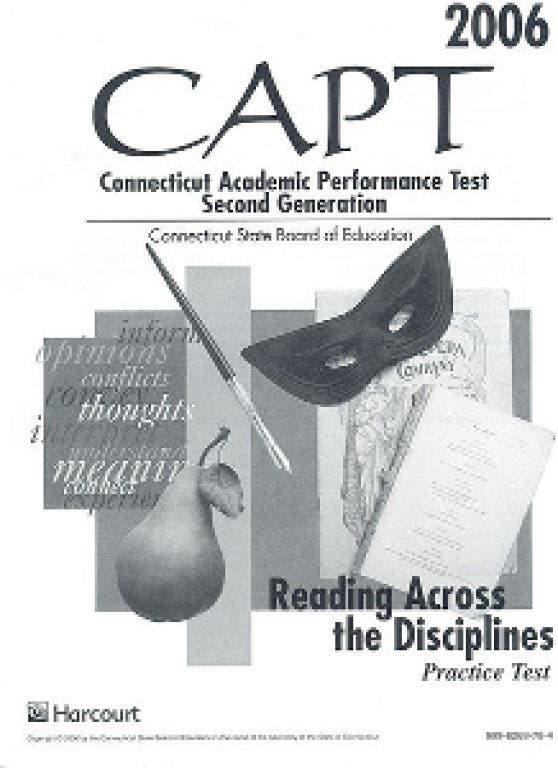
With the release of Monroe's results from the CMT and CAPT tests this past year, Monroe Patch has seen an uptick in comments about the value of educating students to "take a test." Some have said that these tests that usually run in the month of March unduly stress students, and then some have used the data taken from the tests to assess the effect of the past year's fiscal budget constraints on student performance.
If you aren't familiar with these acronyms, here is a brief overview of the Connecticut battery of standardized testing, the CAPT (Connecticut Academic Performance Test) and CMT (Connecticut Mastery Test) exams:
First, as part of the No Child Left Behind Act signed into law by President Bush in the early 2000's, standardized testing is a mandate in all states by the Department of Education to gauge how "academically successful" schools are with their student's performance. Every state in the nation has it's own battery of tests, and he results are used to find schools that are struggling and often look to bring in intervention or impose punitive measures meant to act as an incentive to bring up student test scores. Schools that perform better on exams are generally presented with more funding and more aid from the federal and state governments. For this reason, standardized testing is a primary focus for schools, not only to ensure that students perform their best for their own personal benefit, but also for the schools and the districts. Recently, in Georgia, a district was found to have had ordered teachers to change the answers to student's tests to cast a better light on the performance of their students, and such actions partly demonstrate just how large of a grasp these exams have on teachers and students alike.
Find out what's happening in Monroefor free with the latest updates from Patch.
CAPT: CAPT is administered only in a student's 10th Grade year. Like the CMT's, testing usually begins in early March and take anywhere from a week to a few weeks to complete each section, but on average takes about 9 school days, with certain sections required to be taken at a specific preset time and date and others flexible to the schedule of the particular school. CAPT is broken into several different disciplines: Science, Reading, Writing, and Mathematics. Each discipline has multiple exams in the particular category that are taken over the period of administration. Exams are graded on a number scale.
Find out what's happening in Monroefor free with the latest updates from Patch.
Science: Science I and Science II which includes multiple choice and open ended questions on basic chemistry, physics, biology, and earth sciences.
Reading: Response to Literature, which has multiple short stories and then a slew of multiple choice, open ended, and essay questions to be answered covering initial understanding, interpretation, connection, and critical stance.
Writing: Interdisciplinary Writing I and II consist of a random assigned opinion topic with both sides of the argument cited in various articles. The student then must write a persuasive essay using citation and evidence from these sources. There is also an Editing and Revising section that requires students to repair spelling and grammar purposely left incorrect in different texts.
Mathematics: Mathematics I and II consists of open ended, grid in, and multiple choice questions ranging from basic algebra to geometry.
CMT: The CMT is administered from Grade 3 through Grade 8, with a very similar set of exams to that of the CAPT test, with extensive testing in Reading, Writing, and Mathematics. Tests are graded on a scale from 1 to 5, with 5 being "Advanced" and 1 being "Below Basic." Depending on the grade of the student, each set of exams will be different in difficulty and in content.
Editing and Revising: Like CAPT, students are required to fix grammatical and spelling errors purposefully left incorrectly in different passages.
Direct Assessment of Writing: Also like CAPT, students must write a paper on a designated topic within a 45 minute time period.
Degrees of Reading Power or (DRP): Students are given passages with different blanks. They are given options to fill those blanks to make the statement make sense. As the test continues, the difficulty of the passages increases.
Reading Comprehension: Students are given multiple passages to read and then must respond to them through multiple choice, essay, and open ended questions covering comprehension, connection, and opinion.
Mathematics: Students complete multiple choice, open ended, and grid in questions on mathematic topics appropriate for their grade level.
All exams have a set time limit, like the SAT, in which to complete the test. Some tests range from 70 minutes, to 45 minutes, to 25 minutes, etc. depending on the type of test. Grading of these exams is different depending on what exam is being taken. For writing exams, an essay is read by two graders, then each assigns a grade on a scale from 1-6. Both grades are added together to create a holistic score. Mathematics are graded on a question by question basis, with some questions like multiple choice and grid in being worth a designated amount of points. Answering a question correctly means you receive a point; if you answer the question and if you are incorrect, you lose that amount of points. If you do not answer the question at all, you neither receive points nor lose points. Reading is on a point by point basis as well, depending on the question. Most exams with the exception of the writing portions are graded my machine.
Logistically, these tests are handled like they're entering Fort Knox. They arrive in vehicles, boxed and shrink wrapped, with labels on them set with the particular time and date the exams should be opened. If an exam is opened early, that can cause some serious complications for both the person who opened the test and the school. Teachers may not see any portion of the test, even whilst students are taking them, to avoid offering any assistance. Everything is very regimental in how exams are administered, in alphabetically assigned rooms, sitting in alphabetical order, with each exam having a barcoded label with the student's information listed. Proctors read a set statement on each test, giving instructions and further information on how to complete the test, and then it's up to the students to complete them.
With the background information out of the way, there have always been both staunch support and opposition to standardized testing. If I was to say I was not biased, I would be lying, so let me be clear by saying this: I absolutely believe that standardized testing is not only unnecessary and overvalued, but it also contributes to why our education system is as behind the rest of the world as it currently is. Here are my 7 reasons why standardized testing should go the way of the dinosaur:
- #7: Stress- If you remember taking the SAT's, chances are you remember the study sessions, the evening before where you're starting to feel a little shaky, and then that daunting feeling when you see the test packet being dropped on your desk. CT tests are a bit different, because that feeling is induced by teachers and administrators from September until March. With CAPT, Masuk spends a good portion of 10th and most of 9th Grade prepping students for the test, testing them in classes to see where they are weak academically and then putting them in support classes to rectify the problem. Plain and simple, these tests are brought on by a culture of stress, stress to succeed or else, except the or else is perceived to be that you can't have a successful future unless you get the top score on the test. This is inaccurate as of this day and age, and it doesn't help students morale.
- #6: Labels- Do you remember when you were in Elementary school and a kid would come up to you and call you a name? Remember how you felt? Think about how kids feel when the results come back and they received a 2 or a 3 while their friends received a 4 or a 5 on their tests. The students feel inferior, like they failed or are less valued than their classmates. Of course, this doesn't describe all students, but standardized testing sets up a divide where those who received higher scores are thought to be more intelligent and therefor better, and those who received lower scores are thought to be less intelligent and therefor should not be as expected upon to become high achieving scholars. Doesn't do much for one's self confidence.
- #5: Effectiveness- Books have been written on this topic, but to be brief, experts in the fields of physiology and education are debating the merits of how effective these exams truly are at gauging student performance. Can a rudimental algorithm of this range of answers correct to this range of answers correct accurately demonstrate whether a student is performing well in school? Some students aren't the type of people that are "good" at taking tests even if they are great students, so they may perform poorly, while students who may be a weaker student may be great on the test because they test well. Do we really want to base a persons abilities on what a piece of paper shows? Keep in mind, most colleges around the US are choosing to go test optional because they have realized that perhaps they aren't the best indicator of true student ability.
- #4: Logistics of Education- Teachers will agree, test preparation is the bain of their existence. Preparing for these exams does not mean learning new content or really focusing on expanding one's knowledge, it's based upon performing well on the test. Teachers have to stop their lesson plans to review content that may or may not be on the test, and that review may take days or even weeks. There is a difference between learning and learning to take a test. The style of education we receive in the US is learning to take a test. There are no multiple choice tests in the working world.
- #3: Interruptions- Schools have to take 2 weeks out of their schedules to take these tests, in which time, bell schedules and the ability to focus students is all but gone. These exams are a major time waster and break the flow of meaningful instructional time.
- #2: Different types of Intelligence- Part of the reason why the rest of the world is passing us by is because they are heavily invested in broadening fields of study for students. STEM education is valuable because students who perform better in the fields of science, technology, engineering, and mathematics will have the ability to focus on those fields. There are multiple different types of intelligence, and there are people who cannot excel solely academically. There are those that may be poor students, but brilliant artists, musicians, athletes, writers, etc., and standardized testing overlooks that. You can't gauge the true value and abilities of a student from a test, making one question why we try to.
- #1: US Standards vs. Global Standards- US educational standards are far less rigorous than the rest of the world. In Europe, while students attend school for the majority of the year unlike here in the states, they are a higher caliber of student because they have to be self sufficient and self motivated to succeed. Here, teachers have to spoon feed a room of students who have no interest in learning because the importance of education and that interest is not reinforced in them. Our academic standards are low because we teach students at a slower rate with less challenging material than they do overseas, and that's a problem. In our testing, we meet goal on a curriculum that is nowhere near as competitive as that of our global neighbors, and that can cause problems in the workforce. Who would you be more apt to hire: a person who was educated in Europe who attended a European school with high standards, or a person educated in the US who attended a US school will subpar standards? Depending on where you are in the world, you're more likely to go with the European educated.
We're losing the fight in education because we focus so much on testing and not on the full scope of student ability. Students are made up of so much more than academic study, but the current system we are under does not allow for that to shine. If we want to remain on the forefront of innovation, we need to support teaching creative problem solving, creativity, and get outside this bubble that constrains us to believe that a single core curriculum in academics is sufficient. The US system of education is broken without a doubt, and unless we move away from this mentality that testing and trying to pass our standards of tests will be sufficient in a global economy and a global workforce, we're going to slide further away from being a dominant force in the world.