Arts & Entertainment
"Wizard of Oz" Costumer Adrian Greenberg Exhibit at Library
The exhibit opened on June 3 and may be viewed during the hours that the library is open through June 28.


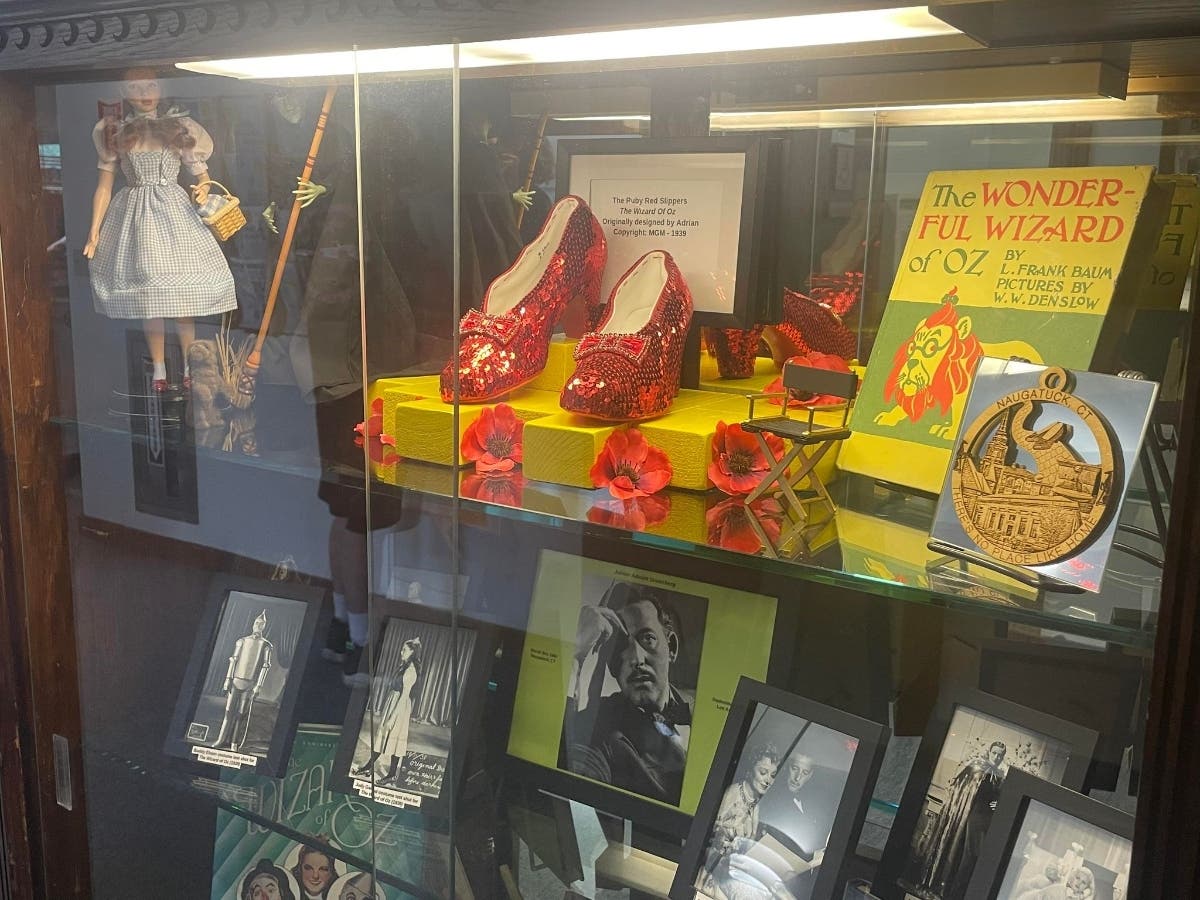

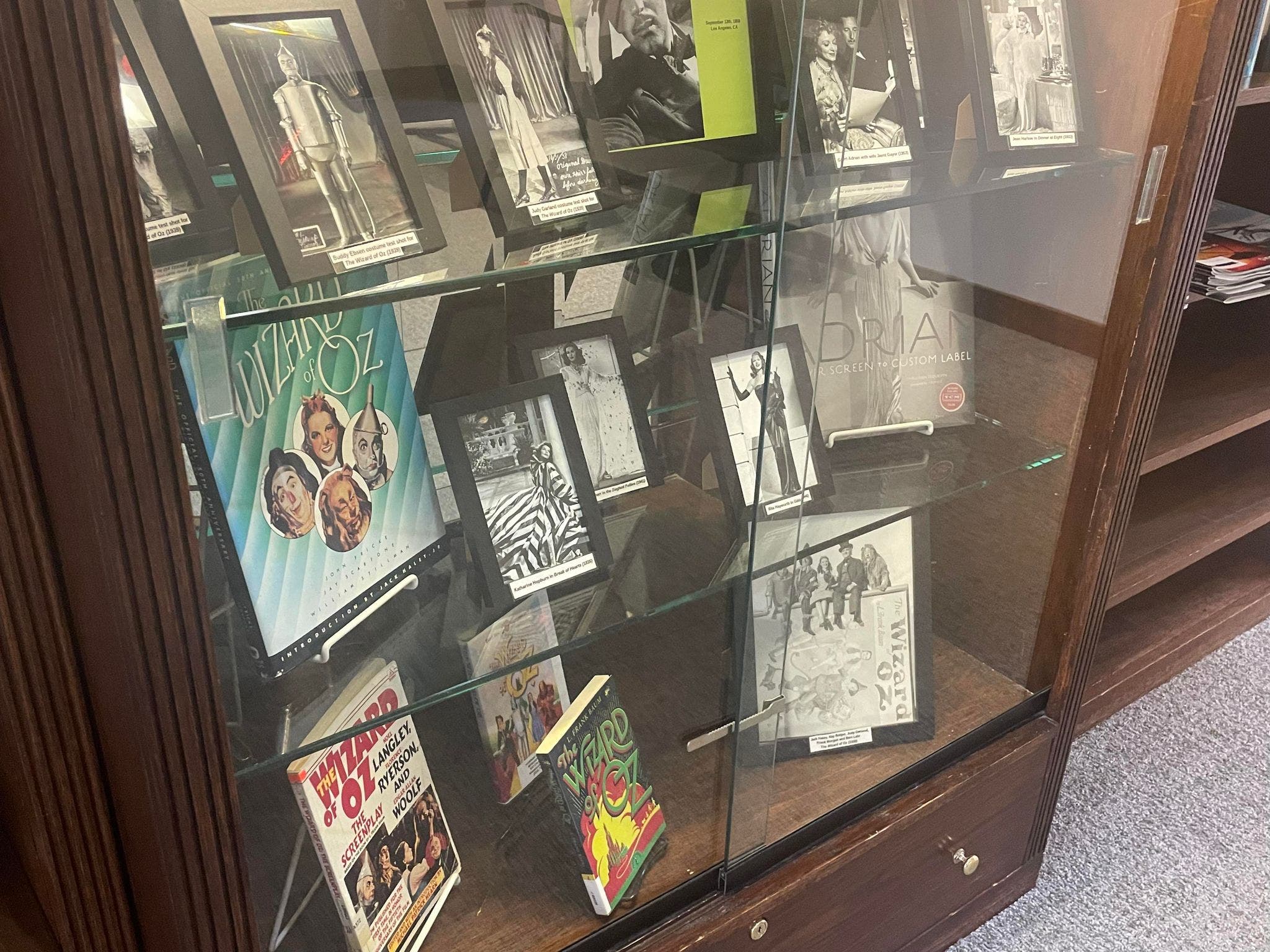
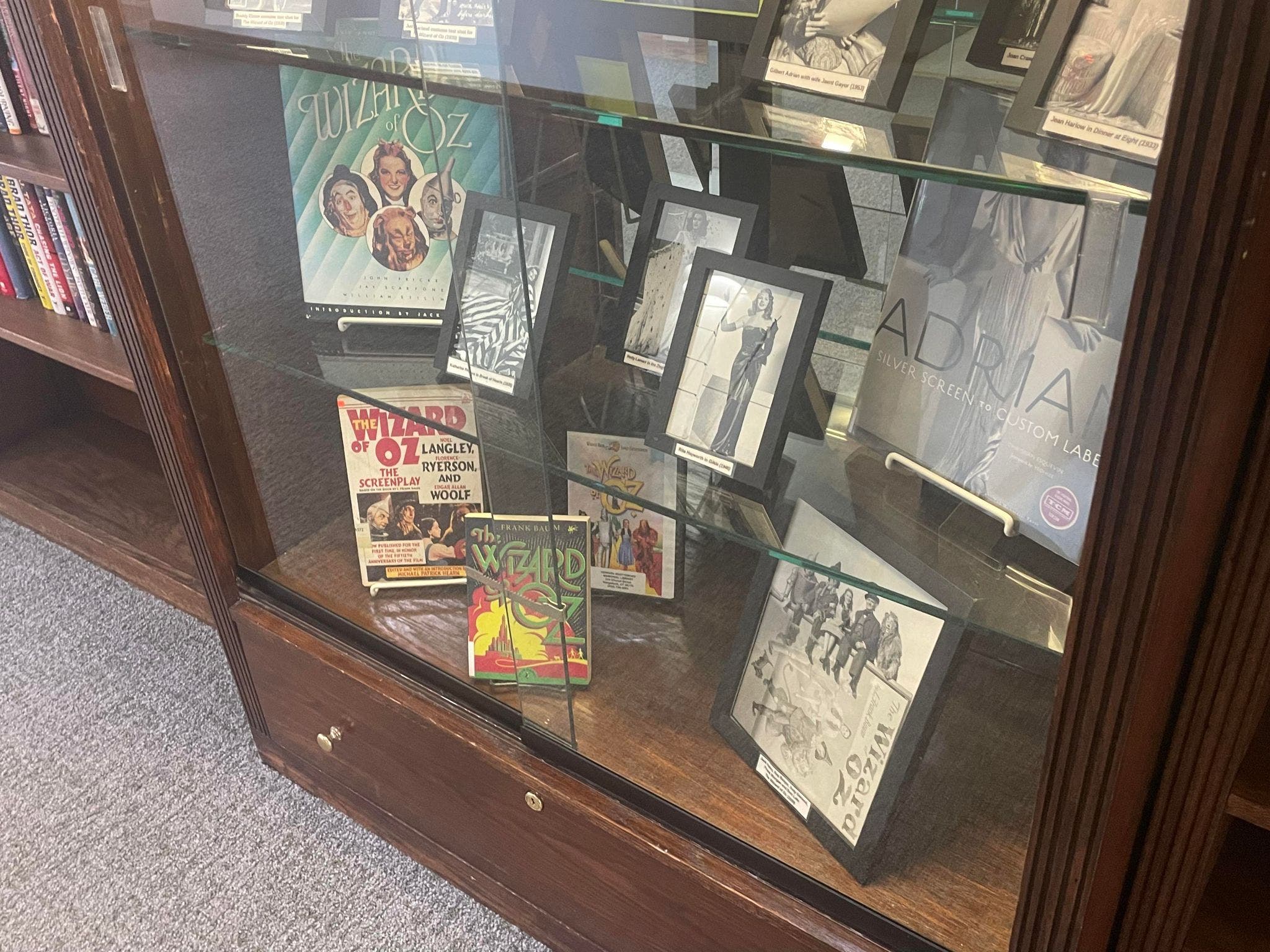
Just in time for Pride month, Kyle LaRue has created an exhibit for the Whittemore Library in Naugatuck about Adrian Greenberg, the costume designer for the beloved film version of “The Wizard of Oz.” The exhibit opened on June 3 and may be viewed during the hours that the library is open through June 28.
LaRue provided the following information about Adrian “Gilbert” Greenberg.
Adrian Adolph Greenberg, was born on March 3, 1903. Adrian and his family resided at 20 Frederick Street in Naugatuck, CT.
Find out what's happening in Naugatuckfor free with the latest updates from Patch.
When Adrian was a toddler, his parents Gilbert and Helena Greenberg, opened a millinery shop on Church Street in Naugatuck. This family business helped to create a lifelong love of fashion, fabrics and accessories for a young Adrian.
After graduating from Naugatuck High School between 1918-1919, Greenberg went to the New York School of Fine and Applied Arts (NYSFAA), now Parsons School of Design, in New York City. In 1922, he relocated to the NYSFAA Paris campus. Soon after that, American composer Irving Berlin hired the young Adrian to do the set and costume designs for his Music Box Revue (1922-23) on Broadway in New York City.
After seeing Aidrian’s talent, Natacha Rambova, the wife of silent screen actor Rudolph Valentino, offered him a job in Hollywood as head costume consultant. He then went on to become Chief Costume Designer for Metro-Goldwyn-Mayer (MGM).
Find out what's happening in Naugatuckfor free with the latest updates from Patch.
At this point in his career, he was known as just “Adrian.” He dressed iconic Hollywood stars like Greta Garbo, Jeanette MacDonald, Jean Harlow and two Connecticut legends, Katharine Hepburn and Rosalind Russell. He also made the shoulder pad a major style accessory that was seen in many film costumes and in the personal wardrobe of actress Joan Crawford, often said to be part of her trademark.
The late 1930’s was a very busy time for Adrian. He designed the costumes for movies like “The Great Ziegfeld,” “Camille” and “Marie Antoinette”—all three films back-to-back. In his thirteen years designing for MGM, Adrian designed the costumes for more than 250 films.
The year 1938 became a pivotal time in Adrian’s career. He designed the costumes for the film, “The Women,” with an all-female-cast that included stars like Norma Shearer, Joan Crawford and Paulette Goddard.
In that same year, Adrian designed the costumes for the beloved film “The Wizard of Oz,” starring Ray Bolger as Scarecrow, Bert Lahr as the Cowardly Lion, Jack Haley as the Tin Man, Margaret Hamilton as the green Wicked Witch of the West and a 16-year-old Judy Garland in the role of Dorothy Gale.
Adrian took what he had seen from “The Wonderful Wizard of Oz” book and illustrations and created some of the most famous and whimsical characters of the twentieth century. MGM gave the production team of “The Wizard of Oz” a budget of just under three million dollars—an equivalent of around sixty-four million dollars by 2023 standards.
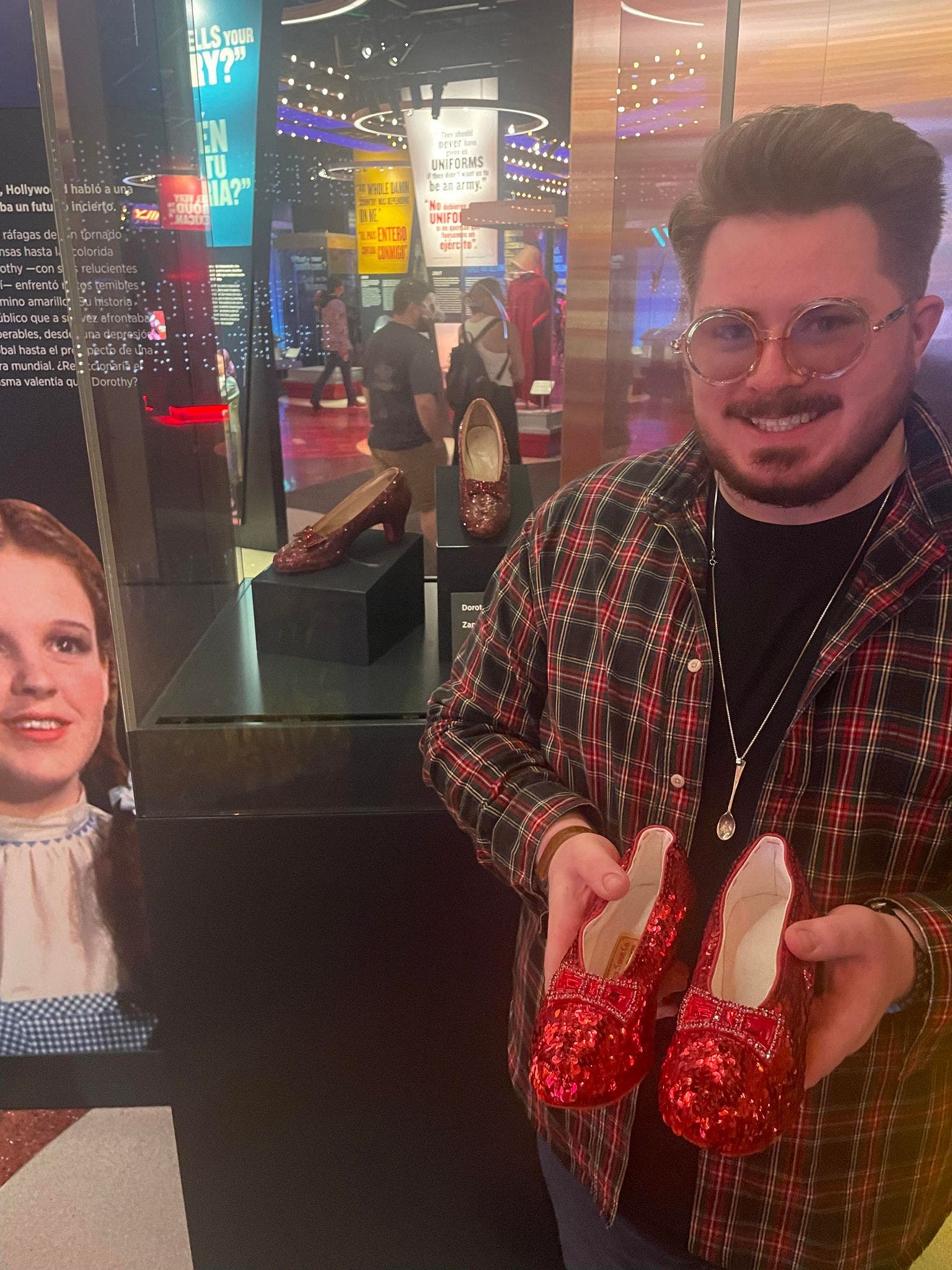
In the beginning of the designing process, Adrian was asked to create a witch’s shoe that would eventually appear on Dorothy Gale after her house fell on The Wicked Witch of the East during a brutal tornado. He made a pair of ladies’ silk heels with an array of red sequin and red bugle beads. He called them “The Arabian Test Pair,” as they featured an upward-pointing toe and curled heel. The film’s director, George Cukor, deemed them “unsuitable” for Dorothy Gale’s Kansas farmgirl image.
Adrian later created a pair of shoes, known the world over, as the Ruby Slippers. They were a French heeled white silk pump decorated with a 2,300 burgundy sequin overlay—the red sequin showed up as too orange once technicolor was applied to the film—and butterfly-shaped bows. The bows were made of a leather base with dark red glass jewels and bugle beads outlined by dark red rhinestones in a silver setting.
Between seven to 10 pairs of the Ruby Slippers were made for the film. As of 2023, there are only four pairs left in existence, including one pair at The Smithsonian Museum in Washington, DC.
Adrian designed hundreds of costumes for “The Wizard of Oz, including doubles of all the lead characters’ costumes and their stand-ins.
In 1939, the same year as the release of “The Wizard of Oz,” Adrian married American actress Janet Gaynor. In Hollywood at that time, there was a term for marriages like their’s—a “lavender marriage.” This meant a marriage created to help conceal the socially-stigmatized sexual orientation of one or both partners. Adrian was a homosexual and Janet was a bisexual. On July 6, 1940, the couple had a son named Robin Gaynor Adrian. Both Adrian and Janet would publicly state that they were happily married until Adrian’s death.
In 1942, the fashion line Adrian, Ltd. was established in Beverly Hills, CA. The company’s designs were created to appeal to “every woman” at that time and also helped to fill in the gaps Paris left behind due to the lack of exportation during the German occupation. His iconic haute couture gowns, oftentimes made of silk, were now available for everyone to wear.
Adrian said, “It is thrilling to be designing for American women and I can only hope the women will enjoy wearing my clothes after they have purchased them for their own.” During this time, Adrian worked on sixteen films while also designing for his shop.
In 1952, after ten years, Adrian had to close the doors of Adrian, Ltd. after suffering from a heart attack. During those ten years, he insisted on doing all of the drafts and designs himself and kept his portfolio close to the vest. This resulted in him having to close the business after his health began to fail.
In the same year, Janet and Adrian retired to Anápolis, State of Goiás, in Brazil. In 1958, Adrian was asked to come out of retirement to design the costumes for the musical theater version of the 1932 film, “Grand Hotel,” called “At The Grand.” In 1959, he started working on the Broadway musical “Camelot.” While at his studio working on the designs, Adrian suffered a fatal heart attack and died at age 56.
After his death, Adrian was posthumously awarded the Tony Award for Best Costume Design in a Musical.
All photos contributed by Kyle LaRue