Community Corner
Eagle Watching on the Housatonic
The Shepaug Dam is a popular place for Newtown and other area residents to catch a glimpse of the majestic bald eagle.
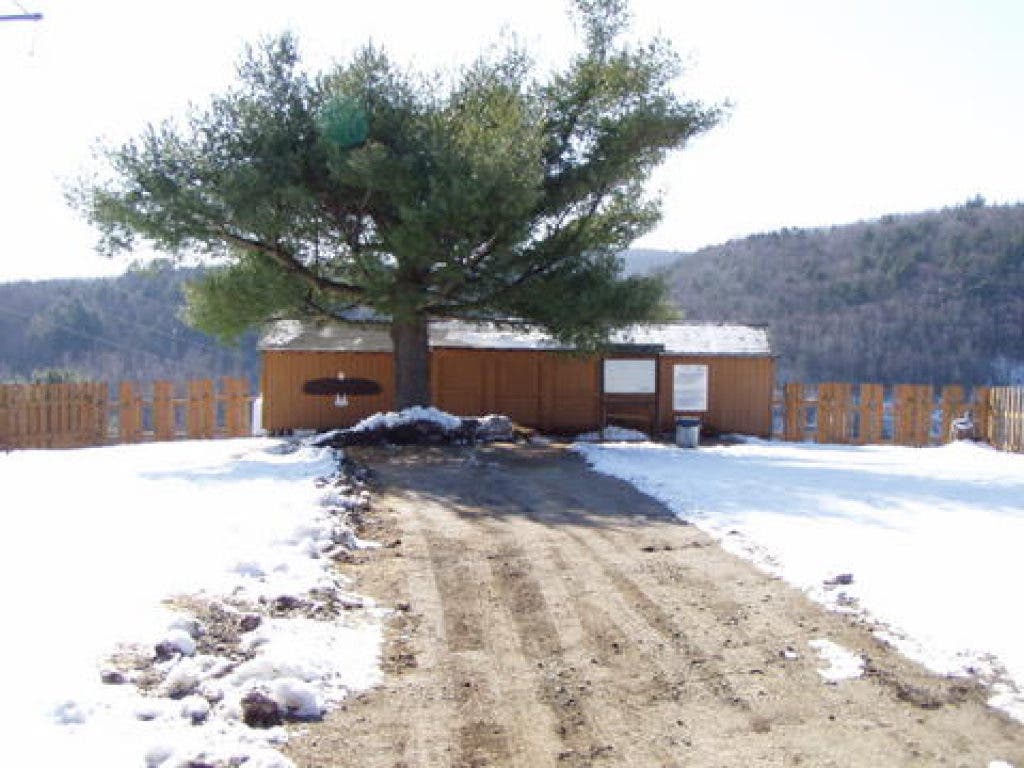


With binoculars, telescopes and cameras, they came from near and far hoping to see a bald eagle on the Housatonic River at the Shepaug Dam. They weren’t disappointed.
About 40 people crowded into the observation shelter on the Southbury side of the dam Sunday, Jan. 16. They marveled at several eagles roosting, soaring or catching fish under a blue sky.
“The eagles are beautiful. It’s the first time I’ve seen them. I even saw one eating a fish,” said Courtney Gleason, of Newtown.
Find out what's happening in Newtownfor free with the latest updates from Patch.
Eagles used to be very rare in New England, let alone Connecticut. But, the birds have become a usual sight here on the Housatonic River by the hydroelectric dam.
Protective environmental measures allowed them to survive and reproduce, according to Connecticut Audubon volunteers who manage the observation area.
Find out what's happening in Newtownfor free with the latest updates from Patch.
Lucy Walker, of Easton, one of the volunteers who also works for FirstLight Power Co., which owns the dam, told visitors most of the eagles seen here live in the northern New England and Canada.
She said about 100 eagles migrate south in winter to Connecticut and even to Virginia to find open water when their usual feeding areas are covered by snow and ice. Some of the birds became year round Connecticut residents, she added.
Walker explained the turbines of the power dam stir up the river water and prevent it from freezing while they bring fish, such as perch, to the surface for the eagles to eat.
An adult eagle might eat per day a pound-and-a-half of fish -- its preferred food, but it might also dine on water fowl or carrion, she said.
A large, adult eagle roosted in a tree for several hours. Visitors saw him through telescopes. But, finally the eagle flew. Some with cameras photographed him in flight.
Joey Lounsbury, 13, of Danbury, armed with a digital camera and telephoto lens, snapped pictures of the eagles to add to his collection of wild bird photos.
Lounsbury said he intended to add one of the eagle images to his photos now on display in Nico’s Pasta and Pizza Restaurant on Main Street in downtown Danbury.
Meanwhile, Sujatha Mizar, an amateur wildlife photographer and software engineer from Grafton, MA., was trying her best to get a photo of the eagles.
“I just got back from a safari in northern Tanzania,” she said. “I’m going to Haines, Alaska, in November for the bald eagle festival.”
Alan Goodman, of Mt. Vernon, NY, who came with friends from Brewster, NY, reveled in the visit.
“It’s wonderful seeing the eagles. I was born in South Africa and visited many game parks there before I came here to live,” he said.
One of the volunteers on hand was Oden Seaholm, of Milford, who used to have a store for bird watchers, the Wild Bird Center, in his city.
“Birding is the second leading hobby in America, behind gardening,” he said.
Seaholm said Benjamin Franklin, one of the nation’s founding fathers, had proposed making the wild turkey the nation’s symbol, but he was outvoted in 1782 by others who chose the bald eagle.
Seaholm was an open encyclopedia of eagle facts:
- Eagles have a wing span of 6 to 7.5 feet and a body length of 34 to 43 inches.
- The black brown bird develops white feathers on head and tail when reaching sexual maturity in 4 to 5 years.
- Females resemble males, except they are larger. Males weigh 8 to 10 pounds, and females 10 to 14 pounds.
- Their nests measure about 8 feet in diameter.
Nancy Gould, a Newtown volunteer, said winter visitors to the site are restricted to the observation area so that the eagles can feed undisturbed. If humans bother them, the eagles may not eat, and some, especially juvenile birds, might starve and die in the winter cold, she said.
Persons or groups wanting to visit the site must call FirstLight at 800-368-8954, 9 a.m. to 3 p.m. Tuesday through Friday, to reserve a place in the observation area.
The area is open from 9 a.m. to 1 p.m. Wednesday, Saturday and Sunday from the end of December to mid-March, weather permitting.
Answers to most asked questions about the eagles may be found at www.shepaugeagles.info.