Community Corner
North Haven Diaper Bank Cares About Bottoms
"It's hard work being poor," said the Diaper Bank's Janet Alfano of the situation the families the Bank serves find themselves in.
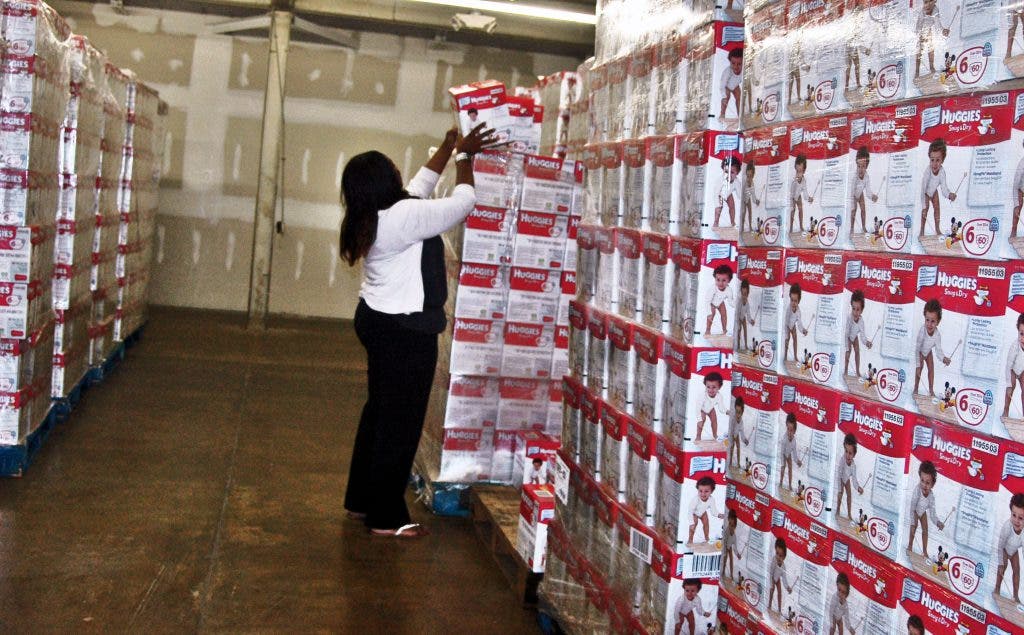


Janet Alfano cannot say enough about diapers.
Seated in her North Haven office mere feet from a warehouse filled with disposables, the director of the nationally known addressed the issue of who needs to receive free supplies of diapers in difficult economic times.
“We see folks who have been at the lower end of the socio-economic spectrum. We’re also seeing so many families who are new to social assistance programs,” Alfano said, noting that the bank receives a few more calls each day from persons who would like to become clients.
Find out what's happening in North Havenfor free with the latest updates from Patch.
“It’s hard work being poor," she continued. "There’s so much more involved. It’s hour to hour. There’s not an ability to be able to plan ahead when you’re at that end of the economic scale.”
The bank, which supplies diapers to 66 agencies-partners across much of the state, has a dual mission of supplying free diapers to low-income families and also educating the public about the health and parenting concerns associated with them.
Find out what's happening in North Havenfor free with the latest updates from Patch.
Alfano termed the diaper “a very basic and concrete thing.” She noted that a parent cannot bring a child to daycare without a supply of them and that many laundromats won’t allow persons to wash cloth diapers there.
Then, there exist the concerns that can result from an inadequate supply of diapers, such as the potential for hepatitis, or the fact that children with soiled diapers tend to cry and that that behavior can lead parents who are already badly stressed to abuse them.
Struggling to Make Ends Meet
Alfaro referred to one especially galling outcome that an inability to buy diapers can trigger—this, a parent's inability to meet the cleanliness assessment that child protection services use as one measure of whether or not a parent can keep custody of a child.
“So many of our clients don’t have cars,” Alfano said. She noted that even recipients of free diapers are likely to work two jobs and, so, find getting transportation to a Diaper Bank’s agency-partner difficult. That low-income worker’s strange schedule in and itself can preclude a person's stocking an adequate supply, she remarked.
Said Alfano: “We’ve had folks come to our office and change.”
________________________________________________________________________________________
Interested in North Haven’s news, events, community bulletins, blogs and businesses? Sign up for the free North Haven Patch daily newsletter, "like" us on Facebook and follow us on Twitter.
________________________________________________________________________________________
Then, there is the cost of diapers which, according to Alfano, easily amounts to $100 a month. This can cost more, she said, for those who must purchase diapers in packs of five from the small, corner stores in their immediate neighborhoods.
“It’s just something you don’t think of,” she observed. She noted that if parents who first learn of the Diaper Bank have children, they say, “'Oh, we get it.' It’s a car payment if you have two in diapers,” she mused. Then, pausing briefly, she corrected herself, "Diapers and formula—that’s a car payment.”
14 Million Diapers
In the eight years of its existence, the Diaper Bank has given away 14 million disposable diapers. Before April, the Diaper Bank used to give away an average of 200,000 to 225,000 disposable diapers each month.
Then, the bank, which used to receive both federal and state aid but now must survive solely on private donations, found itself forced to cut its distribution to 145,000 diapers a month.
And while the need remains great, Alfano conceded that the Diaper Bank just does not have money to add any more agency-partners to the shelters, food pantries, churches and social service agencies on its list.
Toward that end—and, like many nonprofits these days—the Diaper Bank has stepped up its fundraising efforts, holding events such as Diaper Drives, and even trying, albeit unsuccessfully, to alter the language in federal child development block grants that would have permitted willing governments to assist parents in a supply of diapers' purchase.
Alfano remarked that there were no monies attached to this shift--one that, she believes, died in a Congressional committee.
Anyone who wants to learn more about the Diaper Bank and its activites can check the Bank’s website, which is thediaperbank.org.