Arts & Entertainment
Be Careful When Planning Picture Book Vacations
Children's librarian examines dozens of picture books in an effort to find the best, and most appropriate.
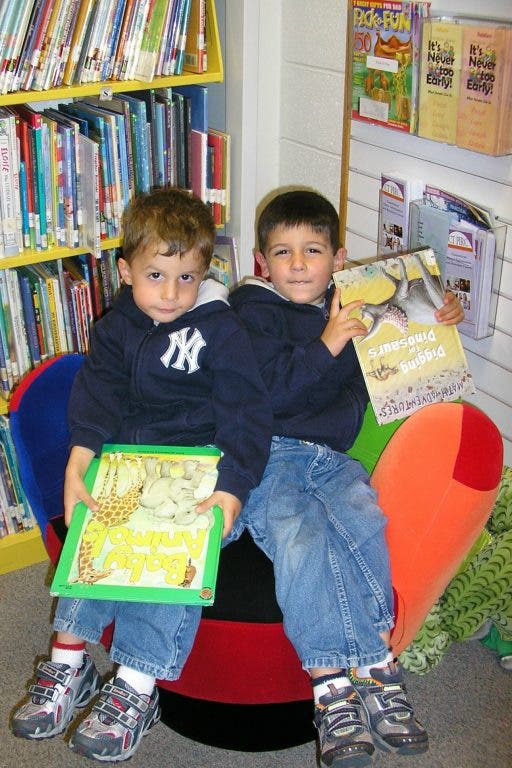

If this winter’s mountains of white snow are making you feel trapped inside your house, picture books can offer you and your children a quick escape to another, more colorful world. However, planning a reading adventure isn’t as easy as just picking a book off a shelf. Thousands of fantastic picture books exist, but there are numerous tales that will leave you scratching your head – and hoping your children weren’t paying close attention.
One of the dangers of a journey through the land of children’s literature is that some of the books that seem the most innocuous are also the ones you might want to avoid. For example, the library has an entire shelf devoted to Caldecott Medal winners and honor books, which are chosen by the Association for Library Service to Children. They feature gold or silver stickers on their covers, and as I overheard a 4-year-old explain, “It has a label on it. That means good pictures!” The books are, indeed, honored for their illustrations, but it’s important to remember that they haven’t been awarded for their text.
If you’ve ever browsed through the Caldecott titles, you may have already suspected that plot wasn’t a deciding factor for the award. The 1993 Caldecott Honor book, The Stinky Cheese Man and Other Fairly Stupid Tales by Jon Scieskza and Lane Smith, has surely raised a few eyebrows even before its cover was cracked. The Talking Eggs, a 1990 Caldecott Honor Book, has probably also attracted readers just because of its unusual title. The first book’s mischievously playful approach makes it worthy of a picture book vacation, but the second book offers a trip that isn’t for everyone.
Find out what's happening in Oxfordfor free with the latest updates from Patch.
The Talking Eggs, by Robert D. San Souci and Jerry Pinkney, is an adaptation of a 19th-century Creole folktale. The story’s important lesson about avoiding greed is eclipsed by disturbing imagery. A magical woman detaches her own head in order to brush her hair. Then, a sneaky girl prevents her from reconnecting the head in order to force the woman to divulge the secret of the talking eggs, some of which contain jewels. Even after the secret is revealed, the woman’s body is left to helplessly search for its head, and the horrified reader is left wondering if it ever succeeds.
While an argument can be made for the cultural value of The Talking Eggs, the content of other Caldecott books is more questionable. In the Night Kitchen, a 1971 Caldecott Honor book by Maurice Sendak, features a completely nude little boy who is mixed into cake batter by three giant bakers and put into the oven to bake. Reading the book feels more like a trip on drugs than a trip of inspired imagination.
Find out what's happening in Oxfordfor free with the latest updates from Patch.
Sendak’s name may be familiar because he wrote and illustrated the 1964 Caldecott Medal winner Where the Wild Things Are. The book is a beloved classic that was made into a movie in 2009. However, Sendak is especially skilled at crafting disconcerting children’s tales. Besides writing the bizarre In the Night Kitchen, Sendak also wrote Outside Over There. In this 1982 Caldecott Honor book, goblins steal a baby and replace her with a child made of ice. After the baby’s oblivious sister hugs the ice changeling until it melts, she realizes that she must save her kidnapped sibling. The older sister trails the goblins and discovers that they are actually babies too. To free her infant sister, the older girl plays music that forces the goblin babies to dance until they can’t breathe. It’s difficult to accept the disconcerting idea that the babies in the pictures are evil and that we want them to dance to their deaths. Not exactly a pleasant distraction from reality.
The Caldecott shelf does offer some fantastic fictional getaways. Popular stories such as Mo Willems’ Don’t Let the Pigeon Drive the Bus and Ludwig Bemelmans’ Madeline’s Rescue sit alongside their more unusual counterparts. Furthermore, this year’s winner, A Sick Day for Amos McGee by Philip C. Stead and Erin E. Stead, is a warm future-classic about friendship that would be a shame to miss. Therefore, it’s not necessary to totally give up the dream of traveling to a snow-free picture book land. The key is to peruse stories before inviting your children into their magical world just as you would read a travel guide before booking a family trip. If you take that simple precaution, it’s likely that your children will enjoy their travels into the world of books now and long after the snow melts.