Politics & Government
Spirited Debates in Oxford Go Back to the Civil War
Oxford town historian takes us back in time to remind us that residents have always been fiesty.
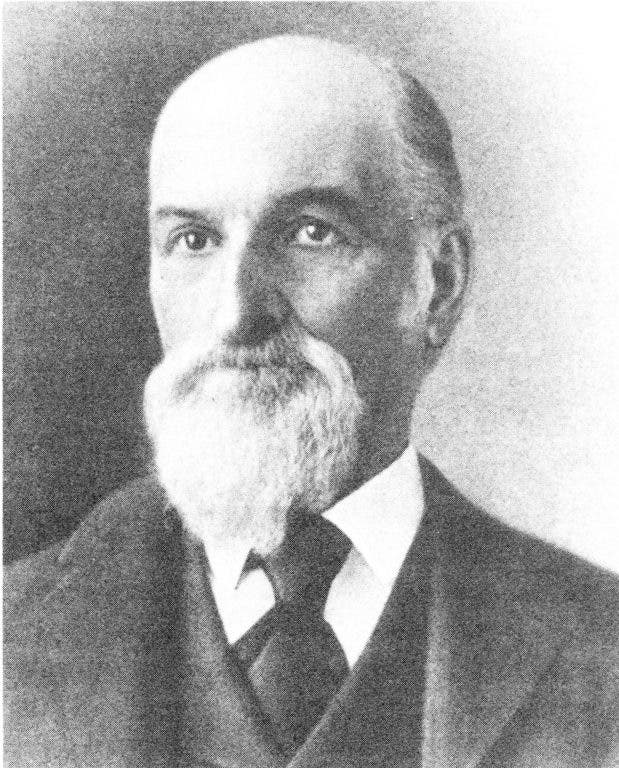

There are 33 graves of Civil War veterans in Oxford. Yet, the list of persons credited to the Town of Oxford includes 107 men.
What accounts for the large discrepancy? Military records say eight of the 107 men, or 7.5 percent, died in the service. The deaths in the service don't reconcile the 99-man-difference between the number of Civil War veterans buried in Oxford and the number listed in military records.
A closer look at the 107 men listed as joining the Union service from Oxford shows that ten were born in Oxford. Two others were in the 1860 census of Oxford residents. The other 95 men were not living in Oxford then or later in the 1870 census. Surprisingly, the number of out-of-town men exceeds the local residents nearly eight to one.
Find out what's happening in Oxfordfor free with the latest updates from Patch.
Civil War-era town records provide a clue. To meet the call for the Union drafts, the state assigned a quota, based on each town’s population. If the town met its quota with volunteers, there would be no draftees called up from Oxford. Local voters held a series of meetings to try to encourage enough volunteers to avoid a local draft. They offered a bounty to each man who signed into the service, listing Oxford as their home. The bounties encouraged non-residents to list Oxford as their home.
The process of awarding bounties to those who signed into service was highly controversial. Records show residents would approve a certain amount, only to have their votes rescinded at a later town meeting. The amounts varied from one meeting to the next. At various times, the townsmen voted to raise, then lower, and even drop the bounty offer. They also voted and later rescinded votes on whether to pay the bounties by a special tax or by borrowing the cost of the bounties. Oxford records reveal great controversy and dissension ‑ both over the Civil War, the need for soldiers, and how to pay the costs of the war.
Find out what's happening in Oxfordfor free with the latest updates from Patch.
On Sept. 2, 1862, a town meeting responded to the state order that each town make plans to draft Oxford men to serve as nine months soldiers. If a town furnished their quota, the state would take no additional draftees in Oxford. This gave the local residents a powerful incentive to encourage volunteers or hire substitutes. The town meeting approved a bounty of $100 for each such volunteer and to take “measures for encouraging enlistment.”
By July of 1863, the governor and legislature worried confederate forces might attack the state. Another town meeting to raise bounties to encourage volunteers, and also to provide for support of families of volunteers “as may be in danger of being reduced to want,” and would become the town’s responsibility to support.
At the town meeting, William Church (father of S. B. Church who donated the money for Oxford’s Town Hall) presented resolutions:
- That the selectmen may offer a bounty of not more than $300 to any who will volunteer in case of war within the state;
- That the selectmen may pay a sum not exceeding $300 to the family of every citizen of this town who may have been at any time now or hereafter drafted into the service of the United States when necessary to prevent the families from becoming dependent on the town for support;
- That the selectman pay $300 to any resident drafted in the town provided the drafted man hires an able bodied volunteer or substitute to serve in his stead.
A motion to adjourn the meeting “'till war is over” failed, and further debate followed.
Eventually, they voted to adjourn the meeting to the following week. When the meeting resumed, they discussed giving each volunteer $300. Homer Riggs, who had already returned from military service, amended the motion to include all men who enlisted in the service of the war previously.
Abijah Hyde, a veteran of the War of 1812, offered a further amendment that “the bounty be extended to all who served in the war of 1812.” Both motions were defeated. They approved the original motions to give $300 to volunteers and $300 to needy families of volunteers. However, the matter was not settled until a second town meeting confirmed the vote.
Raising funds to pay the costs of the war also created controversy. In August 1864, residents voted to add two mills to their current tax bills to pay for state military costs. To meet Oxford’s quota of 26 additional men, they authorized selectmen to borrow the funds needed. They voted to offer a bounty of $1,000 for each man who agreed to serve. It was a generous offer that would not last long.
Other residents called for another meeting to rescind the votes. Then residents voted by ballot and rescinded all the doings of the previous meeting by a vote of 134 to 54.
That vote did not stand long, either. On August 20, another town meeting was held. Residents approved the added tax of two mills on the assessment list of 1863 for the use of the state and approved a sum of $300 for each recruit obtained. The meeting also authorized the town to borrow money as needed, up to $7,800.
As the war continued on, townspeople continued to argue about the costs. Each time the federal government issued calls for more recruits, the meetings and arguments back and forth ensued.
The final town meeting on payment for recruits and substitutes was held in February 1866, just two month before Lee’s surrender at Appotomax. Residents met to vote on “the payment of the balance due for certain parties as compensation for furnishing substitutes.” After much discussion, they decided to get a legal opinion. The selectmen were instructed to get a written opinion from Wm. B. Wooster of Derby, Atty. at law. (Col. Wooster was a respected Oxford native as well as a Civil War hero.)
The town meeting reconvened a few weeks later. The report recommended payment. Residents voted by secret ballot; 13 voted to pay the claims and 98 vote not to pay them. So those who were last to get their claims before the town never received a town bounty for their services. No listing of the men whose claims were unpaid was included in the records.