Neighbor News
Women Patriots – Behind the Scenes Revolution
March is Women's History Month and this article honors the women who quietly helped fight for freedom.


The Sarah Riggs Humphreys-Mary Silliman Chapter of the National Society Daughters of the American Revolution celebrates America 250! In anticipation of the July 4, 2026, 250th Anniversary of the signing of the Declaration of Independence by the 13 Colonies, the DAR wishes to remind everyone of the sacrifices and heroism of everyday men and women who fought for our freedoms that we enjoy today.
March is Women’s History Month and this article honors the women who quietly helped fight for freedom. These women are the unsung heroes who’s activities and patriotism have been underestimated all these years. This article is about those who quietly organized the tea boycott three years before the Boston Tea Party; spun cotton and wool and made their own homespun clothing and, when the war came, made uniforms for the Army; and who listened to the ‘enemy’ and passed on information to the Patriots.
Women in the Colonies were proactive in a quiet way. The Townshend Acts of 1767 imposed customs on glass, paint, lead, paper, and tea. The Boston Evening Post on January 31, 1770 published an agreement by 300 women who pledged to boycott purchasing and drinking tea. They created their own blends of tea from the flowers and plants they grew. Three years later, the Sons of Liberty staged the Boston Tea Party on December 16, 1773.
Find out what's happening in Shelton-Derbyfor free with the latest updates from Patch.
The Daughters of Liberty were more focused on how they ran their homes and their protests were centered on making their own homespun cotton and wool and sewing clothing as a peaceful way of supporting the Patriot cause. During the Revolutionary War these same women gathered and sewed uniforms and blankets for Continental soldiers.
It is not unusual for women to help General George Washington spy on the ‘enemy’ in their villages. British soldiers were housed in the homes of colonists and the women took advantage of what they heard by gathering valuable information from careless conversations between the British and their sympathizers.
Find out what's happening in Shelton-Derbyfor free with the latest updates from Patch.
A young girl, Sarah Reynolds (Ancestor #A095844), aided the patriot cause by being a dispatch bearer in Stamford, CT. She pretended to be ‘foolish’ when loyalists were around. “She would play with the sand, letting it run between her bare toes in imitation of foolish children and…[they] would merely comment on her silliness and pass on[1].”
General Washington realized the need to establish reliable networks to gather information about the British behind enemy lines. He appointed Major Benjamin Tallmadge in November of 1776 to set up an intelligence network out of New York City from Setauket, Long Island. This spy ring is known as the Culper Spy Ring.
Communication was through a series of coded numbers and each member was given a specific number to protect their identity in case of exposure. Number 355, was the code for ‘lady’.
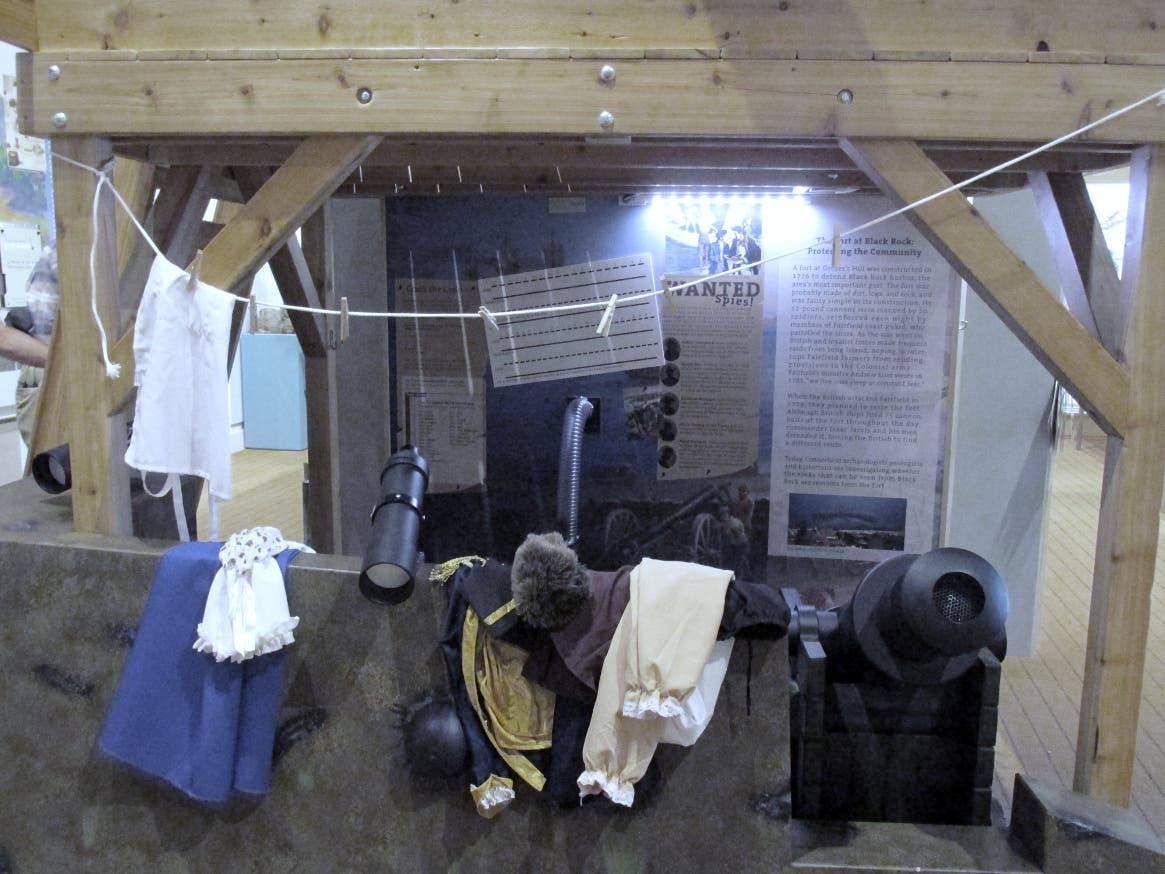
Anna Smith Strong, a spy in Setauket, Long Island, was recruited by Major Tallmadge. She signaled another spy, Caleb Brewster, to pick up information when she hung her laundry out to dry. “The black petticoat signaled that a message was ready to be picked up and the handkerchiefs would relay where the message was hidden. Six coves along the shore of Long Island were designated as dead drop locations. The number of handkerchiefs hung corresponded to one of the six coves. This messaging system was never broken throughout the entire Revolution and no one in the Culper Ring was ever caught.” As a woman, Anna was severely underestimated. Doing laundry was a normal chore for women so no one suspected that she was doing anything out of the ordinary.” [https://www.womenshistory.org/articles/revolutionary-spies]
Caleb Brewster was also from Setauket, Long Island but, in 1776 when the British occupied his home town, he fled to Black Rock Harbor in Fairfield, Connecticut. Black Rock harbor was a shipbuilding seaport and became the base for Brewster. At Anna Strong’s signal, Brewster would cross Long Island Sound in a whale boat, pick up the letters and return to Black Rock. He would than pass the letters to Sheldon’s Light Dragoons courier who would ride to Washington’s headquarters cutting delivery to one week.
Everyday men and women willingly sacrificed to save others by putting their lives on the line. Almost all of the stories involve men, but there are also countless extraordinary and brave women who risked their lives to advance their cause during the revolution.
The DAR recognizes as Patriots not only soldiers, but anyone who contributed to the cause of American freedom.
The DAR is a non-profit women’s service organization dedicated to historic preservation, education and patriotism. Any woman over 18 who can prove lineal descent to an ancestor who served in the American Revolution is a prospective member. For more information on the DAR visit http://www.sarahriggshumphreysDAR.org
The National Society of the Daughters of the American Revolution asks everyone to celebrate the 250th Birthday of the United States of America and the Patriots that achieved American Independence. For more information visit https://honoringourpatriots.dar.org/
[1] Stamford Daily Advocate, Sat. Jul 3, 1897