Neighbor News
Women – Unsung Heroes of the American Revolution
March is Women's History Month and this article honors the women who quietly helped fight for freedom.
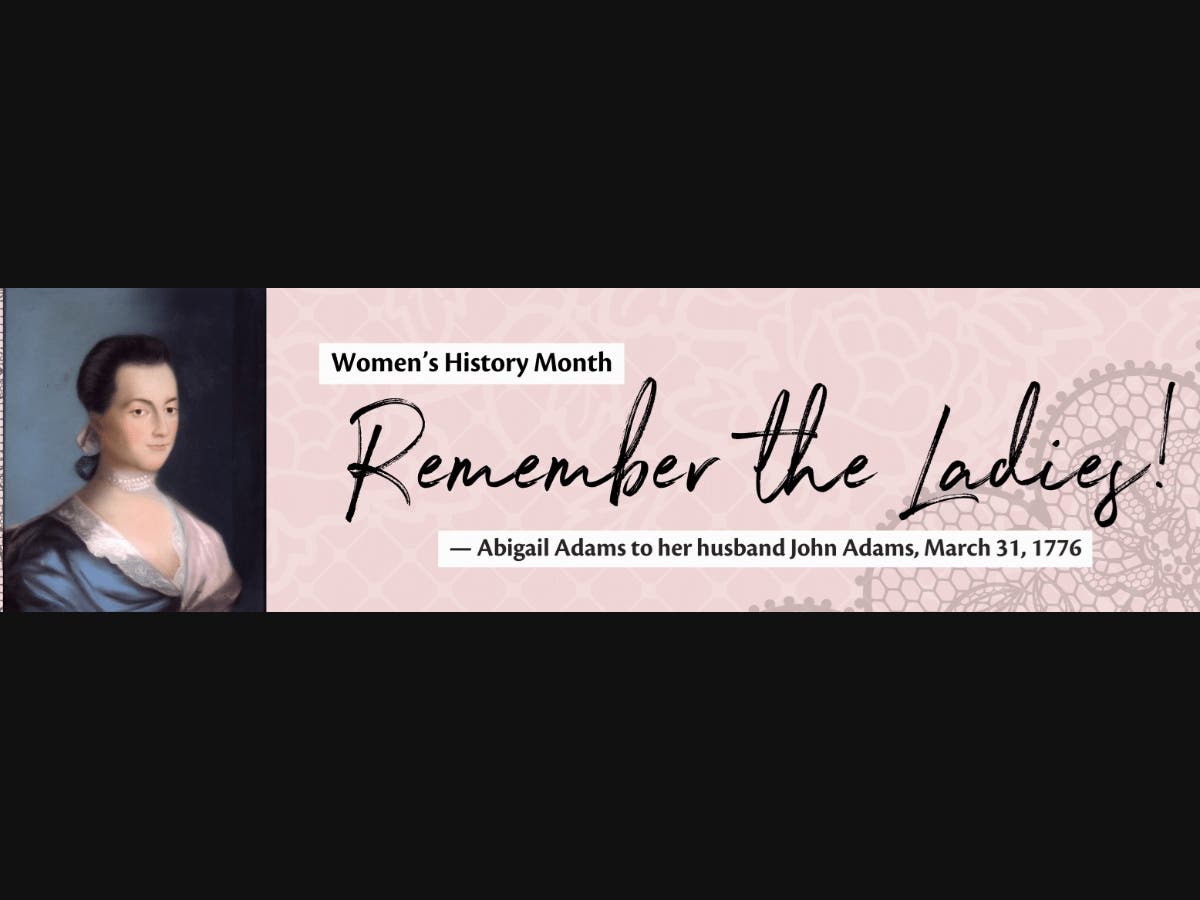

The Sarah Riggs Humphreys-Mary Silliman Chapter of the National Society Daughters of the American Revolution celebrates America 250! In anticipation of the July 4, 2026, 250th Anniversary of the signing of the Declaration of Independence by the 13 Colonies, the DAR wishes to remind everyone of the sacrifices and heroism of everyday men and women who fought for our freedoms that we enjoy today.
March is Women’s History Month and this article honors the women who quietly helped fight for freedom. These women are the unsung heroes who cooked and baked for the soldiers guarding the coast in Fairfield; defended their homesteads and pursued the British troops as they burnt homes and meetings houses along the coast-line. We also must not forget the women who were spies in the Culper Spy Ring along with the many women who organized boycotts of British goods and sewed clothing for the troops. And, similar to Abigail Adams, these women kept their homes and farms safe to ensure money was coming in to sustain the farms while their husbands were away in the Continental Army.
Connecticut was known as the Provision State during the war. Sarah Silliman Hubbell stated that her mother, Christian Silliman, baked for the soldiers at Black Rock Battery, and the artillery officers also boarded at the Silliman house (see Stephen Lyon, Revolutionary War Pension W20547). Most likely, at every guard station along the Long Island coast, wives, daughters, and sisters cooked and baked to feed the soldiers guarding the coast. Other women provided blankets and sewed clothing for the soldiers at home and for the soldiers in the Continental Line. Some names we know – Sarah Seeley, Elizabeth Morehouse, Abigail Wilson – other names are lost in time.
Find out what's happening in Shelton-Derbyfor free with the latest updates from Patch.
When the British invaded the coast in Fairfield on July 7, 1779 William Wheeler, wrote in his journal, “At 7 in the morning, the fog clearing off, the enemy's fleet, just returned from plundering New Haven, appeared. Three guns announced an alarm—everyone busy in moving or throwing their things out of doors. About 11 o'clock 1,600 regular troops landed at the foot of the bar on town beach. Isaac Jarvis commanded the battery at the point of Grover's Hill, Black Rock, who, as soon as the British turned to go up the beach lane, fired a 12-pounder with ball & grape- shot, & kept it going till it was so hot you could hardly bear your hand thereon. As they approached the parade, a field piece let go a ball & grapes through them….”
Much of Fairfield was burned and several townspeople were killed. Residents were compensated for their loss sustained in Fairfield based on 1774 value (Hinman, R. R. A historical collection from official records, files, &c., of the part sustained by Connecticut, during the war of the revolution pub 1842 p616-621). Among the widows were Eunice Morehouse and Sarah Andrews in the Parish of Greens Farm; widow of Seth Osborn, widow Elizabeth Sturges, widow Cutler, widow Abigail Hubbell, widow of Col. Gold, widow Rebecca Jennings, widow Smith, widow Hannah Taylor, and widow Mary Penfield in the Old Society of Fairfield.
Find out what's happening in Shelton-Derbyfor free with the latest updates from Patch.
Eunice Burr, wife of Thaddeus Burr, Esq., thought she would be safe because over the years she was “well acquainted with a number of the British officers, and ever finding them of a polite, humane disposition, and observing the good order they kept up among their soldiers, I was induced, once to act against all the entreaties of my friends, risk my life, and all that was dear to me, in hopes to save an ancient, pleasant mansion house….” She found them to be “…a pack of the most barbarous ruffians [who] came rushing into the house, and repeatedly accosted me with, You damn’d rebel, where is your husband…; at the same time stripping me of my buckles, tearing down the curtains of my bed … taking what they could find….” Jane Bulkley, wife of Andrew Bulkley, said “…a number of officers and men came to my house, and received such refreshments as they required…; and at their request I went and milked my cow, and gave them the milk; whereupon the cow was led away by them, and killed….They plundered my house, stripped my buckles out of my shoes, and abused me with insulting language….” These are just a few of the depositions by women who tried to save their families and possessions.
The DAR recognizes as Patriots not only soldiers, but anyone who contributed to the cause of American freedom. While some of the women lost their husbands in service to their country, others lost their homes and possessions and can be considered for Patriotic Service.
The DAR is a non-profit women’s service organization dedicated to historic preservation, education and patriotism. Any woman over 18 who can prove lineal descent to an ancestor who served in the American Revolution is a prospective member. For more information on the DAR visit http://www.sarahriggshumphreysDAR.org
The National Society of the Daughters of the American Revolution asks everyone to celebrate the 250th Birthday of the United States of America and the Patriots that achieved American Independence. For more information visit https://honoringourpatriots.dar.org/