Neighbor News
Not Their Paperwork: A Survivor’s Fight Against a Broken System
A brain injury made me "just paperwork" to the system. This is my fight to be heard—and why we must demand justice for all survivors.

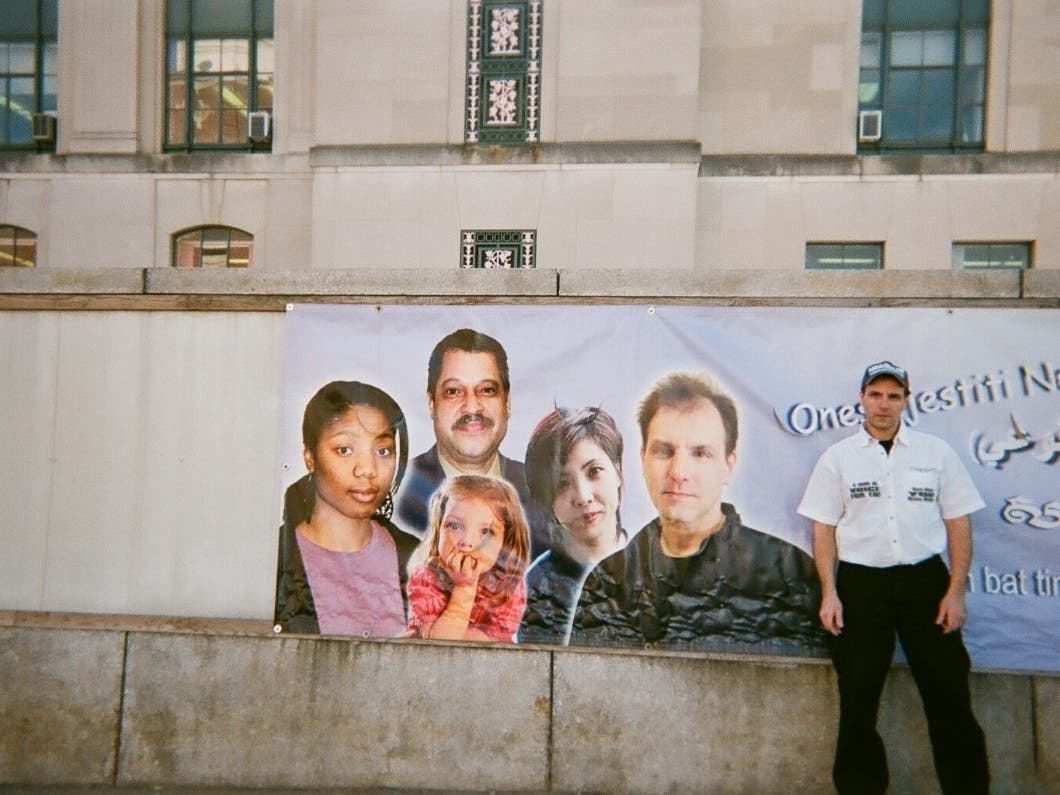
Laying it all on the line—no filters, no holding back. This is my truth, my story, and everything I’ve fought to say. If you want to know what it’s really like to survive, to speak up, and to challenge the system, here it is—raw and real.
by Craig Sears
This is my story. Before I was a file or a case number, I was a person with a future. Then, a motorcycle accident left me with a traumatic brain injury—and suddenly, I became paperwork. But I’m a survivor, and I’m fighting back against a system that wants people like me to disappear.
Find out what's happening in Stamfordfor free with the latest updates from Patch.
Quick Overview
- Part 1: I talk about how the system fails people with brain injuries and why we need genuine support—not just empty promises. I want people to see the strength it takes for survivors to get through each day and how much we rely on each other.
- Part 2: Building on these challenges, I share what it’s really like to confront ongoing legal abuse and how the system protects itself rather than helping. I want everyone to know it’s time to push for change.
Part 1: A System That Doesn’t Care
Find out what's happening in Stamfordfor free with the latest updates from Patch.
People with brain injuries are often let down by the very organizations that are supposed to help them. I know because it happened to me. My life changed forever after a motorcycle accident left me with a traumatic brain injury (TBI). The accident was terrible enough, but what came after was much worse. The system was indifferent, doctors misdiagnosed me, and the people in charge cared more about protecting themselves than helping me.
When I was 20, I had what most people want: a good job, a loving family, friends, a girlfriend, and my car and motorcycle. Then, in a split second, it was all gone. I woke up strapped to a hospital bed, my life broken. Suddenly, I wasn’t seen as a person anymore—I was just a problem for the system to manage. Most of the people who once promised to be there for me disappeared. The loneliness was crushing. Sometimes, it felt like the silence would finish me.
If it hadn’t been for my mother, I don’t know if I’d have made it. She fought for answers when I couldn’t. My family stood by her and by me, even when I was ready to give up. Their love kept me going. I owe them everything.
But not everyone has that kind of support. I’ve met many survivors whose families turned away, leaving them to deal with a broken system alone. That’s when you realize the truth: the system doesn’t work. Survivors need each other and the people who love them. It’s our networks—not the institutions—that keep us going. In fact, a study published in the journal Brain Injury (2013) found that individuals with traumatic brain injuries who had strong family and peer support reported significantly better emotional well-being and quality of life than those who were isolated or relied solely on institutional care. If you have a loved one with a brain injury, stick by them. Your support means more than you can imagine. When systems only protect themselves, we have to protect each other.
A brain injury doesn’t just mess up your body—it tears your entire world apart. You lose your old life and the people you trusted. Suddenly, you’re just trying to figure out who you are, while the system sees you as a burden, just another file to ignore. Survivors are misdiagnosed, mislabeled, and abandoned by the very groups meant to help them. After my accident, my body was patched up, but no one noticed the actual injury in my brain. Instead of rehab, I was locked in a mental ward for nine months—called “crazy,” drugged up, and ignored. I ran away when I could, desperate to prove I was still alive. No one listened.
The CDC calls TBI “the silent epidemic” because it’s everywhere, but most people don’t see it. Dr. Brent Masel, former National Medical Director of the Brain Injury Association of America, put it simply: “We have a public health crisis on our hands.” (BIAA, 2010)
This mislabeling isn’t rare—it’s a pattern. Repeatedly, brain injury survivors are placed in the wrong facilities, denied the help they need, and left to fend for themselves.
A study led by Dr. Ann McKee, a renowned neuropathologist at Boston University, found that brain injuries—especially those involving repeated trauma—are frequently misdiagnosed as mental illness or behavioral disorders. Her research, published in journals such as Brain and JAMA Neurology, highlights how symptoms of traumatic brain injury (TBI) can mimic or be mistaken for psychiatric conditions like depression, personality changes, or psychosis.
After my accident, it took months for anyone to realize I had a TBI. Instead of rehab, I was locked away and labeled “mentally ill”—an easy way for the state to save money and stick me in places that couldn’t help. I fought to get out, but when I did, I was alone, struggling to relearn basic skills. I was arrested and locked up again and again for things caused by my brain injury. Abuse and neglect followed me everywhere: attack dogs, restraints, forced meds, solitary cells. I ended up in state psychiatric hospitals; I should never have been there. Living with a brain injury is not the same as living with a mental illness, but too often the system treats us as if it is.
Shutting down places like Fairfield Hills Hospital was supposed to mean better, more community-focused care. Experts in disability rights and brain injury rehabilitation argue that actual progress requires not just closing old institutions but also developing specialized services and staff trained in brain injury. In reality, people with brain injuries were just sent to other places that weren’t built for us—nursing homes, psychiatric hospitals, or group homes lacking specialized knowledge. There was no proper treatment and no real escape. That’s why I joined a lawsuit that resulted in the Acquired Brain Injury (ABI) Waiver. But the state still had all the power. Closing hospitals didn’t free us—it just moved us around, often to prisons like Garner Correctional Institution.
In psych wards and jails, I was stripped, restrained, medicated against my will, and isolated. These places have become dumping grounds for people with disabilities. For example, according to the U.S. Department of Justice, people with disabilities are vastly overrepresented in state psychiatric hospitals and correctional facilities—one study found that up to 50% of inmates in certain prisons have a disability, many of them with undiagnosed brain injuries. The state holds all the power, and we pay the price.
The system pushes us into “programs” rather than facing the facts. If you take a mental health plea, you’re trapped; if you refuse, you’re still denied care. Even now, there’s no way out. A brain injury isn’t a mental illness, but there’s no proper care, no genuine support. The system is set up to keep us down.
Statistics reveal a troubling reality: many people with disabilities—including those with traumatic brain injuries (TBI)—are often labeled as “mental health” cases just to access basic services or support. According to a 2017 report from the National Association of State Mental Health Program Directors, 60% of people with TBI are misdiagnosed with psychiatric disorders, which leads to inappropriate treatment and placement. This mislabeling puts them at greater risk of being institutionalized and trapped in a system that doesn’t meet their actual needs.
For instance, research shows that up to 40% of people with disabilities in certain state-run programs face major barriers, such as
- a lack of oversight,
- complaint systems that don’t work,
- outright discrimination,
- and even retaliation when they try to speak up.
The result is a cycle where staff, police, and judges—many of whom aren’t properly trained in brain injury—keep repeating the same mistakes. These aren’t just statistics or paperwork issues; they represent daily, lived struggles for people like me. The system’s failures have real and lasting consequences.
Community services won’t fix anything if they just repeat the same old failures. People deserve dignity and respect. Real justice means you’re never forced into an institution just for having a brain injury. We need independent oversight, proper ways to file complaints, enforced disability rights, protection from retaliation, comprehensive staff training, survivor involvement in all reforms, and ongoing legal advocacy.
If you’re a survivor or support one, act now: Document everything you experience or witness.
- Join local advocacy groups or survivor networks.
- Get copies of your records and keep a timeline of any incidents, decisions, or conversations.
- Speak up by filing complaints with the right agencies.
Even small steps can help protect your rights and push for the changes we need.
Part 2: When Enough is Enough
When people in power decide you don’t matter, the system lets them get away with it. I know—I’ve lived it, more than once—thanks to Detective Jeffrey A. Holtz, the Bridgeport Police Detective Bureau, and Judge McShane at Bridgeport Superior Court in Connecticut.
It all started with a bogus traffic stop. Detective Holtz used a stock photo of a car that wasn’t mine—no license plate, no connection to me. He invented a victim out of thin air and edited audio recordings to fit his story. The arrest report said I committed a crime on November 8, but I could prove I wasn’t even in Bridgeport that day.
Holtz’s report claimed that over a month later, on December 20th, I was pulled over on the other side of town from where the supposed crime happened. That’s when this whole thing started. The timeline and evidence proved their story was implausible from the start.
With my attorney, I went through every file and piece of evidence. The differences were obvious: the car in the photo wasn’t mine; the audio was doctored, and the paperwork described someone else. Still, the court ignored all this and kept the case going. I filed motion after motion for an investigation into the faked recordings—nothing changed.
The so-called interview with the “witness” was just more proof of misconduct and evidence tampering. Holtz wasn’t looking for the truth—he was covering himself. After years of delays and different judges, Judge McShane finally took over, but he ignored the growing evidence that this case was built on lies.
When you’re in the system—especially with a disability—your rights disappear. You’re stuck with public defenders who just go through the motions. The first time, my lawyer was Thomas J. Paoletta. I’d already proven my innocence to him, but he pushed me to take a plea deal. No way. When I refused, I was sent for a psychiatric examination, which cleared me. Paoletta’s office dropped the case, and I got a new lawyer, Peter Stark. About a year later, the case was marked “nolle prosequi”—meaning it could be reopened any time.
And then it happened all over again. Years later, it was the same detective, the same police department, and the same fake evidence. This time, I hired a private lawyer named Kevin Black. I actually had to file a complaint against him because he wasn’t really defending me. After I filed the complaint, he got the case closed—but it still wasn’t truly resolved.
The third time, it was just like the first: the same psychiatric exam, the same courthouse, the same result. Once again, Peter Stark was assigned as my lawyer. Every time, even when the evidence clearly showed I was innocent, the case dragged on, was marked “nolle prosequi,” or just hung over my head—never fully settled, always a threat. It felt like my lawyers barely did anything, while the system kept protecting itself.
For over three years, I demanded that the supposed victim and witnesses show up in court with real ID. They never did. Judge McShane eventually set a trial date, but when the child advocate couldn’t locate any actual victim or witnesses, the case was marked “nolle prosequi”—not dismissed, just left hanging over me in case they decide to bring it up again. That’s how the system covers up police misconduct.
Even with all the evidence on my side—my documents, therapy receipts, and witness statements—the authorities sided with Holtz and the Detective Bureau. This is the emotional toll of constant legal battles and being gaslit by the system—on top of the trauma from my brain injury. My experiences with Detective Holtz, lawyers Paoletta, Black, and Stark, and Judge McShane show just how deep the cover-ups and self-protection go.
If you care for someone with a brain injury or disability, know this: the system can erase you in a heartbeat. They’ll ignore evidence, silence your voice, and grind you down until you give up. I experienced it. But I won’t let them erase me. I am not their paperwork or their lies. I’m still here—naming names, demanding justice, and refusing to back down.
They count on us staying quiet. I won’t be silent. I’ll keep calling out Detective Jeffrey Holtz, Judge McShane, and every official involved. Survivors like me deserve better, and no one should have to go through this alone. Together, we can demand accountability and actual change.
Turning Pain into Action
I did everything I could to prove my innocence. But how do you fight back when the “victim” and “witnesses” don’t even exist, and the system refuses to listen, even when you show them the truth?
That’s why I turned my pain into action. I joined the Connecticut acquired brain injury (ABI) class action lawsuit and helped create the ABI waiver, which actually made a difference for people like me. By sharing my story and this well-documented program, I’ve been able to help other survivors feel less alone—and to prove, on paper and in court, what really goes on.
I am not their paperwork. I am not their false accuser. I am a human being. I matter, no matter how hard they tried to erase me.
Support and What You Can Do
- Survivors can reach out to groups like the Brain Injury Association of America (BIAA), BrainLine, and online peer support forums.
- Always document what happens and keep evidence. Know your rights under the Americans with Disabilities Act (ADA) and ask for accommodations.
- For legal help, contact the ADA National Network, DREDF, Legal Aid, or the National Disability Rights Network (NDRN).
- Take care of yourself: set boundaries, go to therapy if you can, and connect with others who understand.
- Family and friends: listen, help navigate the system, and stand by your loved one.
Final Word
To all survivors: You’re not alone. The system might not protect us, but we can protect each other. I’ll keep speaking out, demanding justice, and fighting for a world where we’re all treated with dignity and hope.
This is my story, but it’s not just mine. It’s for everyone who’s ever been erased by the system.
We are not their paperwork. We are people. And our voices matter.