Neighbor News
Should YouSupplement w Vitamin D during Corona?
Dr.Brian McKay of Core Health Darien shares information about Vitamin D supplements. If you have any questions call 203-656-3636
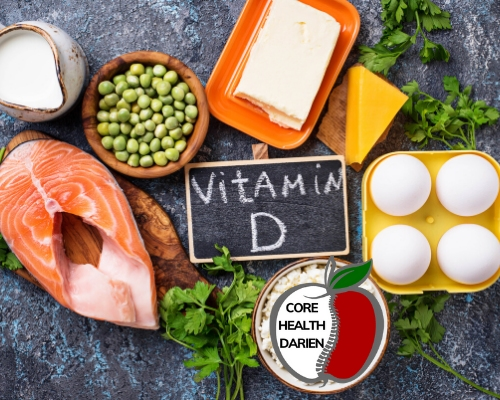
The importance of sufficient vitamin D for bone health has a long history. I would like to share with you information to help you decide if vitamin D supplementation is right for you, especially during the Covid-19 pandemic. Read and you decide. The information can not be all backed up by science. Some of it comes from reputable sources and some is conjecture. I aimed to review the clinical evidence that vitamin D has a role in preventing or treating COVID-19. Here is what I found. This is meant to inform, always check with your doctor before taking any supplements. Supplements do not cure diseases, they can help the body deal with a disease. Here is what I would like to share:
Vitamin D is an important factor in maintaining bone health to avoid osteoporosis.
Vitamin D has been shown to greatly reduce the risk of many types of cancer and increase survival. Adequate vitamin D may eliminate some depressive symptoms.
It is established that vitamin D is beneficial for bone health and our studies demonstrate the importance of vitamin D for athletic performance within UK university students too.
Vitamin D is also important to the cells that produce the hormone insulin -- which regulates blood sugar -- and to the body's sensitivity to insulin.
50% to 90% of vitamin D is absorbed through the skin via sunlight while the rest comes from the diet.
Vitamin D is important for bone metabolism, and regulates calcium concentrations in the blood.
Since vitamin D is absorbed in the small intestine, a leaky and inflamed GI tract which is in people with low thyroid function reduces the absorption of vitamin Vitamin D is a potent immune modifying micronutrient and if vitamin D status is sufficient, it could benefit vulnerable adults, in particular, those 70+ years and older who are cocooning during the COVID-19 outbreak, concluded the report.
The current recommended dietary allowance for vitamin D is 600 IU daily for people from 1 to 70 years old and 800 IU for people over 70.
Vitamin D is important in bone health, but recent research also points out its essential role in extraskeletal functions, including skeletal muscle growth, immune and cardiopulmonary functions, and inflammatory modulation, which influence athletic performance.
Find out what's happening in Stamfordfor free with the latest updates from Patch.
Vitamin D has the unique property of being synthesized in the skin from exposure to sunlight. Some food sources of vitamin D may include- egg yolks, mushroom, salmon, cow milk, soy milk, cereal, oatmeal, orange juice, and cod liver oil.
Vitamin D has been proven to reduce the risk of getting the common cold. In 2017, a large analysis of prospective clinical trials showed that taking vitamin D reduces the odds of developing a respiratory infection by approximately 42% in people with low baseline levels of Vitamin D
Adequate Vitamin D may potentially provide some modest protection for vulnerable populations. Whether from diet or supplementation, having adequate vitamin D is important, especially for those at the highest risk of COVID-19.
Vitamin D may not prevent the virus but could help the host and how they deal with the virus. Thus supplementation of vitamin D is more important as we age. There is a very good reason why vitamin D have linked with cov19
There is data to suggest that vitamin D is protective against respiratory infection. Vitamin D may improve the odds of survival from COVID-19.
Science supports the possibility although not the proof that Vitamin D may strengthen the immune system, particularly of people whose Vitamin D levels are low. It has both anti-inflammatory and immunoregulatory properties and is crucial for the activation of immune system defenses.
Find out what's happening in Stamfordfor free with the latest updates from Patch.
Vitamin D is known to enhance the function of immune cells, including T-cells and macrophages, that protect your body against pathogens.
Findings suggest that vitamin D deficiency may partly explain the geographic variations in the reported case fatality rate of COVID-19, implying that supplementation with vitamin D may reduce the mortality from this pandemic.
Significantly, vitamin D is also thought to play an important role in the body's immune response, according to Bruce Troen, Professor and Chief, Division of Geriatrics and Palliative Medicine, from the University at Buffalo, New York.
A higher level of vitamin D is linked to a reduction in IL-6 levels, the latter being a proinflammatory cytokine. Vitamin D is an immunomodulator, acting through the innate immune cells called dendritic cells as well as the adaptive T cells.
As we age, our ability to make vitamin D is reduced by 75%.
Vitamin D is one of the most useful nutritional tools we have at our disposal during the COVID-19 pandemic.
Vitamin D can be stored in the body in fat cells for an average of three months.
During periods of sunlight, vitamin D is stored in fat and then released when sunlight is gone suggesting that adequate levels of Vitamin D promotes good sleep.
If you read this much you are probably falling asleep! Hope you found it interesting.Dr.Brian McKay Core Health Darien