Politics & Government
Stamford To Consider Ban On Non-Organic Pesticides
Stamford will consider banning the use of non-organic pesticides on city property.


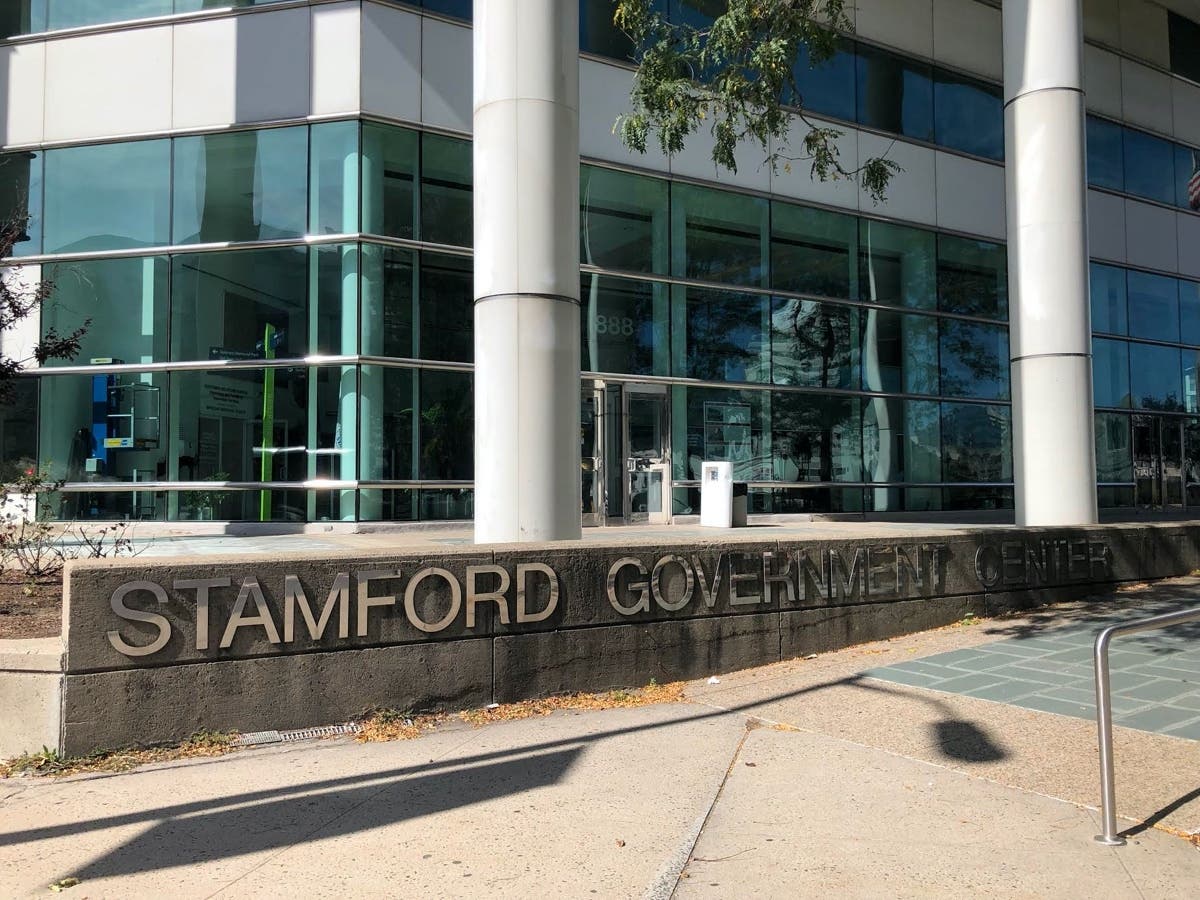
STAMFORD, CT — Stamford will consider banning the use of non-organic pesticides on city property after the Operations Committee unanimously voted last week to send an ordinance to the Board of Representatives for final adoption. The board is scheduled to discuss the ordinance on Sept. 8.
During last week's Operations Committee meeting, Mayor David Martin advocated for the ordinance, which would require the use of organic products on city property "including but not limited to parks, streets, sidewalks, grassy areas adjacent to city streets and sidewalks, waters, waterways, fields, athletic fields, beaches, and open spaces."
According to the proposed ordinance, “Permanently Banned Products” means any product, material, substance, pesticide, fungicide, insecticide, herbicide, rodenticide, or fertilizer that contains Glyphosate, 2,4-D, 1,3-D, Neonicotinoids, or Chlorpyrifos.
Find out what's happening in Stamfordfor free with the latest updates from Patch.
With regards to schools, the proposed ordinance states "organic products shall be used in schools and on school grounds, unless a Prohibited Product is expressly permitted to be used at those locations by law."
City attorney Dana Lee said the Board of Education follows state guidelines when it comes to using pesticides.
Find out what's happening in Stamfordfor free with the latest updates from Patch.
"This is a good step forward, I believe, for the city of Stamford. There are some uncertainties, but I believe we can do this. I believe we should do this," Martin told the Operations Committee last week. "There will be some cost involved. I believe it is certainly appropriate to make those costs with this ordinance and basically set forth a policy. I will be honest, we may need to tune this up a little bit after we get some experience. It may be that we need a year to figure it out. But I believe it's time to move ahead and therefore I'm very supportive of this."
If approved by the Board of Reps, the ordinance would become effective July 1, 2022.
Several people spoke in favor of the ordinance during the public hearing portion of last week's Operations Committee meeting.
Melanie Hollas, Stamford resident and the Commissioner of Parks & Recreation, urged the board to support the ban on non-organic pesticides. Hollas is also co-chair of Pollinator Pathways in Stamford.
"By incorporating this ordinance, the city of Stamford is taking an opportunity to address climate change, the health of all its residents, water quality affecting Long Island Sound, and the pollinators we all so heavily rely on including bees, butterflies, birds, bats and others," Hollas said.
Leigh Shemitz, President of SoundWaters, said the ordinance would go a long way in protecting the Long Island Sound. She noted that chemicals move downstream, they bioaccumulate and impact human life and wildlife, and cause unintended consequences.
Following the public hearing, City Rep. Dennis Mahoney (R-20), asked Martin if the city could accomplish the goal of eliminating non-organic pesticides without an ordinance. He also wondered why a ban hasn't been implemented already.
Martin said the city has been busy tackling other issues. He noted that an ordinance sends a different message especially during the budget process.
"It's one thing to go to the Board of Finance and say this is an ordinance that mandates the city behaves in a certain way and therefore we need $5,000, $50,000, whatever it is, and that's a very different point of view than going to the Board of Finance at budget time and saying well we'd like to spend $62,000 on improving our fields. That's a whole different thing," Martin said.
With Martin running for re-election in November, he said he's "prepared to go forward" with an ordinance now.
"I don't know that my successor is," Martin said. "By setting it as a policy... it establishes it as a priority not only for this mayor but for any mayor that might follow."
City Rep. J.R. McMullen (R-18) urged the Operations Committee to add an amendment to the ordinance that would require the city to issue a report outlining an analysis of the additional cost or savings and the impact on available field time associated with the ban of the use of non-organic pesticides.
Martin said understanding the true cost is difficult to do, and including an amendment requiring such an analysis would use more resources and raise more questions.
"I don't think [an amendment is] necessarily or helpful, but I give you my word, my pledge, that we will try and estimate what the impact has been from doing this. I think it's very hard to understand the benefits of this ordinance. They're not as easily measured, and as important as they are, they don't easily fit on an accountant's balance sheet," Martin said.
The ordinance states that the "Director of Operations or their designee shall, on an annual basis, deliver a written report specifying the Organic and non-Organic Products used on City Property."
Get more local news delivered straight to your inbox. Sign up for free Patch newsletters and alerts.