Neighbor News
Infrastructure Decisions Today May Determine Preston’s Economic Future
discussion about expanding water and sewer along Route 2 could influence development, business growth, and Preston's long-term future.

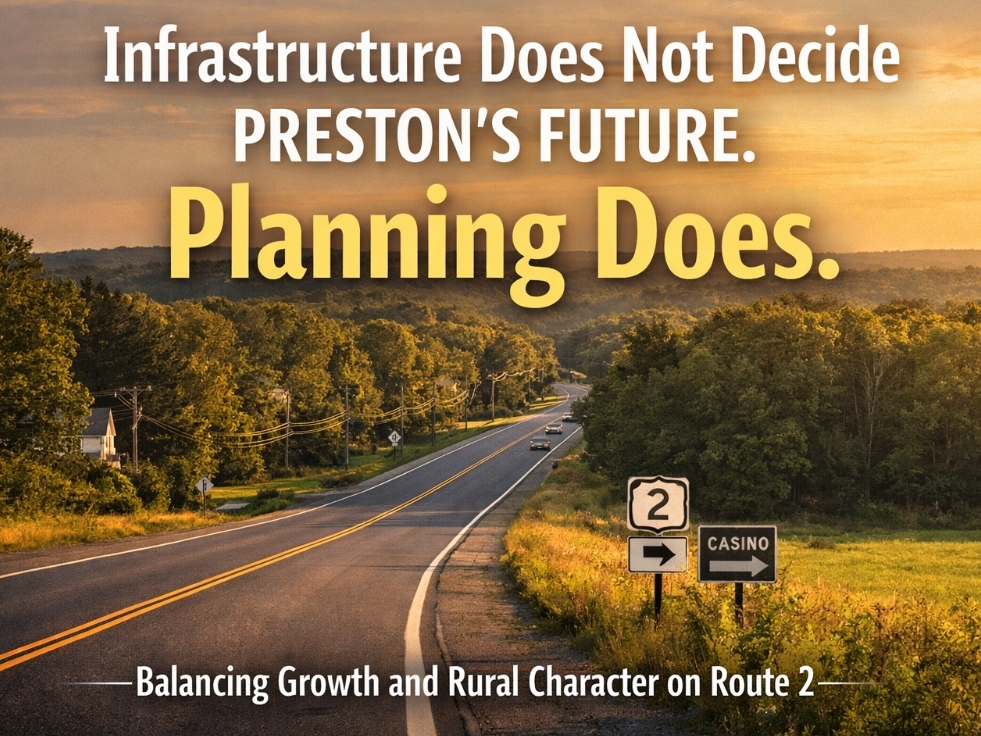
At a recent town meeting in Preston, discussion surrounding the potential expansion of water and sewer infrastructure along the Route 2 corridor raised important questions about the future of the area and how the town may evolve over time.
Infrastructure discussions like these can sometimes feel technical, but they often play a significant role in determining what types of businesses and development opportunities are realistically possible in a community.
Access to public water and sewer is one of the most important factors that determines what types of businesses can operate in a particular location. Many commercial uses—including restaurants, medical offices, manufacturing facilities, and larger employers—require reliable water and sewer connections in order to function.
Find out what's happening in Stonington-Mysticfor free with the latest updates from Patch.
Without these utilities, many commercially zoned properties simply cannot be developed for their intended use.
Conversations like this are exactly the types of discussions we track through our Town Meeting Minute series. Many of the decisions that influence real estate markets and economic development are made quietly at town meetings, planning commissions, and zoning boards. While these discussions may not always make headlines, they often shape the long-term direction of communities across Connecticut and Rhode Island.
Find out what's happening in Stonington-Mysticfor free with the latest updates from Patch.
Readers interested in following these types of local decisions can learn more about the Town Meeting Minute series here:
https://www.seaportre.com/blog/town-meeting-minute-tracking-the-decisions-that-move-markets/
At the same time, many residents understandably want to preserve the character and landscape that make Preston unique. Concerns about growth, traffic, and maintaining the rural feel of the town are all part of an important community conversation.
Infrastructure decisions like this do not automatically determine what development will occur. Instead, they shape what options may be available in the future. Planning decisions, zoning regulations, and community input will ultimately guide how Preston evolves over time.
What discussions like this highlight most clearly is the relationship between infrastructure, long-term planning, and economic opportunity.
Understanding that relationship helps residents, property owners, and local officials make informed decisions about the future of their communities.