Neighbor News
Bankable Career Options in Allied Healthcare Services
Projected to grow by 25% between 2014 and 2024, the U.S. Bureau of Labor Statistics predicts increased employment opportunities in the field
Allied healthcare professionals work collaboratively with doctors, physicians, nurses, dentists, pharmacists, laboratories, and research teams to serve in the identification, evaluation, prevention, and treatment of diseases. 60% of healthcare professionals belong to the allied healthcare sector, working in 80 different allied healthcare professions.
Projected to grow by 25% between 2014 and 2024, the U.S. Bureau of Labor Statistics predicts increased employment opportunities in the field of phlebotomy. Phlebotomy technicians are a vital part of the clinical laboratory team. Health establishments across the country are showcasing an increased need for skilled and certified phlebotomists.
Places of Employment
Find out what's happening in Stratfordfor free with the latest updates from Patch.
Phlebotomists can secure employment at any of the following healthcare establishments:
- Hospitals
- Nursing homes
- Clinical laboratories
- Blood donation centers
- Private clinics
- Ambulatory healthcare services
- Community health centers
- Research institutions
The median annual wage for phlebotomists, as recorded in the year 2014, was $30,670 with individuals earning $14.74 per hour.
Find out what's happening in Stratfordfor free with the latest updates from Patch.
Duties of a Phlebotomist
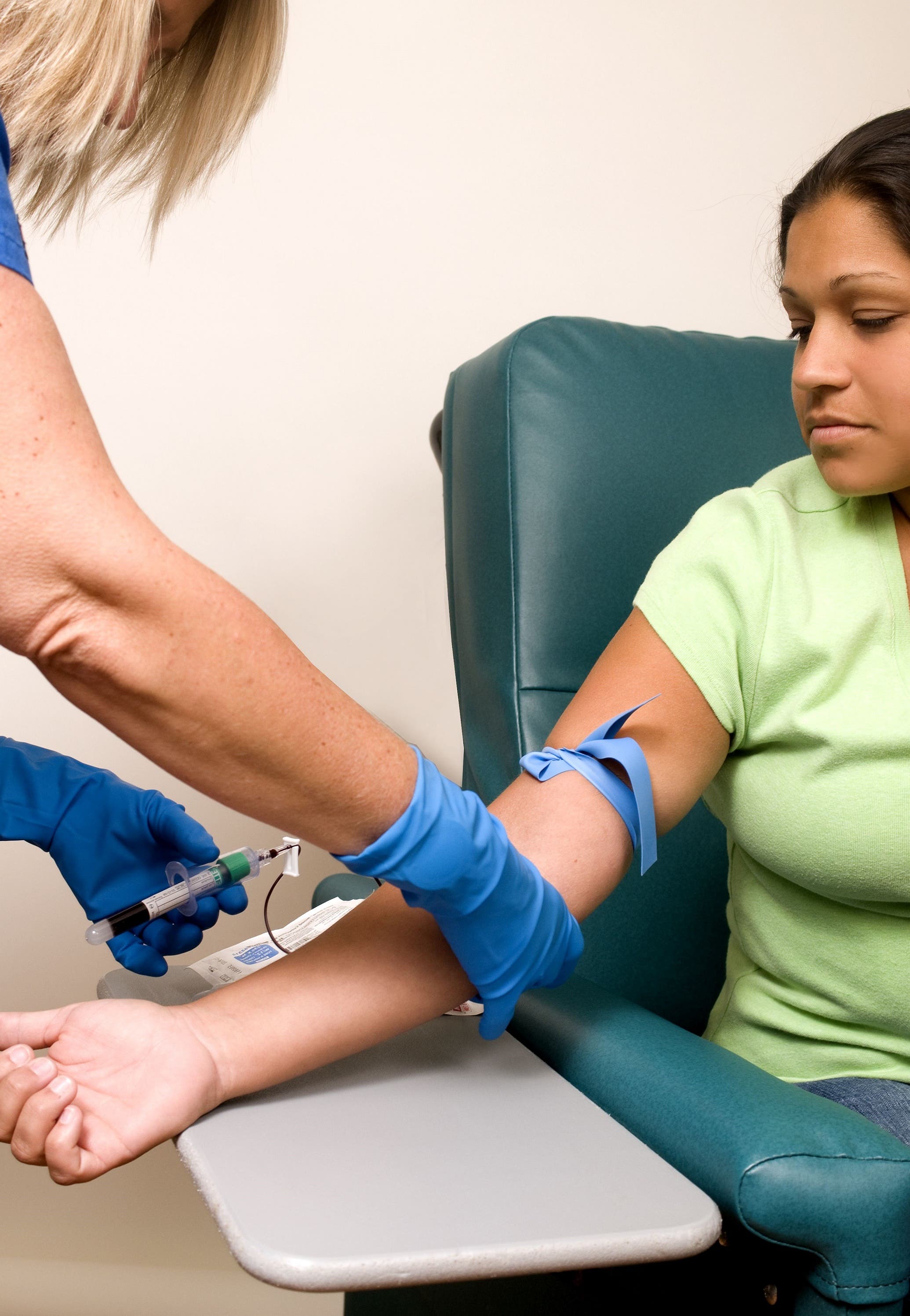
The primary responsibility of a phlebotomist is to perform venipuncture, a process of drawing blood with a needle by making an incision in the patient’s vein. Venipuncture is performed for clinical testing, transfusion, donation, or research purposes. It is important for a phlebotomy technician to ensure the prevention of any infection during venipuncture.
Other duties include:
- Collecting and labeling blood samples
- Verifying patient’s identity
- Entering patient information into the database
- Sterilizing and cleaning devices and instruments such as needles, test tubes, blood vials, etc
- Preparing and sending collected samples of blood, urine and other specimens for testing
- Measuring and recording blood pressure and pulse readings
More to Learn
A phlebotomy technician acquires theoretical and clinical knowledge in the following areas during training:
- Phlebotomy laboratory skills
- Infectious diseases and their prevention
- First aid
- Special collection procedures
- Phlebotomy department management
- Storage, safety, and hygiene procedures
- Phlebotomy equipments
- Phlebotomy complications
- Health law procedures
- Legal issues pertaining to medicine
- Blood and cell composition
- Anatomy
- Physiology
- Blood sampling procedures
Traits That Help
Attention to Detail
Apart from being diligent, a phlebotomist must be sensitive when handling a patient during venipuncture. Utmost care must be taken to ensure the prevention of infection through usage of infected needles, devices, and medical solutions.
High precision of care must be taken when handling contaminated samples and accuracy in segregation of collected samples is inevitable. Mixing of samples could lead to false test results, eventually leading to the provision of wrong medication to patients, which can prove to be lethal. It is imperative to maintain a sterile work environment at all times and label the collected samples with zero error.
Empathy and Compassion
When working with patients, especially the ones suffering from high-risk diseases, every medical professional must exhibit empathy to make the patient comfortable with their medical condition. Patients respond better to procedures and medication when made to feel safe and secure. Engaging patients in warm conversations helps to ease their fear and create a sense of calm and trust. Patience, poise, and compassion helps the technicians go a long way.
Multitasking
Treatments for patients could rely completely on the results of the tests prescribed by the doctors. Phlebotomy technicians must be able to meet the deadlines and prepare reports within the required time. Even under stress and on busy days, the ability to stay diligent and focused must not be lost.
Training and Certification
Phlebotomy technician programs are available at vocational schools, community colleges, and technical schools. These programs take less than a year to conclude, and include classroom and laboratory teaching sessions.
Programs include lessons in anatomy, physiology, and medical terminology, thereby preparing candidates to appear for certifications.
While the phlebotomy technician certificate is not mandatory, it does add value and credit to a technician’s profile and increases his/her job prospects.
Phlebotomy Technician Certification can be obtained from the following certifying bodies:
American Society of Phlebotomy Technicians (ASPT) - One full year of part-time employment or six months of full-time employment as a phlebotomist makes one eligible for the phlebotomy certification offered by the ASPT.
Candidates with nil experience must fulfill the below-mentioned mandatory requirements for certification:
- Completion of phlebotomy training from an accredited institute
- Completion of 100 documented venipunctures
- Completion of 5 successful skin punctures
- Current membership with the ASPT
National Phlebotomy Association (NPA) - NPA mandates candidates to either have at least one year of work experience as a phlebotomist, or they must attend phlebotomy training to qualify for phlebotomy certification granted by the NPA.
The training program attended must compulsorily include:
- Venipuncture techniques
- Clinical internship
- 160-hour classroom training, apart from the clinical internship
American Society for Clinical Pathology (ASCP) - The ASCP considers candidates with no past experience eligible for the phlebotomy certification if they meet the following eligibility criteria:
- Completion of high school graduation or an equivalent degree
- Completion of 40-hour classroom and 120-hour hands-on phlebotomy training
- Successful unaided collection of 100 blood samples
According to the ASCP, the training must include laboratory operations, specimen collection, processing and handling, physiology, and anatomy lessons.
In Summary
With the growing need for healthcare services, allied healthcare professions have become extremely reliable and lucrative career prospects. Individuals who desire to invest less time and funds on education and training in the healthcare sector, can choose to pursue one of the many options allied healthcare provides for a steady career. The employability of healthcare technicians at private and government health establishments is highly encouraging, and more so for certified technicians.