Community Corner
CT Skydiver Wins National Championship, Earns Spot On U.S. Parachute Team
A skydiver from Old Lyme and his team recently won gold at the U.S. Parachute Association National Championships of Wingsuit Flying.


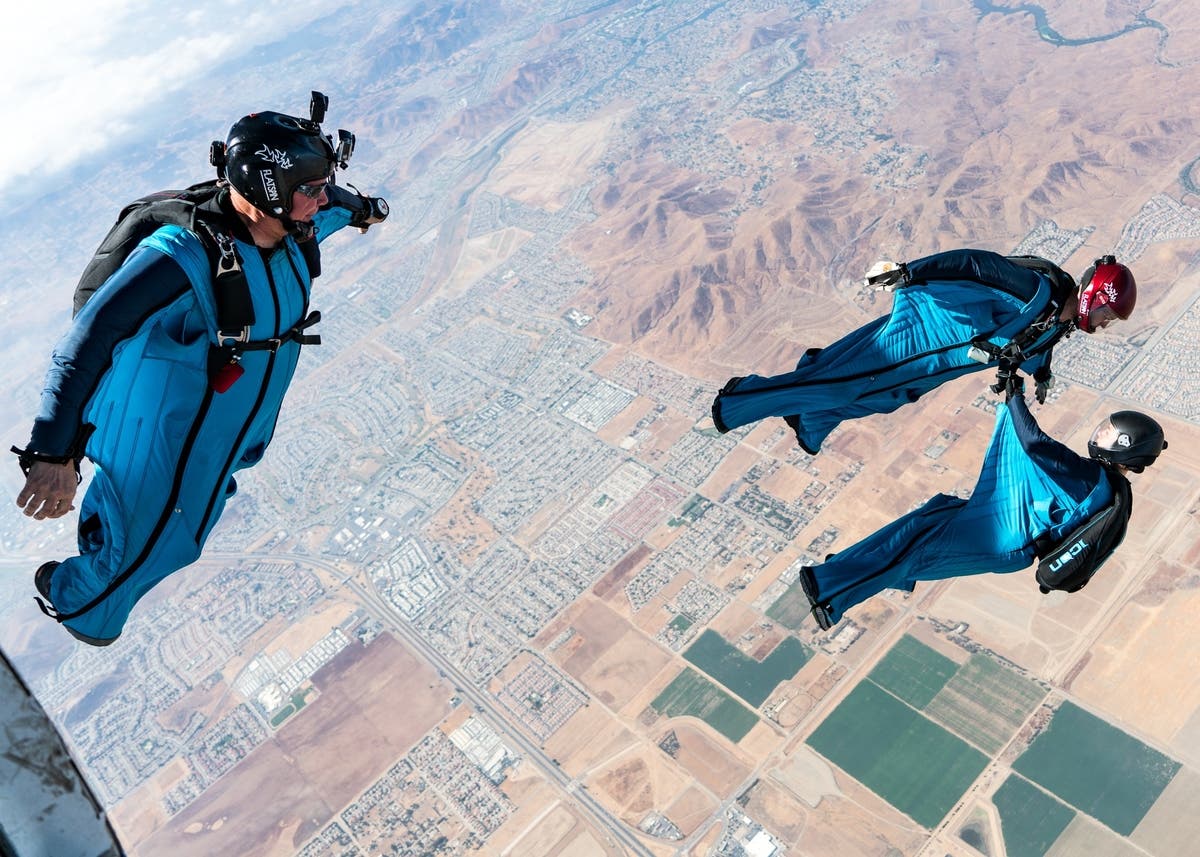

OLD LYME, CT – In order to compete for a national championship title, Old Lyme native Jeff Harrigan, 28, must jump out of an airplane floating miles above the ground. As if that weren't challenging enough, they must then work in sync to perform acrobatics, all while suspended in midair.
Harrigan and his team, Flatspin, are acrobatic wingsuit flyers who recently won gold at the U.S. Parachute Association National Championships of Wingsuit Flying. This marks the second year in a row Harrigan and his team are national champions, after competing last week at Skydive Perris in California, according to a release. (For more information on this and other neighborhood stories, subscribe to Patch to receive daily newsletters and breaking news alerts.)
Their win earns them slots on the prestigious U.S. Parachute Team that will compete at the 2018 World Championships. They will defend their world champion title after winning gold at the World Cup in Florida last year.
Find out what's happening in The Lymesfor free with the latest updates from Patch.
"It’s always an honor to represent your country, even if it’s in a small niche competition like ours," Harrigan said. "I feel lucky to have found a niche that I can fill that allows me the opportunity to represent my country."
According to the United State Parchute Association, wingsuit skydiving involves jumpers wearing technologically advanced suits that are specially designed to increase their horizontal glide across the ground. This allows them to soar through the sky at horizontal speeds approaching 200 mph.
Find out what's happening in The Lymesfor free with the latest updates from Patch.
The acrobatic flying event includes teams of three skydivers, with two performers and a camera flyer, who play a form of aerial tag while gliding across the sky.
Harrigan said the win feels like progress for him and his teammates, as the sport is still relatively new in the country.
"Wingsuit [acrobatics] has only been around for a couple of years in the United States," Harrigan said, "so the discipline as a whole is still on the steep part of the learning curve in terms of the overall skill level. That means we really have to keep pushing ourselves up that curve if we want to stay on top from year to year, because we know the other teams are pushing themselves and we’re all still learning the tricks of this particular trade."
Harrigan said his favorite part about the upcoming world championships is being able to meet world-class wingsuit pilots and fly against them in competition. He also loves getting to fly with them when the competition is over.
"There’s a lot of camaraderie in skydiving," Harrigan said, "even in a competitive environment and in spite of any language barrier."
Though Harrigan works professionally as a quality engineer for Pratt & Whitney, he has also completed in more than 2,000 skydives.
"This has only been an “official” form of competition in the US for three years, and our team has been together since the first year," Harrigan said. "Prior to that, [teammate Sarah Chamberlain] and I had participated in an informal, pick-up-team-style "acro" competition and loved it. And then the year after that was when the USPA announced it was officially a competitive discipline."
Harrigan and his team train at Connecticut Parachutists Inc. in Ellington, which consists of simulated competition.
"We probably did about 50-75 training jumps this year," Harrigan said. "We’ll devote a whole day or a whole weekend at a time to training, and we’ll try to do seven or eight training jumps in a day."
Harrigan said there are seven rounds in the national competition, with each jump making up a round.
Competing teams must perform two different types of jumps: a "compulsory round" consisting of two pre-determined maneuvers selected at random from a pool of 12 different maneuvers and a "free round" consisting of routines made up by each individual team.
"When we’re training, there are a limited number of compulsory maneuvers that we’ll repeat over and over," Harrigan said, "but then we also have to spend a lot of time trying new things to incorporate into our free routine. We don’t have a set schedule for how much we’ll train for each type of jump, but we have a good feel for what we need to work at on a given day."
Harrigan also hopes he and his team might inspire others to keep their eyes open and find something they love to put their all into, regardless of how niche it might seem on the surface.
"My first skydive was somewhat on a whim. I thought it would be a one-time thing," Harrigan said. "I had no idea competitive skydiving existed. I don’t think I even knew what a wingsuit was, much less that I would eventually be on the US Parachute Team for wingsuit acrobatics. So keep an eye out, because you just don’t know what might change your life forever."
Images via USPA/David Wybenga
Get more local news delivered straight to your inbox. Sign up for free Patch newsletters and alerts.