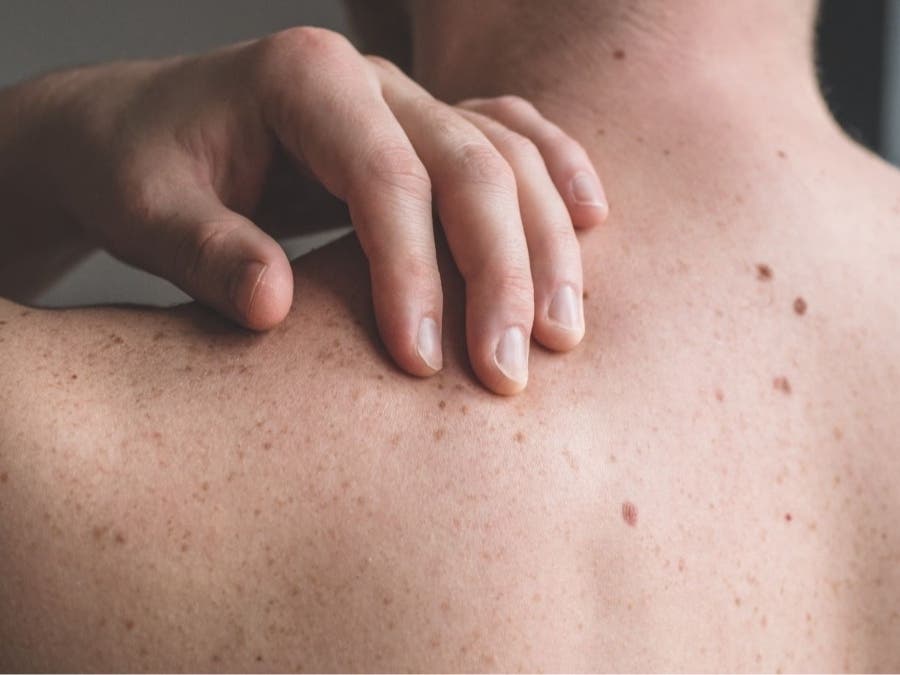
Before you hit the beach, is your skin cancer check-up booked?
It should be, says Dean George, MD, the medical director of cutaneous oncology at Hartford HealthCare Cancer Institute.
“Screenings can find potential problems very early on,” he says. Early detection can help people live longer, which is true not only for skin cancer but also for other kinds of cancer.”
Find out what's happening in Westportfor free with the latest updates from Patch.
Here are the risk factors for skin cancer that you should know.
5 risk factors that make early screening necessary.
Find out what's happening in Westportfor free with the latest updates from Patch.
Regular skin cancer screenings are necessary for everyone of all skin tones.
But, as Dr. George shares, it may be even more essential for you.
- Fair skin: You may have skin that burns easily. If you have blonde or red hair, you also have less melanin that protects the skin’s DNA from damaging UV radiation.
- Lots of moles: The more moles you have on your body, the higher your melanoma risk. Large moles (bigger than the tip of a pencil eraser) or atypical moles also increase this risk.
- Extra sun exposure or use of indoor tanning: Increased UV exposure can lead to skin cancer.
- History of sunburns: Increased DNA damage can amplify your overall risk and lead to skin cancer.
- Family history of skin cancer: A genetic predisposition to certain skin cancers may increase your overall risk.
“Your doctor should examine any changing or symptomatic lesion as soon as possible,” adds Dr. George. “This may include itchiness, raised edges, or open sores that don’t heal or keep coming back.”
What to expect at a skin cancer screening.