Sports
If You're Concussed, Waiting's A Must
The state considers legislation that would guard against student-athletes returning to play too soon after head injuries.
Maybe getting benched isn't so bad after all; riding pine may save your mind.
The Connecticut General Assembly is considering tougher restrictions on students returning to play after head injuries. Connecticut is one of 12 states that may pass such legislation.
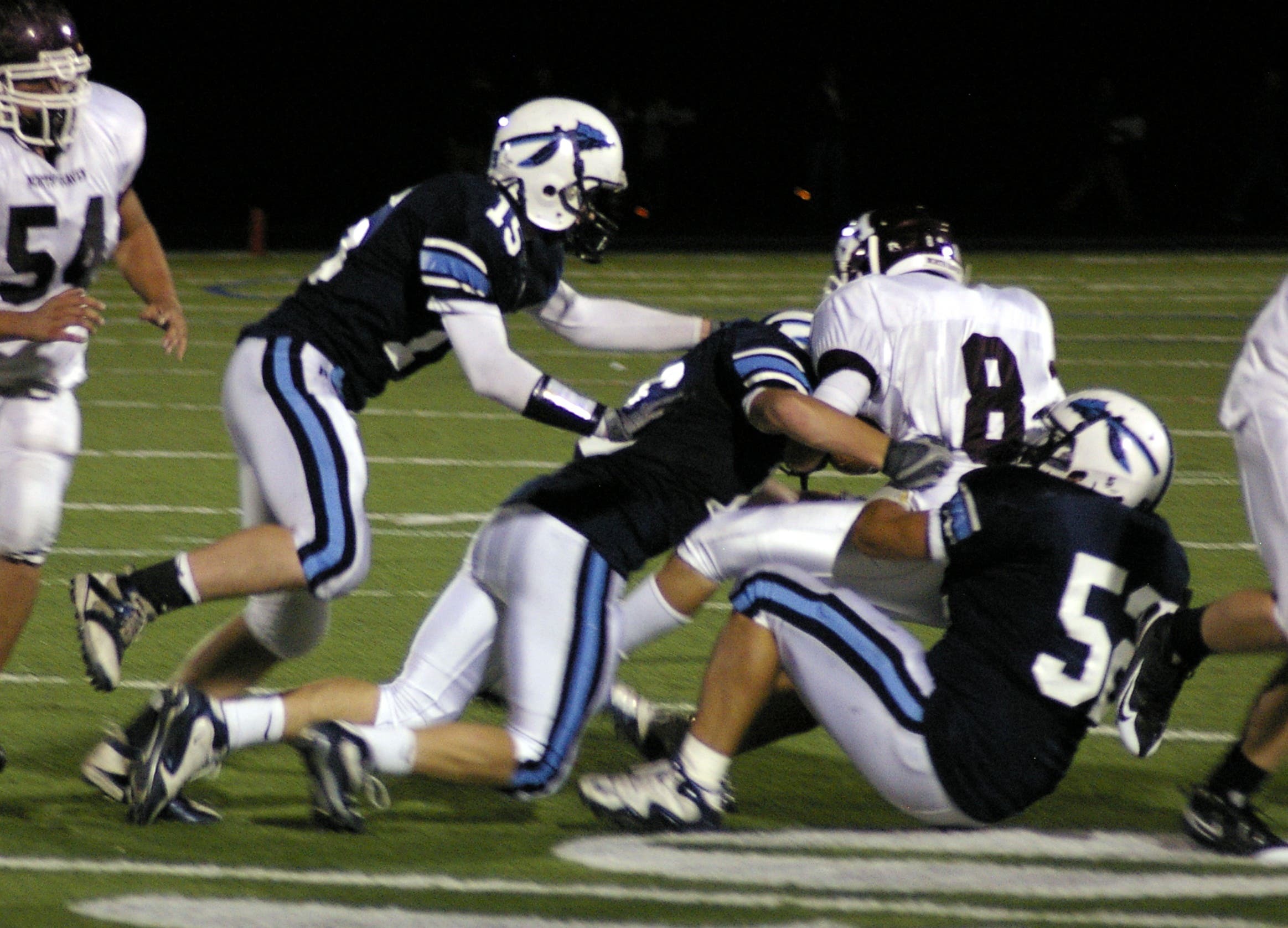
If young student athletes return to the field or rink too soon after a concussion they are at risk for potential brain damage. And although experts agree it's common sense to wait, pressure from coaches, parents, and often the students themselves sometimes impedes that.
Find out what's happening in Wiltonfor free with the latest updates from Patch.
"A kid will fall and get hurt and the coach will ask them how they feel and they'll say 'fine,''' said Christy Hayes, Director of Athletics at Wilton High School. "Very few will say they're hurt, that they have a headache."
Under the proposed legislation, more high school coaches would learn to spot signs of head injuries. Injured athletes would only be allowed back to practice or games after a doctor's approval.
Find out what's happening in Wiltonfor free with the latest updates from Patch.
That's important because younger people have maturing brains and they take longer to recover from concussions than full-grown adults, according to the Brain Injury Association of America. There are about 3.8 million sports and recreation-related concussions in the United States each year.
Hayes said he hopes the legislation passes so that it becomes standard practice across the state to make students wait.
Wilton High School was one of the first schools in Connecticut to make sure any athletes with head injuries waited before competing again. At the start of the season, each athlete must take a computer operated ImPACT test, (Immediate Post-Concussion Assessment and Cognitive Testing). The test measures several functions including reaction time, attention span and working memory.
If a student suffers any kind of injury, the trainers and coaches can compare their post-concussion responses to those baseline results. Students must retake the test again before they can return to play, in addition to being cleared by a doctor.
"I strongly support this," said State Senator Toni Boucher (R-26). " I actually did have a son who had a neck injury as a freshman on a high school football team. He had to have eight weeks of physical therapy and if put back on the field may have had permanent paralysis. I am grateful that they called me to take him home instead. I am highly sensitive to this issue."
Washington State was the first to pass strong legislation for return-to-play. Athletes under 18 with concussion symptoms can't play until written approval from a doctor.
Recently the House of Representatives held a forum on head injuries in the NFL, and the NCAA recently supported the idea of medical personnel clearing athletes before they compete again.
"If anything the legislature could tip the scale in favor of all the schools having ImPACT testing," Hayes said.