Arts & Entertainment
Surgery Goes Robotic
A revolutionary machine is put on display at the Wilton Library.
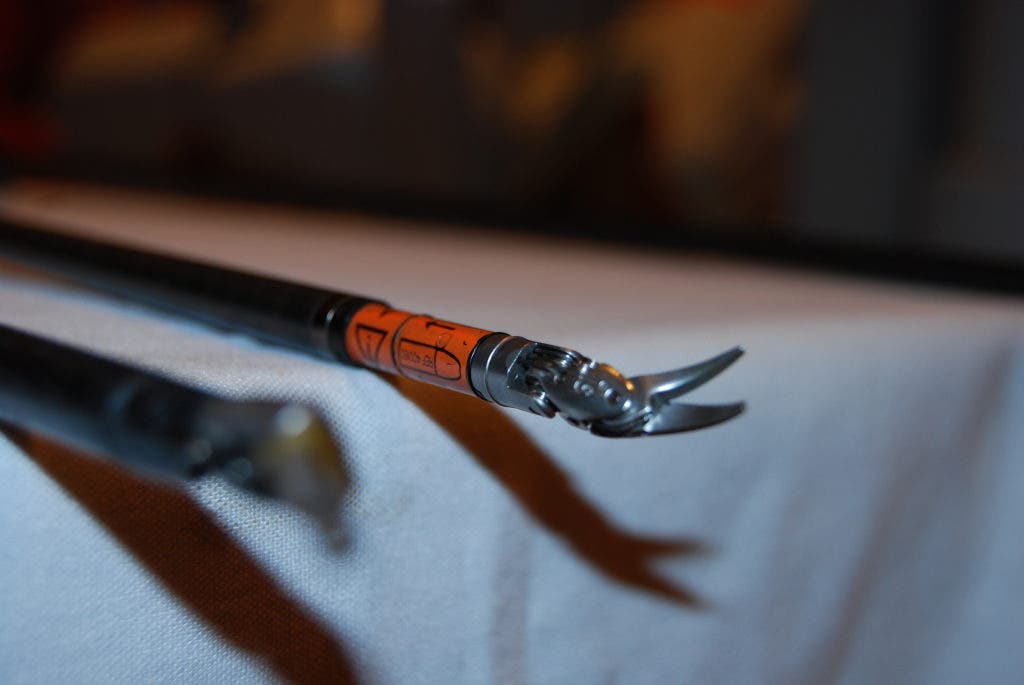


It’s not very often that regular everyday folks get to try out a robotic surgical unit, but that’s exactly what attendants of the Experience Robotic Surgery Like a Surgeon presentation at the Wilton Library got to do.
Four surgeons from Norwalk Hospital presented the da Vinci Robotic Surgical System on Tuesday evening to a curious crowd, some of whom were young, budding doctors. The hospital, which did a total of 10,600 surgeries last year, obtained the surgical system in 2008.
“We acquired the machine several years ago and have been actively doing surgery with it,” said urological physician Dr. Jonathan Bernie, Chief of Robotic Surgery.
Find out what's happening in Wiltonfor free with the latest updates from Patch.
This type of surgery is an extension of laparoscopic surgery, which allows doctors to perform the same traditional procedures, but with smaller incisions. The da Vinci Surgical System takes laparoscopic surgery to an even greater level by exponentially decreasing blood loss during surgery, infection rates, pain and recovery times. Surgical complication rates have dropped to just around one percent with the use of this system.
“The instruments can do precisely what the doctor’s hand does,” said Dr. Alan Meinke, Chief of General Surgery at the hospital. “It’s not the robot doing the surgery, it’s the doctor.”
Find out what's happening in Wiltonfor free with the latest updates from Patch.
The doctor sits at the console to the left and the robot is on the right. With precise finger and even foot movements, the surgeon controls what the robotic tool is doing inside the patient’s body. The incisions used for this type of surgery are much smaller than traditional open surgeries.
“One of the groundbreaking procedures that has been used with the da Vinci is Prostatectomy,” added Dr. Bernie.
Amazingly, men who undergo this surgery with the robotic system generally go home the next day, have minimal pain, and overall do quite well compared to the older technique which required an incision all the way from the bellybutton to the pubic bone.
“You can see the benefit of this and it translates across all fields whether it’s general surgery, gynecology and so forth.”
Dr. John Garofalo and Dr. Adam Ofer both practice Obstetrics and Gynecology at Norwalk Hospital and are also certified in the da Vinci Surgical System.
“This technology really is amazing,” said Dr. Ofer.
In his surgical practice, Dr. Ofer uses the robotic machine for treating endometriosis, pelvic prolapse and uterine fibroids.
“I’m thankful to be able to participate in it,” he said.
Dr. Ofer, as well as the other three surgeons performing procedures with the da Vinci system, went through a lengthy training period to be able to use the machine.
“I think the da Vinci robotic system is really the pinnacle of where we are at with laparoscopic surgery,” said Dr. Garofalo.
Traditional gynecological abdominal procedures often take four to six weeks to recover from, which equals a large disruption to family and work responsibilities. Dr. Garofalo said that many times patients will forgo surgery and suffer with the pain associated with their condition because they cannot afford to lose so much time recovering. With this new robotic system, that recovery time is drastically decreased to a one-day stay or even an ambulatory same day procedure.