Politics & Government
DC Government Ends Fiscal Year With More Revenue Than Expected
The District's chief financial officer reported the city brought in more revenue than predicted during the last six months.


WASHINGTON, DC — Fiscal Year 2020 ended for the D.C. government on Wednesday and it turned out not to be as bad as District financial planners had predicted
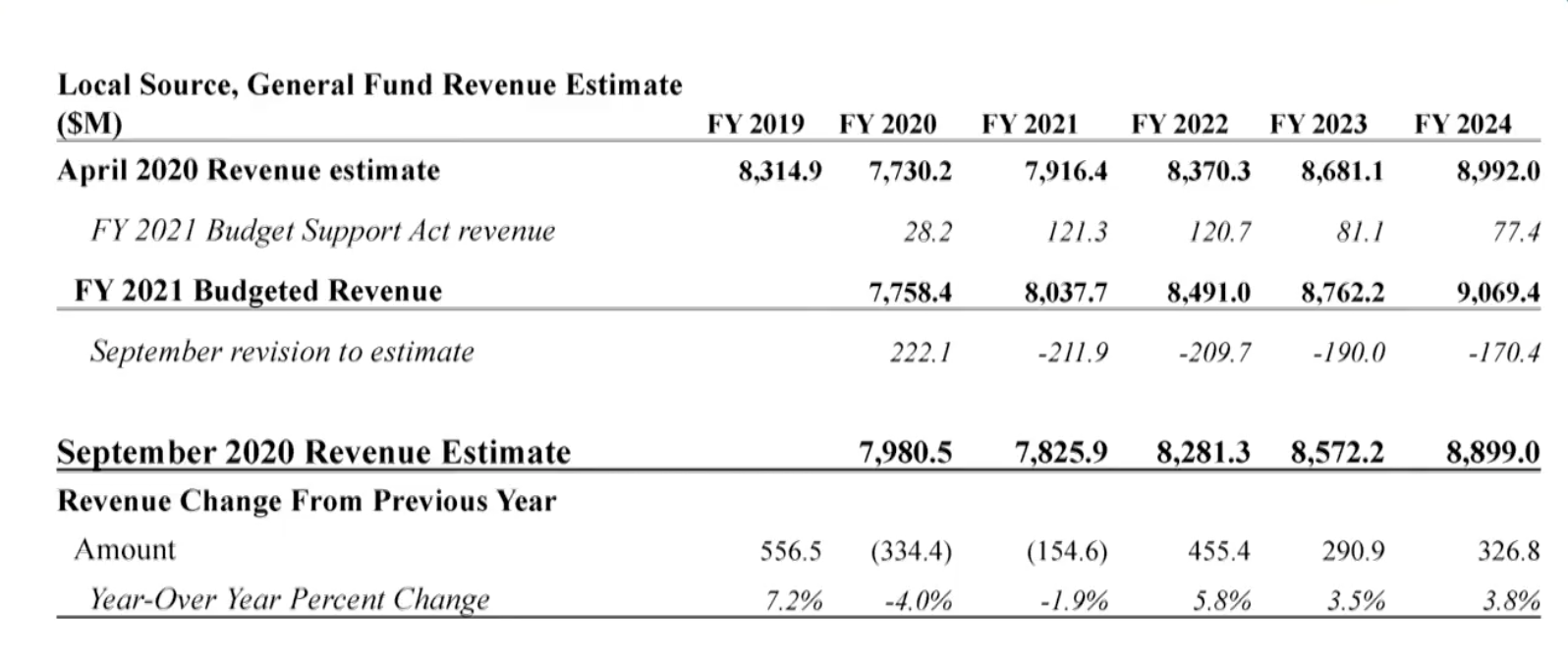
On Wednesday, D.C. Chief Financial Officer Jeffrey S. Dewitt announced he was increasing the FY 2020 revenue estimate by $222.1 million, due to the District bringing in more revenue over the last six months than expected.
"It was not as bad as expected," Dewitt said, during a Wednesday press conference. "That was largely due, on the income tax side, due to the federal aid that drove our income tax revenue increases."
Find out what's happening in Washington DCfor free with the latest updates from Patch.
Dewitt announced that he was also lowering the FY 2021 revenue estimate by $221.9 million. This is expected to cause reductions in revenue in sales, real property, and deed taxes, due to the delayed recovery from the coronavirus pandemic.
Individual income increased over the last six months largely due to the additional $600 in unemployment insurance benefits provided by the federal government. That income was taxable as income and reported on withholding taxes by individuals. Likewise, the Payroll Protection Program (PPP) helped D.C. businesses keep some of their employees on payroll. The money they earned then was reported on income taxes.
Find out what's happening in Washington DCfor free with the latest updates from Patch.
"Also better than expected is the ability and the adaptations of the higher income workers in the District to be able to effectively telecommute and keep their businesses and economies going," Dewitt said. "And I think the District government is an example of that. We've been able to continue to collect taxes in our office and the areas that are issuing permits have been able to function. So, the District government has continued to function as has the federal government as have many businesses. We're not hit as hard as we were concerned about."
D.C. was just beginning its shutdown due to the coronavirus pandemic on April 24. At that time, the District's financial planners were anticipating that by the end of fiscal 2020 on Sept. 30, D.C. would be well on its way toward a full reopening and on the path toward recovery.
"We know more than we knew back in April," Dewitt said. "We now know more about the virus. We know more about the timing of a vaccine. We know more about how our businesses are responding to what I would call the 'COVID recession' that we're in right now."
Several significant factors have occurred since April that changed the financial fortunes of the District's residents and businesses. These include substantial federal funding and actions by the Federal Reserve to prevent job loss and people's income from declining as much as expected.
"When we did the forecast, we didn't know that there would be an additional $600-a-week benefit," Dewitt said. "We didn't know the level or effectiveness of the Payroll Protection Program that businesses have participated in. We weren't aware of the additional $1,200 payment and all the other things that have happened from the Federal Reserve actions."
Although the bond market was in collapse in April, it has since recovered to the point where the District has been able to do some refinancing to help the budget, thanks to a strong municipal market and low interest rates.
Other factors that have changed since April include the stock market recovery, which has reduced projected losses in capital gains; and the gradual reopening of the District's economy following ReOpen DC guidelines.
"All that action actually helped the recession to be less than it would've been otherwise, over the last six months," Dewitt said. "The question is: what will it look like going forward?"
One nagging element, though, is the District has had a much slower than expected reopening from the shutdown.
"Back in April, we were assuming that restrictions on bars and indoor dining would be reduced largely by the summer, and clearly we're still in a Phase 2 recovery because of the COVID virus as we are today," Dewitt said. "We were assuming that large sporting events and performances would return in the spring or early 2021. We now know from the ReOpen DC advisory committee and how things are working, having full stadiums is not likely coming back in early 2021."
The possibility of having large gatherings, such as sporting events, concerts, or conventions of more than 250 people, would more likely occur only when a COVID-19 vaccine could effectively be deployed. For that reason, Dewitt assumed those types of events wouldn't happen until after 2021 and into 2022.
"Back in April, we thought probably conventions center could reopen with the kickoff of the inauguration and the events would start coming back in the spring and the summer," he said. "We do know that many of those conventions have been canceled for most of 2021. So we're seeing calendar 2021 to be relatively slow if nonexistent for regular large conventions."
Dewitt said D.C. was experiencing a "hospitality recession," as that's one of the drivers of the District's economy and one that has been particularly hit hard by the restrictions put in place due to the pandemic. A delayed reopening in the hospitality industry would mean reduced sales tax revenue in 2021.
The District could also see reductions in real property tax in 2021 due to increased vacancies and rent concessions, as well a in deed tax revenue because of slowing sales of large office and multifamily buildings.
Get more local news delivered straight to your inbox. Sign up for free Patch newsletters and alerts.