Neighbor News
During Hunger Action Month Take Action To End Food Waste and Feed People
Together, we can make food recovery a standard practice and ensure food justice for all Washingtonians.

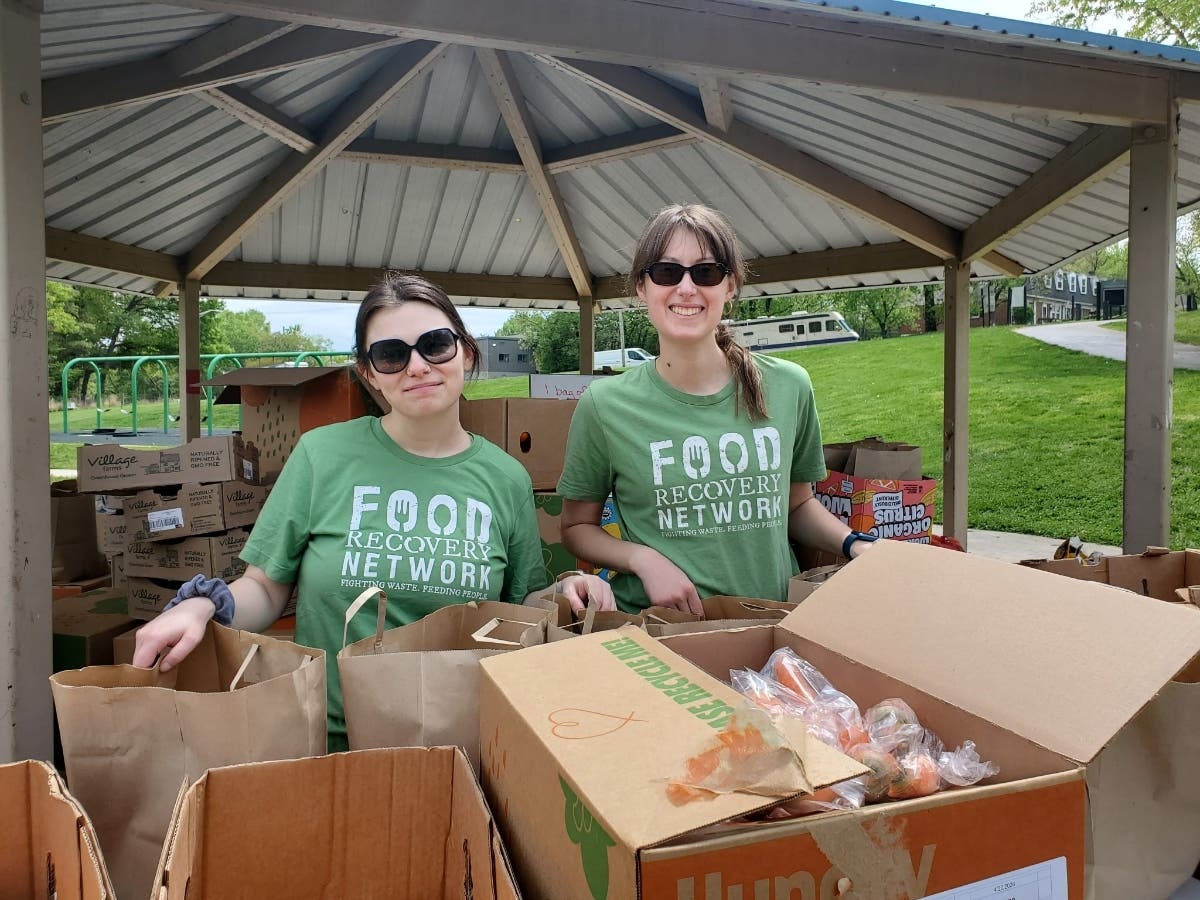
Opinion by Regina Harmon, CEO, Food Recovery Network
In Washington, D.C., hunger is not a consequence of food scarcity—it is a symptom of systemic inequity. As we mark Hunger Action Month, we are reminded that access to nutritious food is fundamentally an issue of justice.
Across the greater DMV region, 40% of D.C. households—and 36% regionally (1.5 million people) experience food insecurity. Even more concerning, 22% of adults face very low food security, regularly skipping meals or reducing portions because their incomes can’t keep pace with the cost of living.
Find out what's happening in Washington DCfor free with the latest updates from Patch.
All around us in the District, large quantities of perfectly good food get thrown away daily. As CEO of Food Recovery Network (FRN), the largest student-led movement recovering surplus food and ending hunger in the U.S, I see a way we can increase free food resources for everyone, balance the scales, and permanently alter the framework of our food system.
To build a hunger-free capital, we must widen our food programming and scale our current initiatives to end food waste. We must demand policy solutions that protect our communities.
Find out what's happening in Washington DCfor free with the latest updates from Patch.
Scaling Campus & Community Food Recovery
In the D.C. metro area, FRN has active campus chapters at American University, Georgetown University, and George Washington University - those chapters alone have recovered over 43,000 pounds of food, providing an equivalent of 35,840 meals for local hunger-fighting partners. Imagine the impact of scaling across the district: if all 22 D.C. based degree-granting institutions recovered surplus food at the same rate as our 3 active campus chapters, we would have already recovered 316,000 pounds of food, delivering over 260,000 meals to local neighbors.
We can also work on scaling event-based and business food recovery. This past spring, FRN’s 3-year partnership with Gaylord National Resort and Convention Center reached 100,000 pounds of recovered food. That’s just one venue. Yet according to Cvent, D.C. has over 1,300 meeting and event spaces. If each venue recovered a conservative 500 pounds of surplus food per year, across all 1,300 spaces, that would mean 650,000 pounds of perfectly good food would make it to people who need it - the equivalent of 541,667 meals. That would provide food for a full year for 123 families of four.
We have to hold businesses accountable for including food recovery in their budgets and event plans. As individuals, we can help challenge the events we plan and attend to include a food recovery plan. Ask what the recovery plan is ahead of the event and include this specific feedback on conference surveys.
When corporations account for surplus food donations as a standard operational cost, just as they do for utility usage, they help build a reliable, permanent safety net for the community. In addition to accounting for the expense in their budgets, tax incentives do exist. There is legislation that protects them from liability. And it builds goodwill with their home communities.
Of course, while food rescue is a vital immediate intervention, corporate commitment and student leadership alone will not solve hunger. Long-term disruption requires systemic advocacy to smooth out our unjust food system.
Advocate for Lasting Change
We can directly appeal to our congressional leaders to support measures that significantly reduce food waste. A recent survey found that 88% of consumers discard food that is close to the package date label, even though it is often still unspoiled. This behavior contributes to an estimated 3.5 million tons of food waste in 2024 alone. On average, U.S. households lose over $762 each year on food that ends up in the trash.
Currently, the Zero Food Waste Coalition and other advocacy organizations like Food Systems Collaborative are urging people to encourage federal lawmakers to support the Food Date Labeling Act. By signing the petition in support of this act before September 15th, we can help standardize food date labels, which could greatly reduce consumer confusion. This initiative will reduce food waste, save consumers money, and cost the government and corporations nothing. It’s a win-win situation!
Locally, D.C. residents can also champion a recent school-based initiative that aims to reduce food waste in schools. The D.C. Council Bill 26-0687—known as the School Food Waste Reduction and Composting Act of 2026— mandates organic waste collection and encourages food donations. The bill was referred to various committees in May for review but has yet to be brought forward for a vote. Residents can still reach out to their Councilmembers, urging their full support for Bill 26-0687.
Together, we can make food recovery a standard practice and ensure food justice for all Washingtonians. Progress in fighting hunger in Washington, D.C., is possible if we work together towards a more equitable food system that provides healthy meals for every resident.
- Regina Harmon, CEO, Food Recovery Network