Arts & Entertainment
Finding The American Voice: How ArenaStage Is Shaking Up Broadway
After a huge renovation a few years ago, Arena Stage in Southwest D.C. has ambitious plans for the future.


WASHINGTON, DC — There's absolutely no mistaking that building on the corner of Maine and Sixth streets in Southwest D.C. And some very big things could be coming out of it in the coming years.
If you're a Broadway fan, you've no doubt heard of plays like "Next to Normal," the 2008 American rock musical about a mother's struggle with bipolar disorder that received 11 Tony nominations and won three, including Best Actress in a Musical for Alice Ripley. And you've certainly heard of "Dear Evan Hansen," the story of a high school senior suffering from social anxiety disorder that was nominated nine times at the 2017 Tony Awards and took home six awards, including Best Musical.
What you may not know is that they both started out right here at Arena Stage. And now the theater is looking for that next diamond in the rough -- that American voice that has not yet been heard and should be heard. The theater certainly has a solid track record for finding those voices.
Find out what's happening in Washington DCfor free with the latest updates from Patch.
Big names have performed at Arena Stage over the years. Names like Morgan Freeman, Jessica Tandy, and James Earl Jones. Yeardley Smith -- the voice of Lisa from "The Simpsons" -- got her big break in acting at
Arena Stage on a production of "Peter Pan." And then, of course, there are the Tony Award-winning musicals mentioned above.
But in order for Arena Stage to achieve its vision, leadership realized they needed an entirely new facility.
Find out what's happening in Washington DCfor free with the latest updates from Patch.
A radical new look
Arena Stage certainly didn't look as impressive as it does now when it first opened in 1950. Even 10 years ago it would be totally unrecognizable compared today, thanks to a massive $135 million renovation undertaken from 2008 until 2010 -- during that time, "Next to Normal" was playing at a temporary Arena Stage theater set up in Crystal City, Va.
Arena Stage's two theaters, the Fichandler Stage and Kreeger Theater, were left standing during the renovation, but everything else was demolished. A huge structure was put up over top of those theaters, and a third theater — the Kogod Cradle — was added.
Even with the sudden explosion of brand new buildings along the Wharf right across the street, Arena Stage's architecture is unmistakable. Massive wooden beams hold aloft a gently curving roof, and an all-glass facade makes it almost like a museum display case, showcasing the original theaters as they once were decades ago.
Walking into the lobby of this unique building when there isn't a show going on is almost like walking into a cathedral: a dignified quiet envelops you as you take in the enormous space and the long, circular ramps that lead to its individual theaters. The goal in designing Arena Stage was to create a sense of intimacy.
And you certainly get that sense when you walk into the theaters themselves. There aren't a lot of seats, so it's impossible to get a bad view. Even the largest stage, Fichandler, has just 680 seats. And the smallest, the new Kogod Cradle, has only 200 seats. The leadership of Arena Stage has no interest in massive, sprawling amphitheaters.
Edgar Dobie, the executive director at Arena Stage, told Patch in an interview that it was important the theater remain true to its founding principles of "being a place where everyone in the community is welcome, and we stay true to that sort of pioneering movement of resident theaters." Despite its modern, almost lavish, appearance, that's what Arena Stage wants to be: an intimate place, Dobie said.
"We've always adhered to that," he said.
Dobie pointed to the Fichandler Stage as a prime example of the unique community feeling Arena Stage attempts to bring to the D.C. theater community. It is in an arena-like format, with the audience on all four sides of the actors.
"The architecture of that building really reflected those founding principles," Dobie said. "There was one entrance, so there's no way to segregate entry. The audience all came in, and not only did they bear witness to a show, but they could look across through the action and see the community was proudly represented."
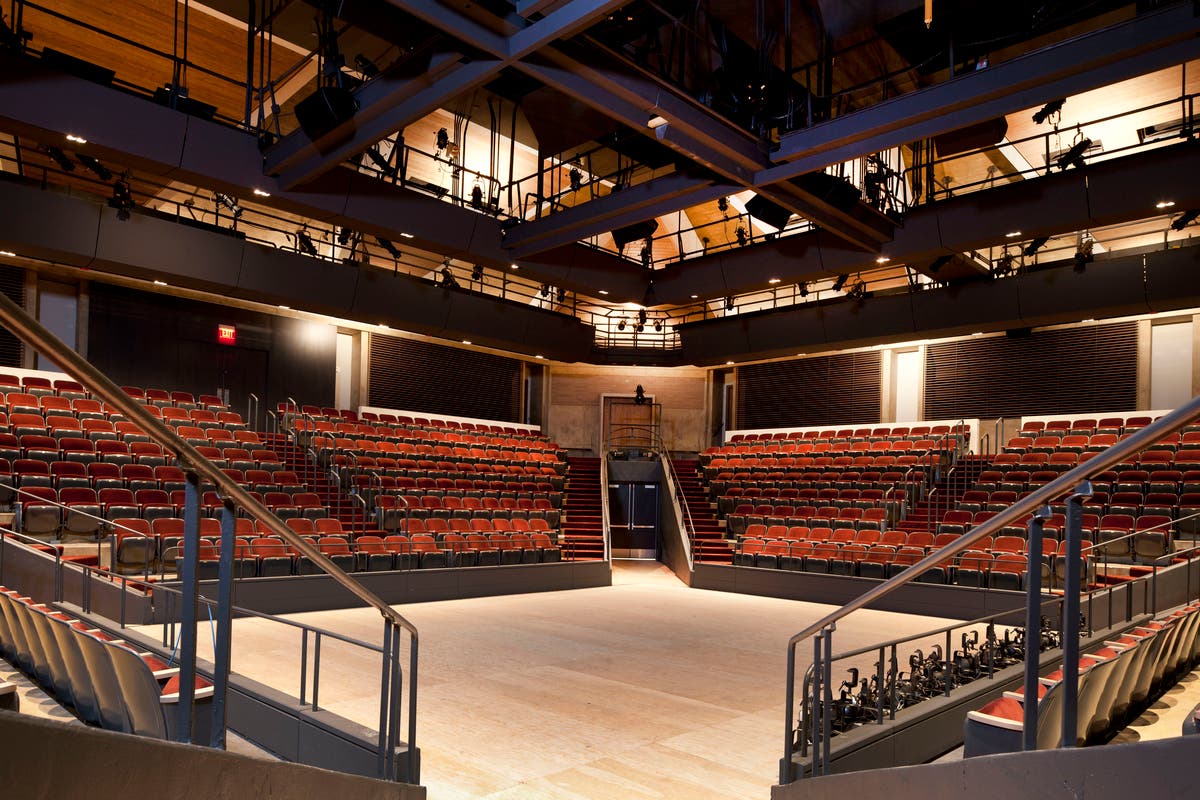
Fichandler Stage
The American Voice
A lot changed from the 1960s to the early 2000s just before the big renovation. The D.C. area exploded in population and economic growth, and the theater scene blossomed to the point that there were 70 companies. The current director, Molly Smith, joined Arena Stage in 1998, and that was a big moment for the theater, Dobie said.
"She decided to focus work on producing and presenting and developing the work of American writers, and finding an American voice," he said. "And all along, education has been a big part of how we reach out to the community. With that came a desire to really build a landmark kind of architectural statement that would match the ambition of that refinement on the mission. It sounds limited, but it's not. It's kind of a very profound area: the work of American writers, and finding the American voice."
A big focus of the theater right now is on "Power Plays." Arena Stage is searching far and wide for groundbreaking new plays and works that seeks to tell "American stories of politics and power," Smith says on the Arena Stage website.
"We're commissioning plays that have particular interest to African-American theater. We did a play on Justice Scalia. Women's voices are underrepresented in the canon and in production, so there's a desire to make that a focus," Dobie said, listing off some examples. "And then, finally, presidential voices: now more than ever, we see the impact those sorts of leaders have. So we're reaching out to the playwriting community and saying, is there a particular interest? We did a play called Camp David on President Carter and the Camp David Accord."
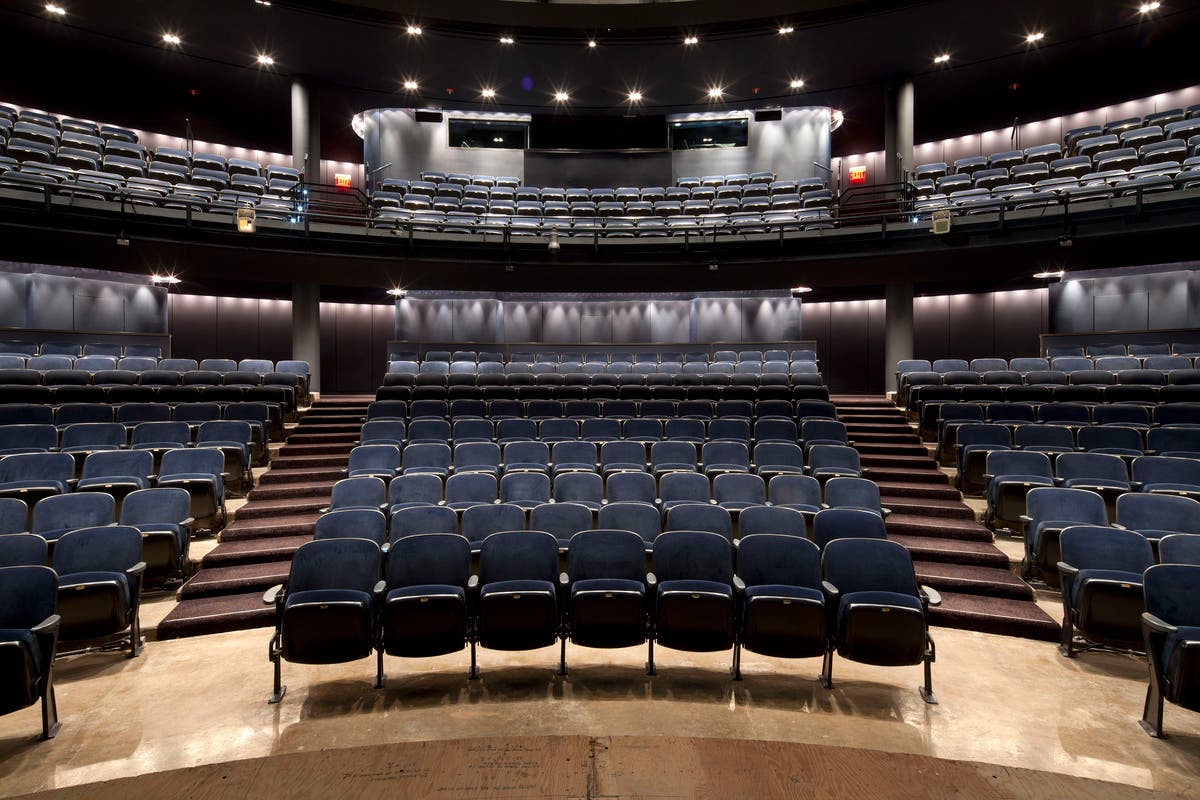
Kreeger Theater
A community center
The quiet that almost seems to echo off the walls of this huge building is a lie -- for if you go a little deeper, behind a few doors at the back, there is an explosion of activity.
Crews are constantly preparing for the next show. Random set pieces in various states of construction fill a large workshop area where the sounds of power tools make it seem more like a construction site than a renowned theater. The most bizarre and yet fascinating nick-nacks can be found in a room devoted to props. And the costume shop is abuzz with activity, packed to the gills with just about every outfit you can imagine.
The crew certainly makes use of every inch of space offered by this building. And it is certainly a welcome change from years ago when doing all this work in-house was a sheer impossibility.
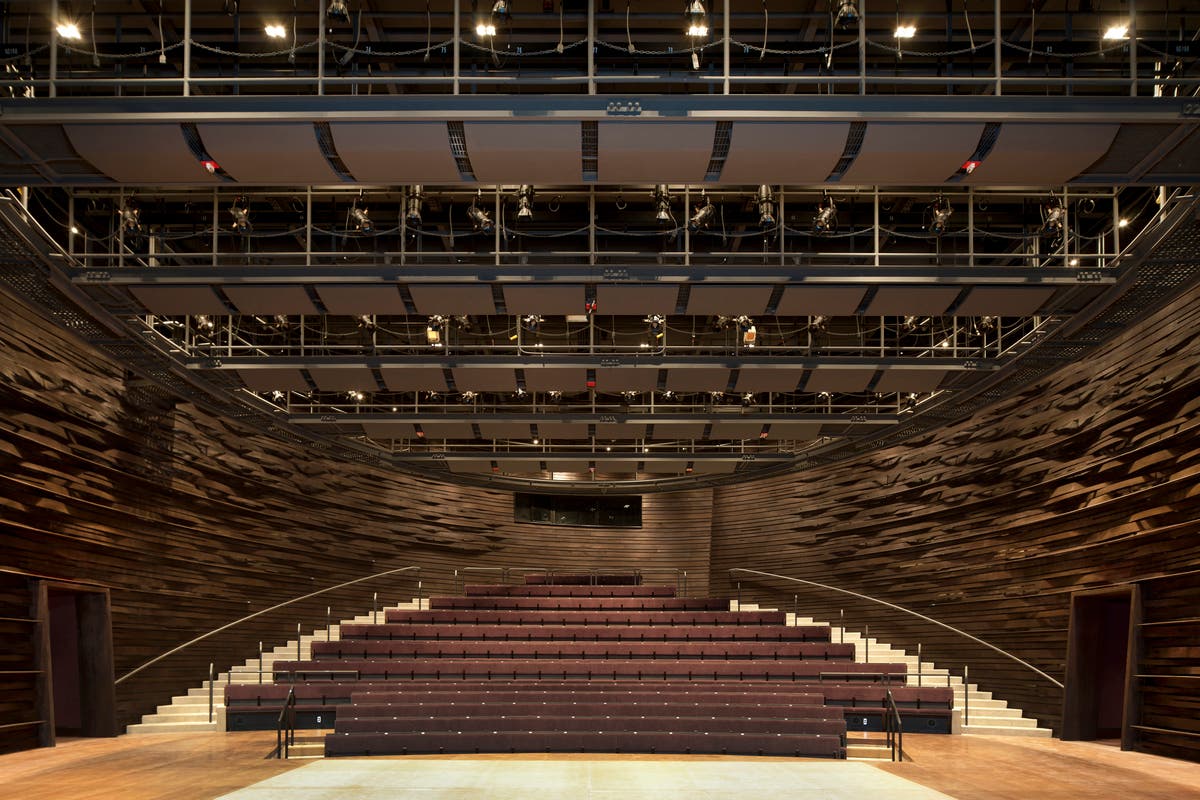
The Kogod Cradle
The area around Arena Stage is full of bustle as well. The Wharf just opened last fall, with shops and restaurants and new apartment buildings now populating an area that was mostly known for rowhomes and fish markets.
There are new theaters here too, such as the Anthem and Union Stage. But Dobie sees them as welcome new entries to the theater community, rather than as competition.
"That added to the cultural organizations that are already here," he said. "It's created kind of a critical mass that when you're looking toward our neighborhood, suddenly you're seeing lots of opportunities to engage with cultural activities."
And it doesn't hurt to have top-notch restaurants and parking across the street when you're trying to attract theater-goers, he said.
The theater is busier today than it ever has been, producing about 10 shows per year. But Dobie says they will firmly stick to their foundation principles of not just being a champion of the American voice, but an important center of the Southwest D.C. community.
"We're trying to be year-round in our programming," he said. "We almost function as a community center in the neighborhood. Our theaters and public spaces are designed for people to assemble. We've done jobs fairs, people like getting married here, medium-sized corporations like to have gatherings here -- so it's got that kind of connection to the community."
Images courtesy Arena Stage and Bing Thom Architects
Get more local news delivered straight to your inbox. Sign up for free Patch newsletters and alerts.