Politics & Government
El Faro Sinking: Here's What NTSB Says Likely Led To Tragedy
The cargo ship El Faro set sail from Jacksonville with 33 crew members in September 2015. It sank less than two days later.

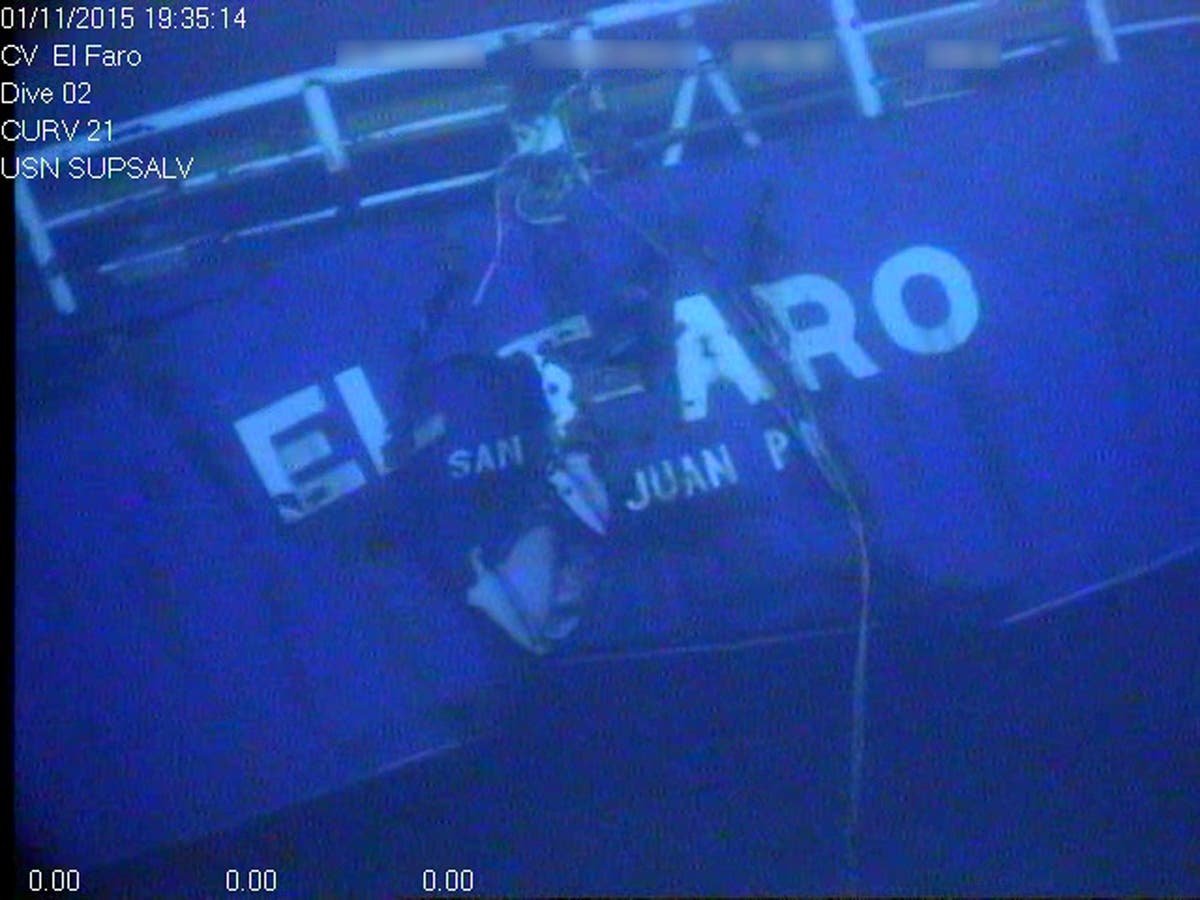
JACKSONVILLE, FL — On Sept. 29, 2015, the cargo ship El Faro set sail from Jacksonville with 33 crew members and headed for San Juan, Puerto Rico. But less than two days later, the 790-foot vessel lost power near the eye of Hurricane Joaquin, leaving it at the mercy of the Category 3 storm, and later sank. Every crew member died.
It took federal investigators, the U.S. Navy and U.S. Coast Guard nearly a month to find the wreckage and debris, which was more than 15,000 feet below sea level.
On Tuesday, more than two years after the sinking, the National Transportation Safety Board met in Washington, D.C. to determine what likely led to the sinking.
Find out what's happening in Across Floridafor free with the latest updates from Patch.
Federal investigators recommended 53 draft safety measures. Among them, replacing old-style lifeboats on any vessel that still uses them. The NTSB said open lifeboats probably wouldn't have protected the crew had they been able to launch them.
Whether the crew could have survived Joaquin's punishing winds and high seas if the El Faro had the safer, closed-top lifeboats used by newer ships remains a mystery. But NTSB safety investigator Jon Furukawa said they would have been a better option for crewmembers fighting for their lives.
Find out what's happening in Across Floridafor free with the latest updates from Patch.
"We believe that would've been the best method of departing the vessel under these conditions. It is still challenging, and we don't know if they would've survived," Furukawa said. "But enclosed lifeboats are the current standard and the El Faro did not have the current standard."
The NTSB board also has studied poor decisions by the captain, problems with weather forecasting, management of the freighter, the suitability of the ship's lifeboats and the oversight of the vessel by its owner, TOTE Maritime, Inc.
The board also is recommending that the entire industry require all crewmembers working on ships to carry personal locator beacons to better locate them during marine emergencies.
The El Faro had an older emergency position-indicating radio beacon, or EPIRB, which did not transmit global position system coordinates, and that made locating the ship more difficult for search-and-rescue crews. Given the heavy weather, crews probably couldn't have reached the ship any sooner, but the board believes the new requirement would help in future sea accidents.
"One marine tragedy can point to many improvements. After the RMS Titanic sank, the world responded with the International Convention for the Safety of Life at Sea, or SOLAS, which has saved countless lives," Sumwalt said.
The board's final report follows one issued by the U.S. Coast Guard on the second anniversary of the ship's sinking. That report placed primary blame on ship Capt. Michael Davidson, who they said underestimated the hurricane's strength and overestimated the ability of the 40-year-old ship to withstand it.
According to transcripts of audio recovered from the ship's voyage data recorder, or "black box," Davidson refused his crew's suggestions to take a slower, safer route as the storm grew into a Category 3 hurricane. The recorder caught the final hours of the ship's increasingly desperate crew as they tried to save the El Faro and themselves.
The NTSB and Coast Guard also have said the ship's owner TOTE violated safety regulations requiring the crew to be well rested, and noted that the company had not replaced a safety officer management position.
TOTE also stopped employing port helpers to safely load cargo. The Coast Guard found that El Faro's crew had difficulty keeping up with the brisk loading pace required to keep the ship on schedule ahead of the storm.
The Coast Guard is seeking civil, not criminal, penalties against TOTE.
The NTSB's recommendations are not law, but are used to guide industry changes or updates to existing safety procedures overseen by the U.S. Coast Guard and so-called "classification societies" like the American Bureau of Shipping, which conducts a large percentage of marine inspections on the Guard's behalf. The recommendations also can be used by Congress to create new laws meant to improve safety.
Larry Brennan, a professor of maritime law at Fordham Law School and a retired U.S. Navy captain, said the NTSB's recommendations are taken seriously, and could create a safer working environment for mariners in the future. He applauded the board's call for a new lifeboat requirement.
"No one should use open boats in rough weather, or any weather," Brennan said. "If the NTSB takes an aggressive course, they may be able to effectively change regulations and policies that will enhance safety at sea."
By JASON DEAREN, Associated Press
Photo credit: National Transportation Safety Board via AP