Politics & Government
It's Up To The Voters Now: Legislature OKs DeSantis Property Tax Proposal
The House and Senate overhauled the proposal so it doesn't impact public schools

June 3, 2026
Florida voters will be asked to sharply curtail the property taxes cities and counties rely upon under a far-reaching resolution championed by Gov. Ron DeSantis and approved Tuesday by a supermajority of the Florida Legislature.
Find out what's happening in Across Floridafor free with the latest updates from Patch.
The proposed constitutional amendment must get a “yes” vote from 60% of voters in the November elections to become law. Republicans who backed the resolution argued that homeowners need relief from rising tax bills.
But before sending it to voters, the Legislature overhauled the governor’s proposal so that it would not apply to the property taxes used to fund Florida’s public school system.
Find out what's happening in Across Floridafor free with the latest updates from Patch.
House Speaker Designate Sam Garrison, in line to take the reins of that chamber in November, spearheaded exempting public schools from the governor’s plan in the House. Sen. Jay Trumbull, in line to be Senate president in two years, led the charge in the Senate.
Following the supermajority vote, DeSantis — known for lengthy press conferences that focus on his “accomplishments” and a strong social media presence — was uncharacteristically quiet.
DeSantis on Monday doubled down on his support for limiting property taxes for schools, saying the state has “increased funding every year for them” and that some districts, despite experiencing declines in student population, have seen “massive” increases in funding.
Initially, the governor’s proposal would have authorized property tax dollars to be spent only in a handful of areas:
A second change the Legislature made to DeSantis’ plan requires property taxes also continue to be spent on supervisors of elections, property tax appraisers, and other constitutionally required local government officials, as well as “the expenditures approved by such county officers or county or municipal governing bodies, except those expenditures prohibited by general law.”
The language regarding municipal governing bodies was included by the Senate sponsor, Miami Springs Republican Sen. Bryan Avila, who said he wanted to ensure the continued flow of intergovernmental transfers, or IGTs, to help fund two Medicaid supplemental programs: Low Income Pool and Hospital Directed Payments.
Specifically, the language was included to help the Public Health Trust, the governing body of Jackson Health System. The trus acts on behalf of the Miami-Dade Board of County Commissioners.
Despite the changes, though, the plan continues to face opposition from a disparate cohort of interest groups ranging from the Florida Association of Counties to the Florida Policy Institute.
The counties sent an email to association members following the vote, highlighting the changes made and noting that Tuesday’s vote was “not the end of the conversation, but the beginning of a new one.“
“County leaders should begin talking publicly about what local property taxes fund in their communities and what is at stake if those dollars go away,” the email reads.
“Floridians benefit from the services property taxes fund, and they deserve a clear-eyed accounting of what this proposal does and does not do, from the people who deliver those services every day.”
The nonpartisan, not-for-profit Florida Policy Institute dedicates itself to “advancing policies and budgets that improve the economic mobility and quality of life for all Floridians,” according to its website. Following the vote, the association put out a statement saying the proposal doesn’t represent a tax reduction but a tax shift.
“One that will force local lawmakers to cut local services that families rely upon or increase other taxes and fees to make up for the missing revenue,” Institute CEO Sadaf Knight said in a prepared statement. “In either case, everyday Floridians ultimately pay the price for the massive loss in property tax revenue.”
Even some of the legislators who ended up voting “yes” worried what would become of the state if 60% of the voters supported it.
New Smyrna Beach Republican Sen. Tom Wright on Monday said he would “have a hard time voting for this” unless changes were made. “There are so many, so many issues of this bill right now that scare the bejeebers out of me,” he said.
Wright began his comments Tuesday, noting, “No one has called me in regards to those other than to say, ‘Good job,’
His tone then shifted.
“I was really concerned, driving up here … and I was prepared to kill this bill. When I first read it I thought, ‘This is crazy,’ but the more I think about it … somebody did something, and that was our governor. He did something that we can at least take a look at,” Wright said.

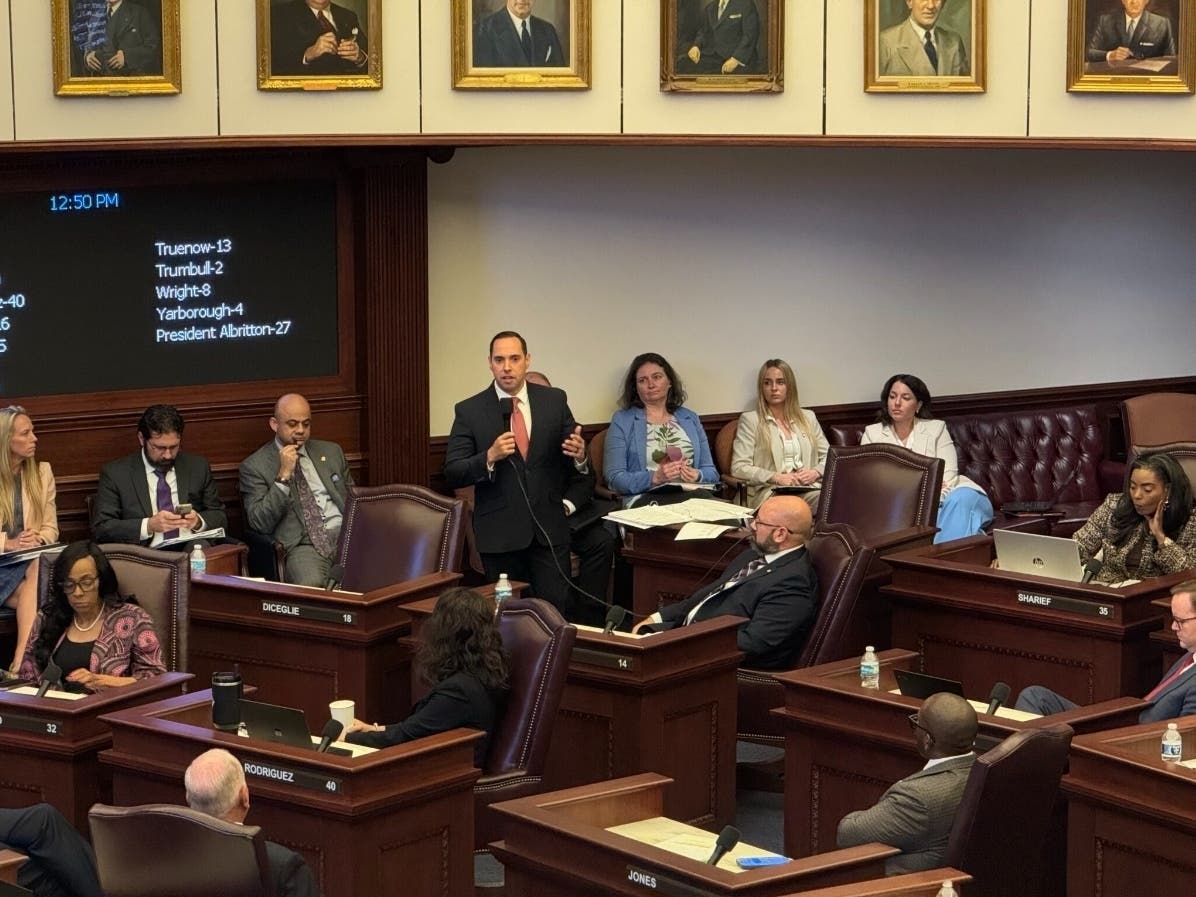
Sen. Lori Berman debates a proposed constitutional amendment to reduce property taxes during a special session on June 2, 2026. (Photo by Jay Waagmeester/Florida Phoenix
“Why not let the voters vote?” Wright continued, adding that the Senate shouldn’t take the opportunity away from Floridians.
He wasn’t the only senator to say Tuesday that their end goal was to give the voters the ultimate choice, even if the proposal wasn’t one they fully supported.
“I’m voting for this bill because we’re giving the voters this opportunity to make the best decision for them, so that way we can provide some type of relief for the residents,” said Mack Bernard, a Democrat from West Palm Beach.
He said he believes the Legislature “owes” it to the public to allow voters to make the decision on whether the proposal should pass.
“I am supporting this bill and I hope that we can come back and make it better,” Bernard said.
Miramar Democratic Sen. Barbara Sharief said she was “fully prepared” to vote against the proposal, but the decision to exempt schools from the property tax restrictions was a game-changer for her. So was the decision to allow property taxes to be used to fund the supervisors of elections and other county-level positions required in the Florida Constitution.
“Between the people who want me to vote ‘no’ and the people who want me to vote ‘yes,’ I feel like there’s a voice that needs to be heard and they need to be able to go to the polls and express themselves,” she said.
“And so, while I have my opinion that this is not perfect and this is not all of what I want, I have learned a few things through this process, and that’s that everything that we vote on is not going to be perfect,” Sharief said.
The proposal passed the House by a 75-26 vote with Republican Reps. Patt Maney of Shalimar and Nathan Boyles from Baker cast “no” votes. North Miami Democrat Rep. Dotie Joseph initially voted for the tax relief plan but changed her vote to “no” after the fact. More than a dozen House members didn’t vote on the proposal.
House Speaker Daniel Perez relished putting the choice in voters’ hands.

Rep. Toby Overdorf fields questions about his joint resolution to reduce property taxes during a special session on June 2, 2026. (Photo by Jay Waagmeester/Florida Phoenix)
“Our constituents many times wish that they could have more of a say in government, just across the board. This is an important issue, it’s property taxes, no one wants taxes. The details of how to come to a final product have been a long road, but I’m proud of the opportunity that we are giving the voters by letting them decide if this is something that’s going to come to fruition or not,” Perez told reporters after the resolution passed.
House Democrats raised concern that the prospect of not paying property taxes could cloud the prospect of losing services funded by tax dollars.
“That’s my concern, is that this is not a tax break, this is a tax shift, and we tell the voters how much they might save and we don’t explain to them what they’re going to lose,” Rep. Anna Eskamani, a Democrat from Orlando, said.
The House Democrats offered amendments to provide “any funds necessary” to local governments for services supporting public safety, children, and veterans. They were all voted down on party lines.
“Let’s not put local government in a straitjacket, let’s not do that. Let’s give them the flexibility that they need to run the local government,” Rep. Marie Woodson, a Democrat from Hollywood, said.
House Democratic Leader Fentrice Driskell said she welcomed the Legislature’s willingness to differ from the governor’s proposal by protecting property taxes that go toward schools.
“It is really frightening to think that the Republicans were willing to play chicken with our public school system and to come so close to the wire that if that amendment hadn’t passed, what would have happened to our school funding?” Driskell, a Tampa Democrat, told reporters following the vote.

Sens. Ed Hooper (left), Ben Albritton (center), and Shevrin Jones (right) talk during floor debate of the proposed constitutional amendment to reduce property taxes on June 2, 2026. (Photo by Jay Waagmeester/Florida Phoenix)
The Florida Phoenix, a nonprofit news site that’s free of advertising and free to readers, covers state government and politics through a mix of in-depth stories, briefs, and social media updates on the latest events, editorial cartoons, and progressive commentary. The Phoenix is part of States Newsroom, a national 501(c)(3) nonprofit supported by grants and a coalition of donors and readers.