Crime & Safety
Rocket Explosion Rattles FL During Test Flight
A Jeff Bezos-owned rocket recently exploded on the launch pad, shaking nearby Florida homes and clouding the air with smoke.

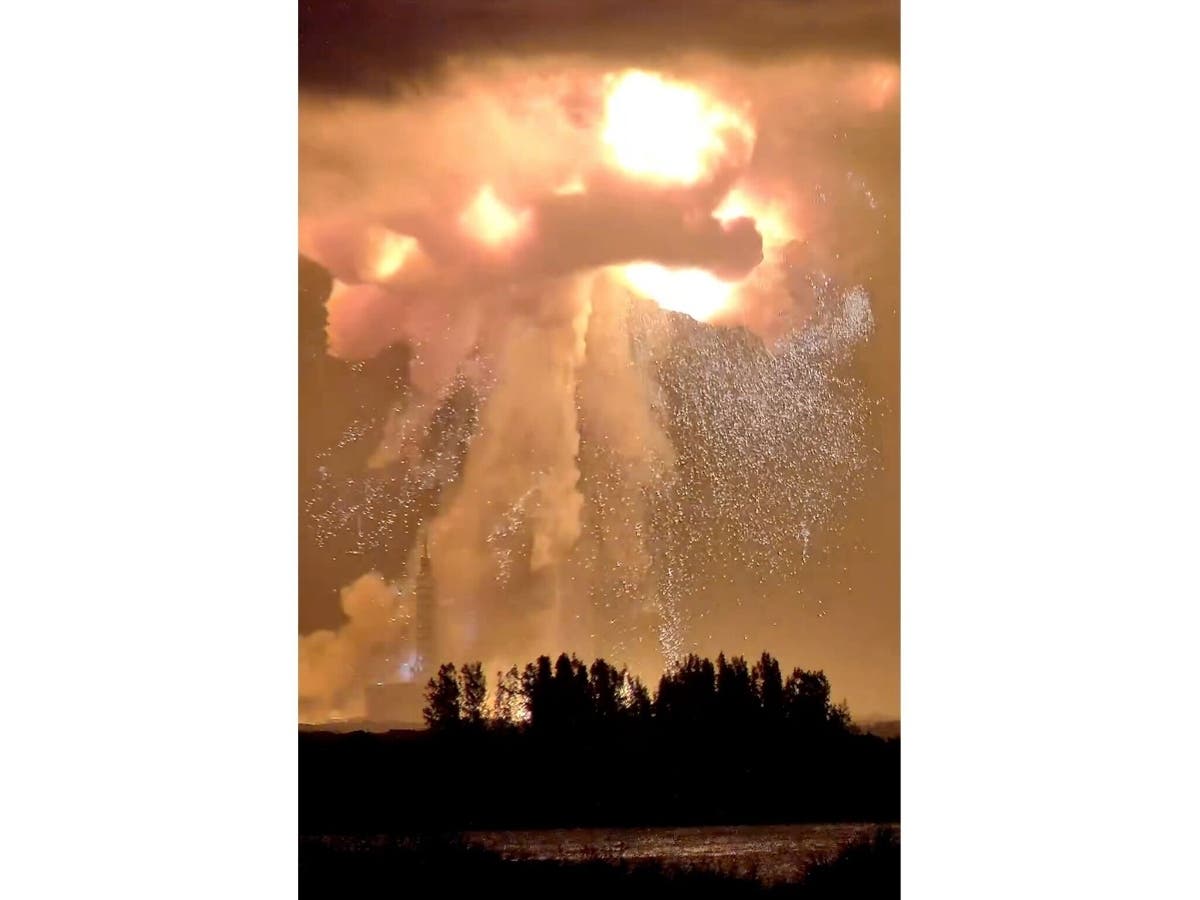
CAPE CANAVERAL, FL — A burst of flames filled the air when a Blue Origin rocket owned by Amazon founder Jeff Bezos exploded during a hotfire test on the launch pad Thursday night in Florida, according to officials.
The Blue Origin New Glenn rocket experienced an anomaly around 9 p.m. at Space Launch Complex 36, according to the Space Launch Delta 45, which operates Patrick Space Force Base and Cape Canaveral Space Force Station. In aerospace, an anomaly is defined as an unexpected event.
Video shared by CNN appeared to show the Blue Origin rocket erupt, sending huge clouds of smoke and orange flames into the atmosphere.
Find out what's happening in Across Floridafor free with the latest updates from Patch.
Homes shook in nearby Cape Canaveral and Cocoa Beach, with residents turning to social media to wonder what happened.
Launch Complex 36 is visible from the beach, and the internet quickly filled with photos of an orange fireball.
Find out what's happening in Across Floridafor free with the latest updates from Patch.
There were no injuries or fatalities during the incident, according to Space Launch Delta 45.
"All personnel are accounted for and safe," Bezos tweeted shortly after the explosion. "It’s too early to know the root cause but we’re already working to find it. Very rough day, but we’ll rebuild whatever needs rebuilding and get back to flying. It’s worth it."
Residents were warned that debris from the explosion could potentially wash ashore in public areas along the Florida coast. Officials said this could last for days, or even weeks.
The debris could be hazardous, and residents were encouraged to not touch, move or try to recover the debris.
Officials asked anyone believes they have encountered debris to report the sighting to Blue Origin's Wreckage Management Hotline, (321) 222-4355, or to authorities.
On Wednesday, Blue Origin announced plans to send "48 Amazon Leo satellites into low Earth orbit as part of their growing broadband constellation." It would have been New Glenn's fourth launch.
The rocket was supposed to blast off next week with internet satellites that are part of the Amazon Leo constellation in orbit.
Towering at 321 feet (98 meters), New Glenn made its debut in 2025. It is named after John Glenn, the first American to orbit Earth, and is much bigger and more powerful than the New Shepard rockets that have carried tourists to the fringes of space from Texas.
The massive New Glenn was grounded in April after it left a satellite in the wrong orbit because of engine failure. It was only the third flight of the rocket that Blue Origin intends to use to launch landers to the moon for NASA, including the landers that will take astronauts to the lunar surface.
The company had been on track to launch a prototype lunar lander to the moon on a flight test this fall. Earlier this week, the space agency awarded Blue Origin a contract worth hundreds of millions of dollars to launch a pair of moon buggies in the next few years as part of the Artemis program.
Space Force officials said the explosion would not affect upcoming launches by other companies from other pads. United Launch Alliance’s Atlas V rocket is due to blast off Friday night with a batch of Amazon Leo satellites, the same kind that this rocket was supposed to take up.
SpaceX's Elon Musk, who's had his own share of rocket explosions, offered his condolences.
“Sorry to see this, I hope you recover quickly,” he told Blue Origin via X.
NASA Administrator Jared Isaacman said the federal space agency was aware of the explosion.
"Spaceflight is unforgiving, and developing new heavy-lift launch capability is extraordinarily difficult," he tweeted. "We will work with our partners to support a thorough investigation of this anomaly, assess near-term mission impacts and get back to launching rockets. We will provide information on any impacts to the Artemis and Moon Base programs as it becomes available."
NASA is set to reveal the astronauts who will travel on a test flight during the Artemis III mission. The announcement was set for 11 a.m. ET, June 9, at Johnson Space Center in Houston.
Get more local news delivered straight to your inbox. Sign up for free Patch newsletters and alerts.