Community Corner
2 FL Gulf Coast Metro Areas Among Top Places To Retire In U.S.: Report
Despite damages from Hurricane Ian in September, Ft. Myers and Sarasota areas are among the top places to retire in the U.S., a report said.


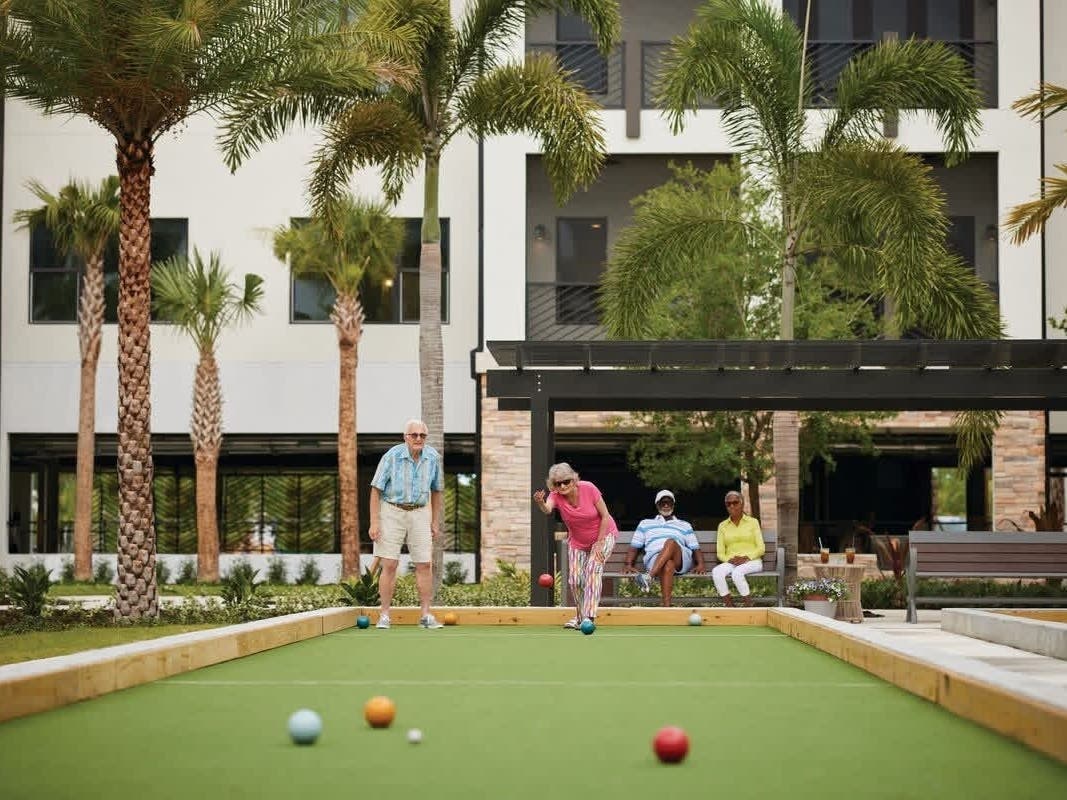
SOUTHWEST FLORIDA — Despite widespread damages caused by Hurricane Ian at the end of September, the Fort Myers-Cape Coral and Sarasota-North Port-Bradenton metropolitan areas are among the top places to retire in the United States, according to a new report from Storage Café.
The nationwide storage space marketplace considered a range of factors relevant to seniors’ needs when reviewing the country’s 100 largest metropolitan areas and compiling the list, including: average income, health factors, crime statistics, life expectancy, and the number of 50+ communities, as well as the cost of housing, groceries and local taxes.
Fort Myers-Cape Coral nabbed the No. 1 spot on the list of top 20 places for retirement in the country, while Sarasota-North Port-Bradenton came in at No. 3.
Find out what's happening in Fort Myersfor free with the latest updates from Patch.
“Both (areas) are clearly set up superbly for older residents, as they make up more of the populations there than in any other large metros — 53.0 (percent) and 62.7 (percent), respectively, compared to the numbers of younger adults — and they receive high average incomes in excess of $35,000,” Storage Café wrote.
The Fort Myers-Cape Coral area also had the best safety score of all the regions considered in the rankings and have a “very high” average life expectancy of 82.4 years, according to the website. “The figure in the Sarasota metro is not far behind at 81.4 (years). Seniors in Florida also benefit from a pleasant tax climate, with their incomes, benefits and inheritances untaxed, although there is both a sales tax and a property tax.”
Find out what's happening in Fort Myersfor free with the latest updates from Patch.
The list’s top five metro areas were rounded out by Cleveland-Elyria in Ohio at No. 2, New York-Newark-Jersey City at No. 4 and Dayton-Kettering in Ohio at No. 5.
Several other Florida regions also cracked the top 20, including Tampa-St. Petersburg-Clearwater at No. 8, Deltona-Daytona Beach-Ormond Beach at No. 17 and Miami-Fort Lauderdale-Pompano Beach at No. 18.
Before Hurricane Ian, Lee County, where both Fort Myers and Cape Coral are located, was the second-fasted growing county in Florida, U.S. Census data showed, according to WINK News.
Between April 2020, at the start of the COVID-19 pandemic, and July of 2021, Lee County saw more than 27,000 new residents — an average of about 1,800 each month.
“2021 will go down in the record book as the greatest market of all time,” Denny Grimes, a real estate expert of four decades, told WINK.
Even since Ian hammered the Gulf Coast in September, housing sales haven’t slowed in recent months.
Homeowners are faced with the decision of whether they should rebuild their properties or sell the land and move elsewhere. As properties hit the market, even damaged, gutted homes in coastal communities hit the hardest by the storm, such as Fort Myers Beach, are selling fast, ranging from $500,000 into the millions in more popular areas, ABC 7 reported.
“It’s priced according to the dirt right now, not according to the structure itself,” Aprile Osborne, co-founder of Call it Closed, told the news outlet.
Ian destroyed more than 5,000 homes in Lee County and damaged nearly 30,000, NPR reported.
This leaves a “completely blank slate” for investors and developers, Brad Cozza, who owns a real estate brokerage in southwest Florida, told the outlet.
"You're going to see values jump, and you're seeing a lot of new players that are now in the area that would not have been in this area pre-storm," he said.
In December, the median sales price for a single-family home in the area was $375,000 and the region saw 921 closed sales, according to data from the Royal Palm Coast Realtor Association.
The region ended the year with a 3.8-month inventory supply, properties sitting on the market a median of 26 days, 1,252 new listings and 3,524 total active listings.
Those numbers aren’t that different from September — the month Ian hit — other than slightly less inventory on the market in December, the data shows.
The median sales price was a tiny bit higher in September at just over $380,000 with roughly the same number of closed sales at 876. That month, there was a 5.1-month inventory supply, homes averaged 22 days on the market, there were 1,241 new listings and 4,464 total active listings.
Data from the Realtor Association of Sarasota and Manatee showed that home sales in the two-county region slowed in November. Data for December’s real estate sales will be released Jan. 20.
Sales were “as low or lower than the lag reported from Hurricane Ian just a few months ago,” RASM said in a news release. “Median sales prices continue to show year-over-year increases, while other factors point toward more typical market conditions for the region … Inventory is increasing but is still low enough to make this a ‘seller’s market.’”
There were 1,252 closed sales across the region in November, a 41.5 percent decrease from this time last year, the organization said. Closed sales for single-family homes in Manatee County decreased by 35.6 percent to 450 sales, while single-family sales in Sarasota County decreased by 50.4 percent to 413 sales. For condos, Manatee closed sales decreased by 36.4 percent to 164 sales, and Sarasota sales decreased by 35.9 percent to 225 sales.
Meanwhile, the median sales price in November hovered around the year-to-date median price for 2022, the Realtor group said. For single-family homes, the median sale price in Manatee County increased year-over-year by 12.5 percent to $506,655, while the median price in Sarasota increased by 19 percent to $499,000. In the condo market, the median sale price in Manatee County increased by 19.4 percent to $358,108, while the median price in Sarasota decreased by 1.4 percent to $345,000.
“In November, single-family homes in Sarasota County saw the lowest number of closed sales all year, while Manatee County saw the second lowest month of sales for 2022, with September rounding out the fewest sales for the MSA,” Tony Veldkamp, RASM president and senior advisor at SVN Commercial Advisory Group said. “This is most likely due to the effects from Hurricane Ian, where September closings were pushed to October, but the lack of contracts in late September and early October has led to fewer closings in November.”
Get more local news delivered straight to your inbox. Sign up for free Patch newsletters and alerts.