Schools
Richard Spencer Speech: Taxpayers 'Subsidizing Hate Speech,' University Of Florida President Says
Spencer is "hijacking" public universities, which are compelled by the First Amendment to provide a speaking forum, said W. Kent Fuchs.

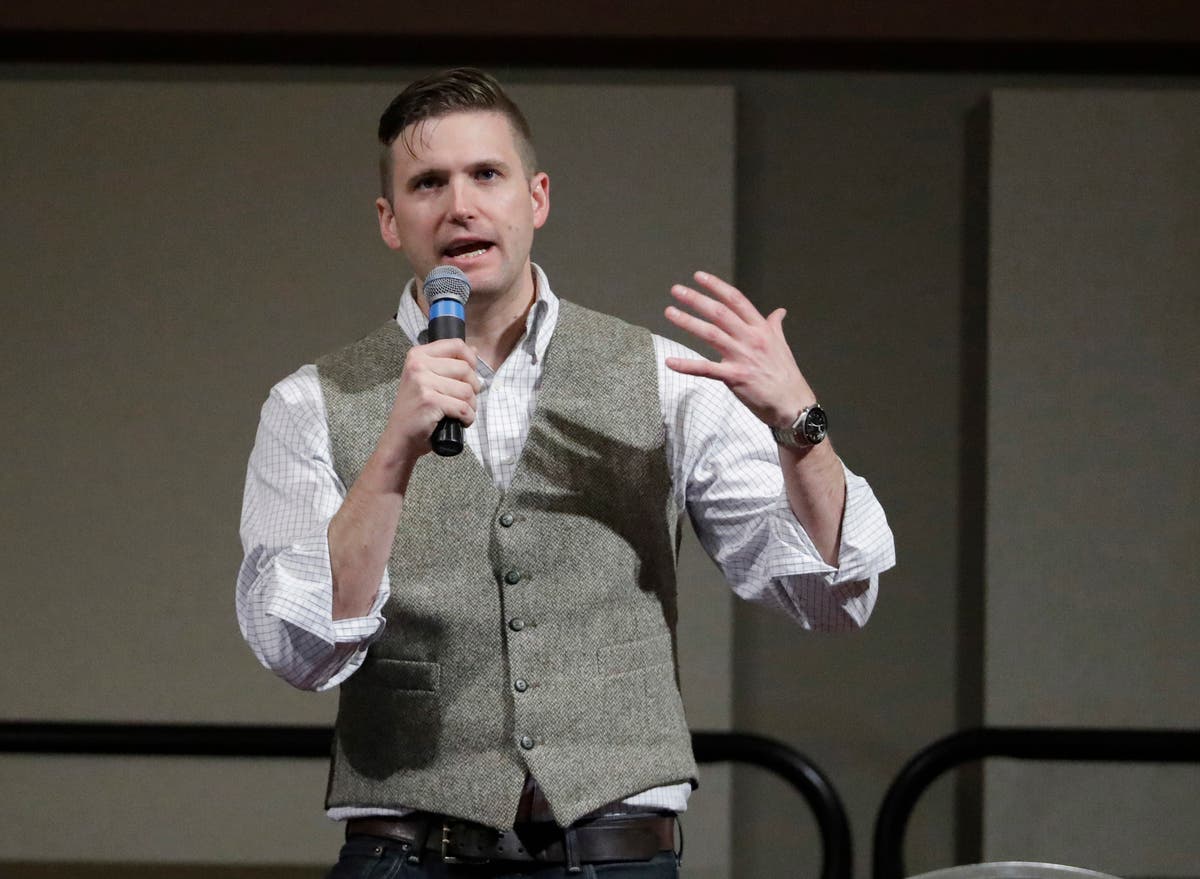
GAINESVILLE, FL — White nationalist Richard Spencer plans to speak at the University of Florida on Thursday, and President W. Kent Fuchs, who estimated the school will spend $600,000 on security, said Spencer is essentially "hijacking" public universities, which are compelled by the First Amendment to provide a speaking forum. Fuchs added that taxpayers are "subsidizing hate speech" because they're on the hook for the security costs.
Fuchs in an interview Wednesday with The Associated Press affirmed his belief in free speech but said the security costs associated with holding such an event at a public university places an unfair burden on taxpayers. The U.S. Supreme Court ruled that the government — in this case a public university — cannot bill speakers for such costs.
Watch: Florida Governor Prepares For Violence Before Richard Spencer Speech
Find out what's happening in Jacksonvillefor free with the latest updates from Patch.
Following the August violence in Charlottesville, Virginia, which left one counter demonstrator dead, Fuchs said high security costs are required to ensure a reasonable amount of safety. (For more information on Spencer's speech and other Tampa stories, subscribe to Patch to receive daily newsletters and breaking news alerts. If you have an iPhone, click here to get the free Patch iPhone app.)
Find out what's happening in Jacksonvillefor free with the latest updates from Patch.
"I fully understand freedom of speech cannot be burdened legally with the full cost of this, but on the other hand we're being burdened," said Fuchs, sitting in his office on campus in Gainesville. "So taxpayers are subsidizing hate speech."
Spencer's National Policy Institute is paying $10,564 to rent space for the speaking event.
The school has called in hundreds of law enforcement officers from federal, state, county and city sources. Streets will be blocked off, and movement around the campus tightly controlled.
Florida Gov. Rick Scott declared a state of emergency Monday, saying a "threat of a potential emergency is imminent" in Alachua County, where the school is located. The order allowed local law enforcement to partner with other agencies.
Cameron Padgett, a Georgia State University student who organized the event at University of Florida for Spencer, called the high security costs "discouraging," and said anyone from either side who incites violence should be arrested.
"That money should be used for scholarships, more research or stay with the taxpayers. But at the end of the day free speech needs to be protected," he said.
After Scott's emergency declaration, Fuchs said the school received many calls from parents concerned about safety. Fuchs had told students prior to the governor's announcement to go to class as usual, and said the campus would remain open.
Fuchs said he supported the governor's decision because it was requested by law enforcement, but admitted it created challenges for his administration.
"Parents want to know, 'Why is the governor declaring a state of emergency and yet you President Fuchs are saying my son or daughter should be going to class?' That (announcement) elevated that tension, locally with parents and brought a national visibility to this," Fuchs said.
Fuchs said he hopes the event will end up bringing the community closer together, and that it can be used to create a dialogue about race.
Student leaders are hosting a "virtual assembly" via Facebook during Spencer's event to discuss race relations and diversity.
By JASON DEAREN, Associated Press
Photo credit: David J. Phillip/Associated Press