Crime & Safety
4 FL Men Charged In Plot To Kill Haitian President Jovenel Moïse: DOJ
The owner of a Miami security company and a financier from Weston are among those accused in the plot leading to Moïse's July 2021 death.


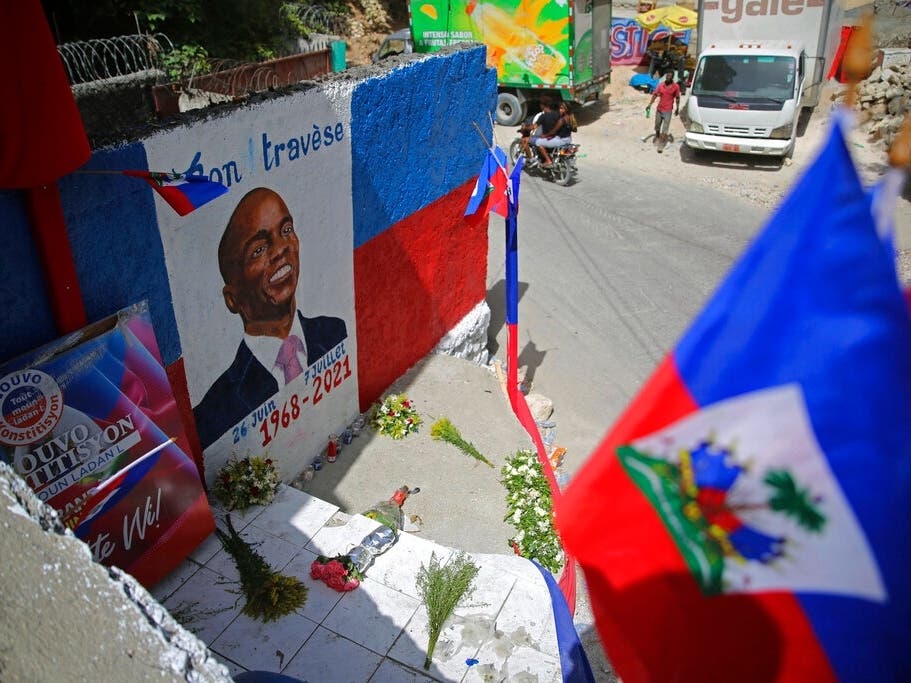
WASHINGTON, DC — Four Florida men are facing numerous federal charges in connection with a plot to murder Haitian President Jovenel Moïse, who was killed in July 2021 in what authorities say was a coup turned assassination.
Antonio "Tony" Intriago, 59, a Venezuelan-American who owned CTU Security in Doral, is charged with conspiracy to kill or kidnap a person outside the United States among other charges. CTU company representative Arcangel Pretel Ortiz, 50, a Colombian-born resident of the United States and a resident of Miami, faces the same charges.
Walter Veintemilla, 54, a financier from Weston, is accused of funding the operation. A fourth suspect, Frederick Joseph Bergmann Jr., 64, of Tampa, is accused of smuggling goods including 20 CTU-branded ballistic vests disguised as medical X-ray vests and school supplies.
Find out what's happening in Miamifor free with the latest updates from Patch.
A total of 11 suspects are now in U.S. custody, including key players like James Solages and Joseph Vincent, two Haitian-Americans who were among the first arrested after Moïse was shot 12 times at his private home.
Other suspects include Christian Emmanuel Sanon, a pastor and failed businessman whose associates suggested was duped by the plotters.
Find out what's happening in Miamifor free with the latest updates from Patch.
According to charging documents, from at least February 2021 to July 2021, South Florida served as a central location for planning and financing the plot to oust Moïse from power and replace him with someone who would serve the political goals and financial interests of those plotting against him.
In April 2021, authorities said Solages, Sanon and others met in South Florida and agreed to a plan: through CTU Security, Ortiz and Intriago would support ousting Moïse in order to replace him with Sanon.
The same month, authorities said Veintemilla and his company agreed to help finance the coup by extending a $175,000 line of credit to CTU and sending money to co-conspirators in Haiti to purchase ammunition.
"By that time, the men planned to foment a public uprising aimed at ousting President Moise and installing Sanon as president," charging documents say.
Authorities said that Intriago, Ortiz and Veintemilla expected to "reap significant financial benefits" if Sanon became president via anticipated contracts for infrastructure, military equipment and the provision of security forces.
According to charging documents, Ortiz and Intriago, as principals of CTU, retained a group of about 20 ex-Colombian soldiers to provide security to Sanon. Bergmann became a supporter and investor who helped fund the Colombians' lodging in Haiti.
Authorities have said that the original plan was to detain Moïse, force him onto a plane and take him to an unidentified location. However, according to court documents, the plot crumbled when suspects couldn't find an aircraft or sufficient weapons.
Sanon, who envisioned himself as Haiti's new leader, was supposed to seize power, but some suspects soon favored a former Haitian Supreme Court judge to take over instead, authorities said. Ortiz, Intriago, Veintemilla and others realized that "Sanon had neither the constitutional qualifications nor the popular support of the Haitian people to become president," according to court documents.
Police say the judge remains a fugitive.
If convicted, Ortiz, Intriago, and Veintemilla could face up to life in prison. Bergmann could face up to 20 years if convicted.
As the U.S. investigation pushes forward, the probe in Haiti is nearly idle. Three judges have stepped down from the case amid fears of reprisals, and a fourth one was dismissed.
Meanwhile, no court hearings have been held yet for the more than 40 suspects arrested in Haiti, with many of them, including 18 Colombian soldiers languishing in a severely overcrowded jail in Port-au-Prince that often lacks food and water.
The Associated Press contributed to this report.
Get more local news delivered straight to your inbox. Sign up for free Patch newsletters and alerts.