Politics & Government
President Trump Calls Miami-Dade Decision 'Strong'
President takes to Twitter to applaud decision by Mayor Gimenez .


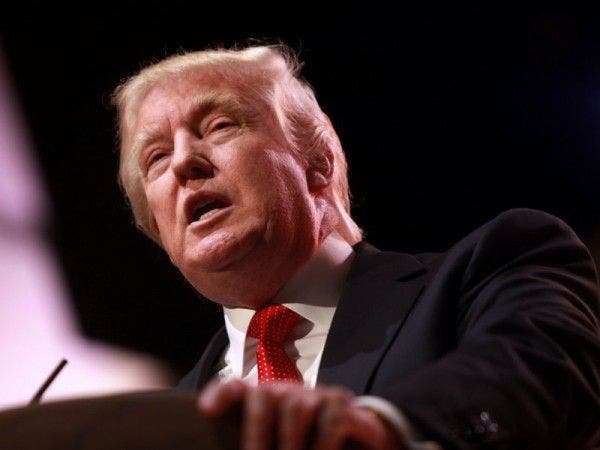
MIAMI — President Donald Trump took to Twitter overnight to applaud the decision by Miami-Dade County Mayor Carlos A. Gimenez to order county jails to comply with the new White House policy that promised to hit so-called sanctuary cities and jurisdictions in their pocketbooks.
"Miami-Dade mayor drops sanctuary policy. Right Decision. Strong!" the president tweeted.
Gimenez issued a memo on Thursday night ordering county jails to comply with the new White House policy one day after President Donald Trump targeted sanctuary cities and jurisdictions in his executive order.
Find out what's happening in Miamifor free with the latest updates from Patch.
"We used to require the federal government to assure us that they were going to reimburse us for the cost of that prisoner until they picked him up," Gimenez told reporters. "We no longer will require that. So we're taking away any kind of excuse as to why the federal government could withhold any federal aide to Miami-Dade County, which is millions and millions of dollars."
City of Miami Mayor Tomas Regalado took issue with the action.
Find out what's happening in Miamifor free with the latest updates from Patch.
"I do not agree with what the county is doing at this moment because there is no clarity," he told reporters on Friday.
But Florida Sen. Marco Rubio in a statement to Patch agreed with President Trump: "Mayor Gimenez made the right decision," he said.
Meanwhile, several dozen protesters held signs outside of Miami-Dade County offices on Friday to protest Gimenez' action. Some of the protesters identified themselves as undocumented immigrants, who now said they will be afraid to contact police when they witness a crime for fear of being deported.
In his one-page memorandum, titled "Executive Order: Enhancing Public Safety in the Interior of the United States," Gimenez pointed to President Trump's executive order and ordered the head of the county's prisons to "honor all immigration detainer requests received from the Department of Homeland Security." The memorandum was addressed to Daniel Junior, interim director of the county's Corrections and Rehabilitation Department.
"Miami-County complies with federal law and intends to fully cooperate with the federal government," added Gimenez in his memo that was signed early Thursday evening. "I will partner with the Board of County Commissioners to address any issues necessary to achieve this end."
Gimenez and other elected officials had feared that that the county might be unfairly lumped in with cities that openly shield undocumented immigrants from prosecution as Patch reported earlier.
The county appears on a map of sanctuary jurisdictions published by the Center for Immigration Studies, which has obtained some of its funding from the U.S. Census Bureau and the U.S. Justice Department and describes itself as an independent, non-partisan, non-profit research organization.
"I don’t believe we’re a sanctuary city," Gimenez told a television new interview prior to the change in policy. "And so, maybe it’s a question of definition. If that’s the case, then we need to get together with the federal government."
County spokesman Mike Hernandez took to Twitter on Wednesday evening to clarify the mayor's position, saying that the county "cooperates with the federal government on immigration matters."
He added that Miami-Dade's potential designation as a sanctuary community was under review by the U.S. Department of Justice.
The apparent shift in county policy followed President Trump's signing of an executive order on Wednesday that will withhold federal funds from local jurisdictions that offer sanctuary to illegal immigrants. The president signed the executive order during a ceremony at the Department of Homeland Security.
Sanctuary cities and counties are called that because they offer sanctuary to illegal immigrants, refusing to turn them over to federal officials for deportation.
Most sanctuary cities and counties have also passed laws preventing employees from even turning over information to immigration officials.
Miami-Dade County was among 10 jurisdictions that faced a June 30 deadline to change their so-called sanctuary policy or risk having to return some $13 million in federal grant money, according to the Center for Immigration Studies.
Inclusion on the Center's map was based on a 2013 Miami-Dade resolution — R-1008-13 — that required the federal government to agree in writing to reimburse the costs of honoring detainment orders in the case of undocumented immigrants. It also limited the county's compliance to only those inmates who had previous convictions for forcible felonies under Florida law or those inmates facing a pending charge on a non-bondable offense.
When the resolution was passed, Miami-Dade officials maintained that blanket compliance with detainment requests could "undermine trust between local police officers and the immigrant community" and that compliance with such requests had already cost the county more than $1 million in 2011 and more than $600,000 in 2012.
President Trump's order didn't specify which funds would be withheld, but sources said that the most likely funding target would be the various grants given to local governments through the Justice Department and the Department of Homeland Security.
Both agencies administer billions in grant money, including Homeland Security's Urban Area Security Initiative that helps cities prepare for acts of terrorism and the Edward Byrne Grant Program that was named for a New York City police officer killed in the line of duty. The latter provides funding for a range of programs, including crime victim assistance, drug patrols and drug treatment.
Get more local news delivered straight to your inbox. Sign up for free Patch newsletters and alerts.