Health & Fitness
The history behind Scents and more
The history of scents, The scents that I am offering for the Holidays
The history behind Scents
The process by which a flower’s scent is extracted and preserved using alcohol distillation is believed to have been discovered by Avicenna, the 11th century Arabian alchemist and physician, who stumbled on it while ‘trying to isolate for Islam the soul of its holy rose’. Before this, perfumes consisted only of thick resins and gums and gooey unguents.
Medicine
Avicenna also used his sense of smell in the diagnosis of illness – by noting changes in the smell of patients’ urine. He was not, however, the first doctor to diagnose diseases by their smell: the Ancient Greek physician Hippocrates, many centuries earlier, recommended sniffing patients’ body odour as an effective means of identifying their ailments.
Find out what's happening in New Port Richeyfor free with the latest updates from Patch.
The plague was not the only malady to be treated with fragrances. In the 17th, 18th and even into the 19th century, perfumes were widely used as remedies for almost any physical or mental disorder – including hysteria, amenorrhea, melancholia, hypochondria, headaches and the common cold – despite growing scepticism about their efficacy among some scientists.
By the early 19th century, the use of aromatics for medicinal purposes had been largely discredited by sceptical scientists, in favour of chemical medicaments. Many traditional practices persisted, including the addition of perfumes to pharmaceutical preparations, but the influence of ‘aromaphobic’ scientists, philosophers and moralists was widespread.
Find out what's happening in New Port Richeyfor free with the latest updates from Patch.
Aesthetics
Until the late 18th century, the most popular fragrances for aesthetic rather than medical purposes were the powerful, heavy perfumes derived from animals – musk, civet and ambergris.
Through history their have been a lot of studies centered around scent.
There is Emotion - The perception of smell consists not only of the sensation of the odours themselves but of the experiences and emotions associated with these sensations. Smells can evoke strong emotional reactions. In surveys on reactions to odours, responses show that many of our olfactory likes and dislikes are based purely on emotional associations. The association of fragrance and emotion is not an invention of poets or perfume-makers. Our olfactory receptors are directly connected to the limbic system, the most ancient and primitive part of the brain, which is thought to be the seat of emotion. Smell sensations are relayed to the cortex, where ‘cognitive’ recognition occurs, only after the deepest parts of our brains have been stimulated. Thus, by the time we correctly name a particular scent as, for example, ‘vanilla’ , the scent has already activated the limbic system, triggering more deep-seated emotional responses.
There are Mood-effects - Although there is convincing evidence that pleasant fragrances can improve our mood and sense of well-being, some of these findings should be viewed with caution. Although olfactory sensitivity generally declines with age, pleasant fragrances have been found to have positive effects on mood in all age groups.
And then there are Perception effects - The positive emotional effects of pleasant fragrances also affect our perceptions of other people. Unpleasant smells can also affect our perceptions and evaluations. The mood-improving effects of pleasant smells may not always work to our advantage: by enhancing our positive perceptions and emotions, pleasant scents can cloud our judgement.
Scent-preferences
Scent-preferences are often a highly personal matter, to do with specific memories and associations.
Vanilla
In the early 1990s, perfume makers began to introduce vanilla as a significant note in their fragrances. Now, vanilla is a dominant ingredient in a large number of perfumes – and the Body Shop have recently launched a pure vanilla fragrance.
Various attempts have been made to explain the current unprecedented popularity of vanilla-based fragrances. Many have tended to focus on the pleasant childhood memories associated with the smell of vanilla, its comforting milky warmth. Others have noted the appropriateness of vanilla scents for the ‘softer, more caring’ zeitgeist of the 1990s – as opposed to the thrusting, bullish 80s, when the fashion was for perfumes so overpowering that restaurants had to ban them because customers could not taste their food.
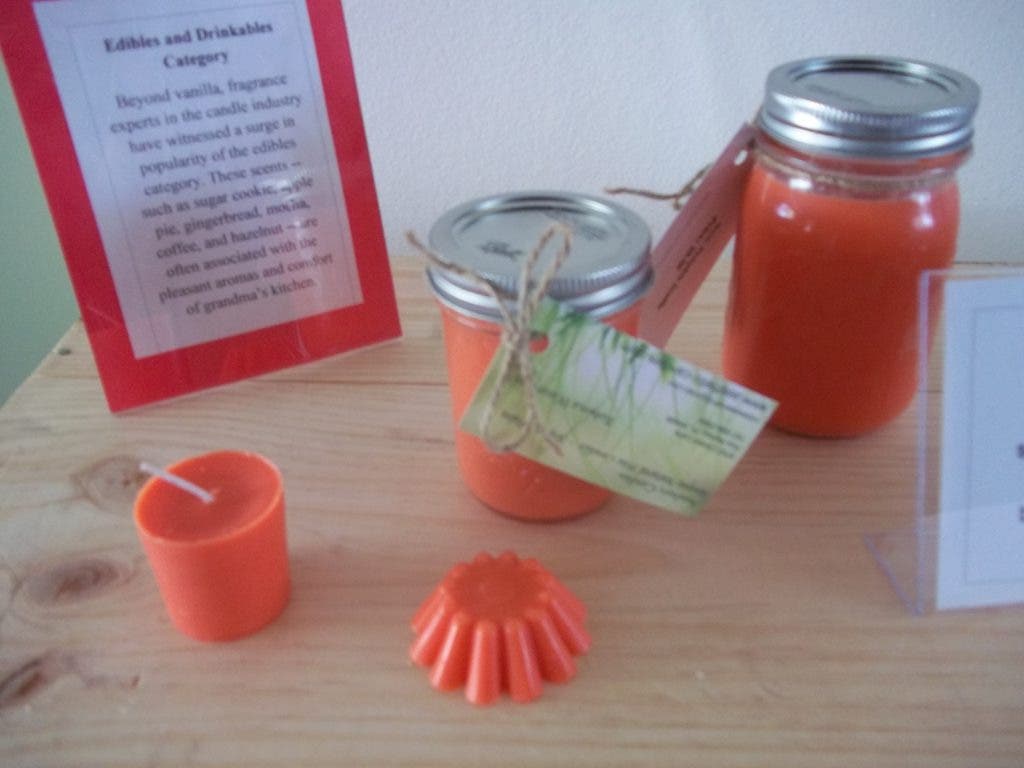
Both of these factors have clearly contributed to the vanilla-boom. This may also bewhy edible scents are becoming more popular also.
There are well over 1,000 candle scents to choose from. I put a lot of thought into selecting the scents for my candles. I listen to what people say when they stop by at the Tarpon Sunday Market, or the events that I take my candles to. Let me create candles in your favorite scent. I consider the people that purchase my candles as clients.
Customer - a person who purchases goods or services from another…
Client - our service orientated climate, consideration for the purchaser of my candles, they are paramount in the decisions that we make regarding scents, quality.
What makes Aesthetic Candles different? What makes Aesthetic Candles different? One practice – we take requests. I have started to add new scents that appeal to the holiday season, first Thanksgiving.
Cranberry Marmalade Soy Candle Collection - A mouth-watering blend of spiced cranberries, crisp spiced apples, fresh oranges, cinnamon, clove, and vanilla
Hot Baked Apple Pie Soy Candle Collection - This is the most wonderful Hot baked apple pie fragrance that I have found! The aroma of fresh cut granny smith apples, smothered in butter, cream, and cinnamon, with a background of fresh baked crust.
Pumpkin Souffle Soy Candle Collection - This fragrance is so good the description just doesn't do it justice! A rich pumpkin scent blended with fresh nutmeg, cinnamon, creamy caramel and toasted vanilla. Yum! I am expecting this scent to be the most wanted scent.
For December – consider making a list, and let me know what you would like. This way I will know how much scent to order. And Iwill have candles ready if you are purchasing them as gifts and sending them out of the area.
The December Scents will be offered in Tins, Jars, Votive Candles and Tarts.
Maple Pecan - Aroma of pecans with maple syrup on a background of vanilla. This is scrumptious blend, soft and smooth you'll taste the roasted pecans, maple syrup, rich vanilla. Cozy up to a fire and read a good book and get a warm feeling on this scented candle.
Cranberry Peppermint (type) A duplicate of the popular Yankee type fragrance. Delightful scents of lemon, cranberry, orange, pomegranate, peppermint, spearmint, and crème de menthe on a base of vanilla, wintergreen and eucalyptus.
Festival of Lights (type) A blend of savory spices, rich cinnamon and sweet potpourri to celebrate the season. This scent is dedicated to eight-day Jewish holiday commemorating the rededication of the Holy Temple (the Second Temple) in Jerusalem at the time of the Maccabean Revolt of the 2nd century BCE. Hanukkah is observed for eight nights and days.
Jack Frost(type) This is a cool, wintery mix of menthol, eucalyptus and corn mint highlighted with vanilla will stimulate and refresh your senses. It is a duplicate of the popular Yankee Candle* fragrance.
Smell of Christmas A blend of cinnamon bark and leaves with fir needles and pine enhanced by clove buds.