Neighbor News
How Long Do You Have to Go to a Chiropractor After a Car Accident?
After a car accident, one of the most common questions people ask is: how long do you have to go to a chiropractor after a car accident?

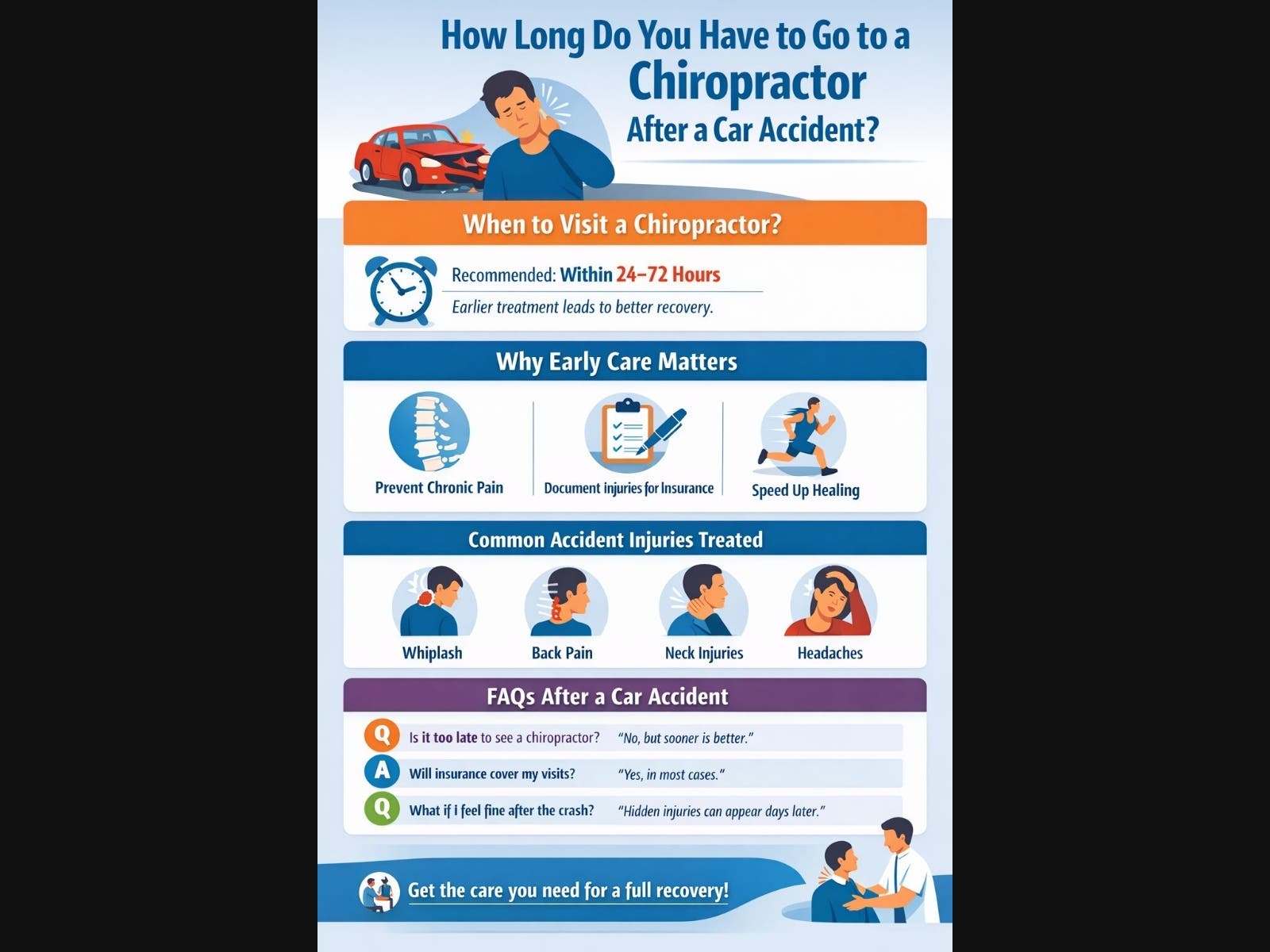
After a car accident, one of the most common questions people ask is: how long do you have to go to a chiropractor after a car accident? The short answer is — as soon as possible, ideally within 24–72 hours, even if you feel fine.
Many accident injuries don’t show symptoms right away. Adrenaline can mask pain, and inflammation may take days to develop. Seeing a chiropractor early helps document your injuries, reduce long-term damage, and improve your chances of a full recovery.
How long after a car accident should you see a chiropractor?
Most people should visit a chiropractor within 24 to 72 hours after a car accident. Early care helps detect hidden injuries, reduce inflammation, prevent chronic pain, and create medical documentation for insurance or legal claims.
Find out what's happening in Orlandofor free with the latest updates from Patch.
Why Timing Matters After a Car Accident
Even minor crashes can cause serious injuries to muscles, ligaments, discs, and nerves. Whiplash, soft‑tissue damage, and joint misalignment often worsen when treatment is delayed.
Delaying care may lead to:
• Increased inflammation
• Long-term stiffness and pain
• Reduced range of motion
• Nerve irritation
• Weaker insurance documentation
Chiropractic care focuses on restoring motion, improving alignment, and helping your body heal naturally.
How Soon Is Too Late to See a Chiropractor?
While earlier is always better, it’s never truly too late to see a chiropractor after an accident. Many patients begin treatment weeks or even months later.
However, waiting too long can:
• Slow down recovery
• Make injuries harder to link to the accident
• Increase the risk of chronic pain
• Reduce insurance claim strength
For best results, aim for your first visit within the first 3 days.
Find out what's happening in Orlandofor free with the latest updates from Patch.
Common Car Accident Injuries Chiropractors Treat
After a crash, chiropractors commonly treat:
• Whiplash
• Neck and back pain
• Herniated discs
• Shoulder injuries
• Headaches and migraines
• Nerve compression
• Soft tissue strains
These injuries often develop gradually, which is why early evaluation is important even without immediate pain.
How Long Will You Need Chiropractic Treatment?
Treatment length depends on injury severity, age, and health history. Typical timelines include:
• Minor injuries: 2–4 weeks
• Moderate injuries: 1–3 months
• Severe injuries: 3–6+ months
Your chiropractor will create a personalized plan with adjustments, therapy, and rehabilitation exercises.
Can You See a Chiropractor Without Symptoms?
Yes. Many accident victims feel fine at first. But internal damage can exist before pain starts.
Seeing a chiropractor early helps:
• Identify hidden injuries
• Prevent long-term problems
• Establish medical records
• Support insurance and legal claims
Early care protects both your health and your rights.
Insurance, Legal, and Documentation Benefits
Prompt chiropractic care creates medical documentation connecting your injuries to the accident. This is important for:
• Auto insurance claims
• Personal injury cases
• Medical reimbursement
• Lost wage compensation
Waiting too long can allow insurers to argue your injuries were not accident-related.
When to Seek Emergency Care Instead
Go to the emergency room first if you have:
• Loss of consciousness
• Severe bleeding
• Broken bones
• Chest pain
• Neurological symptoms
Once stabilized, chiropractic care can support recovery.
Final Thoughts
So, how long do you have to go to a chiropractor after a car accident? Ideally within 24–72 hours. Early chiropractic care improves healing, prevents chronic pain, and protects your insurance claim. Even if symptoms seem minor, early evaluation gives you the best outcome.
If you’ve been in a car accident, professional chiropractic care can help restore movement, reduce pain, and guide your recovery safely.