Politics & Government
10-Year Study Finds New Species Of Bottlenose Dolphin On East Coast
Scientists propose that the coastal form of common bottlenose dolphins found along the U.S. East Coast is a different species.


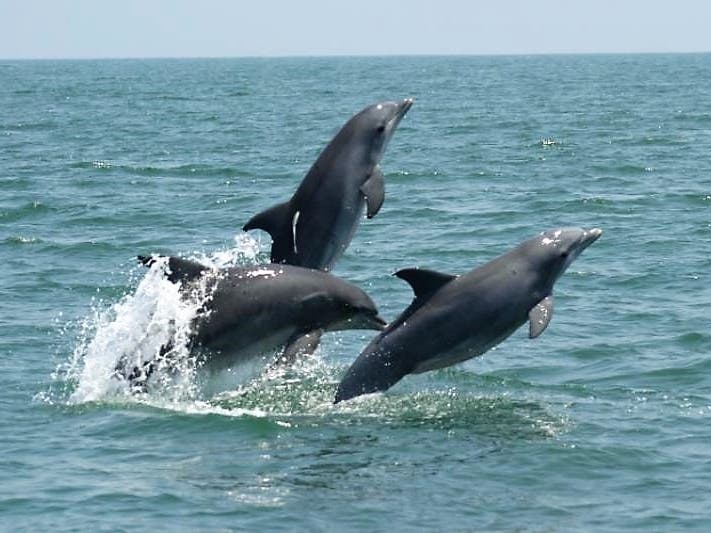
FLORIDA — After nearly a decade of research, a collaborative study says the common bottlenose dolphins inhabiting nearshore coastal and estuarine waters between New York and Florida are likely a separate species from their offshore counterparts.
Scientists found that they are more closely related to other coastal populations in the Caribbean and Gulf of Mexico than their neighboring offshore common bottlenose dolphins.
Ana Costa, Ph.D., lead author of the study at the University of Miami, worked closely with several scientists at the National Oceanic and Atmospheric Administration Southeast Fisheries Science Center to collect DNA and morphological data from tissue samples, skulls and vertebral columns from dolphins that stranded along the East Coast, according to a news release from NOAA.
Find out what's happening in Tampafor free with the latest updates from Patch.
Many of these specimens were originally collected by members of the Marine Mammal Stranding Network and NOAA’s National Centers for Coastal Ocean Science. They were archived in several museums, including the Smithsonian National Museum of Natural History and the South Carolina State Museum.
In general, when there is a new species, the scientist who first describes it chooses both the scientific name and an English common name.
Find out what's happening in Tampafor free with the latest updates from Patch.
The scientific name of these dolphins was previously Tursiops truncatus, or common bottlenose dolphin. As part of the process to select the new scientific name, Costa went back to the first description of a coastal bottlenose dolphin from the U.S. East Coast published in 1865 and chose the first Latin name applied to these dolphins: Tursiops erebennus.
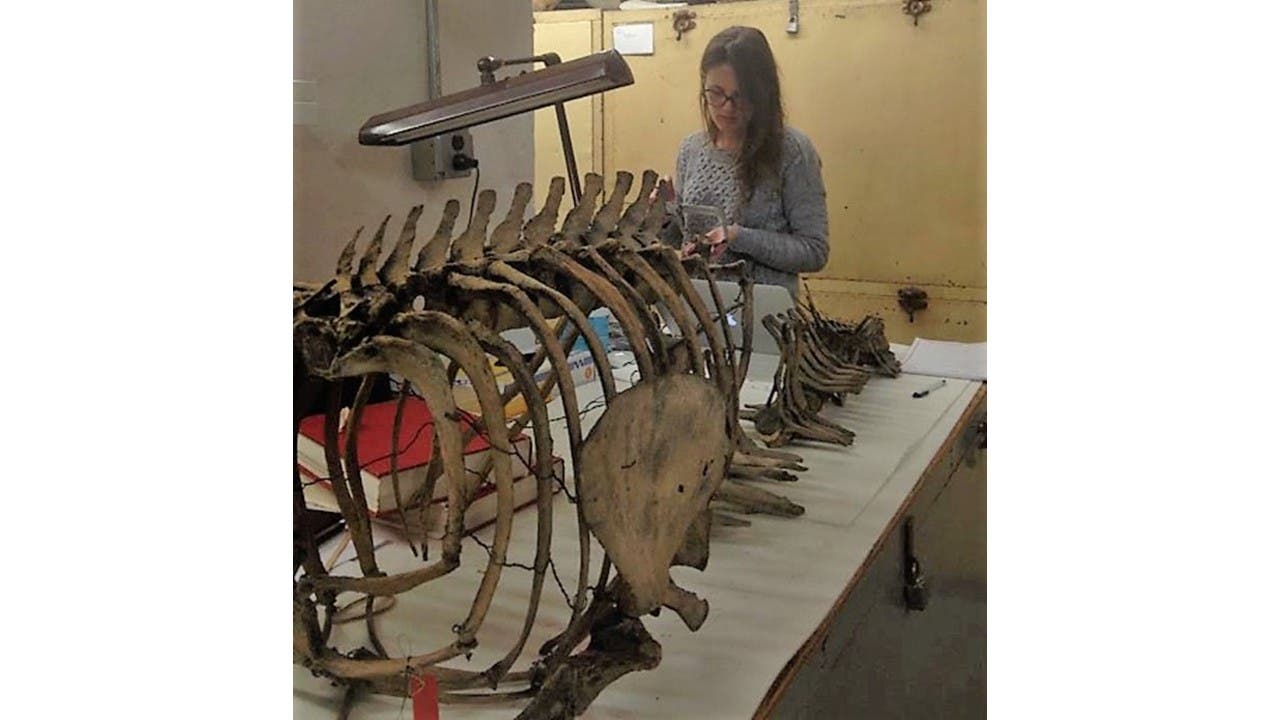
Ana Costa, Ph.D. measures a dolphin skeleton, used to describe and name the species, Tursiops erebennus. The specimen is housed at the Academy of Natural Sciences of Drexel University.
To determine their common name, Costa worked with her co-authors, including Eric Archer, Ph.D., a scientist at the Southwest Fisheries Science Center. They looked back to where the original specimen was collected, on the coast of what is now New Jersey.
They consulted with the Nanticoke Lenni-Lenape Tribe, who are descendants of the original people that inhabited this area, and agreed on the name “Tamanend's bottlenose dolphin" after Chief Tamanend, who was known for his wisdom and peaceful nature.
The research on this project took more than eight years to conduct and follows on decades of previous research on this new species.
And the study isn’t over yet. More scientific research is needed to determine whether the coastal and estuarine bottlenose dolphins in the Gulf of Mexico are different from Tamanend’s bottlenose dolphins or are the same species.
NOAA noted that this new designation does not change the protection status of the dolphins under the Marine Mammal Protection Act.
Get more local news delivered straight to your inbox. Sign up for free Patch newsletters and alerts.