Weather
Hurricane Season Goes Out Like A Lamb, But Still Above Average
The National Oceanic and Atmospheric Administration is calling this hurricane season "above-average," having produced 21 named storms.


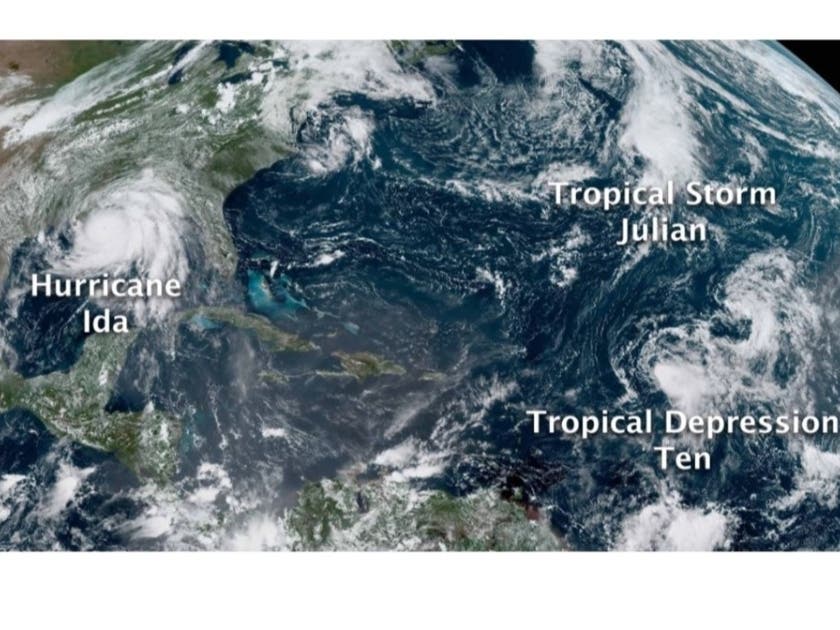
FLORIDA — Floridians can breathe a sigh of relief — at least for the next six months. The 2021 Atlantic hurricane season ended Tuesday with no direct hits on the state.
The National Oceanic and Atmospheric Administration is calling this hurricane season "above-average," having produced 21 named storms (winds of 39 mph or greater), including seven hurricanes (winds of 74 mph or greater) of which four were major hurricanes (winds of 111 mph or greater).
The above-average hurricane season was accurately predicted by NOAA’s Climate Prediction Center, a division of the National Weather Service, in their May and August outlooks.
Find out what's happening in Tampafor free with the latest updates from Patch.
“NOAA provided the science and services necessary to protect life and property before, during and after storms all season long,” said NOAA Administrator Rick Spinrad. “From essential observations to advanced warnings to critical response actions, NOAA supports communities so they are ready, responsive and resilient to the impact of tropical cyclones each and every hurricane season.”
The season officially runs from June 1 to Nov. 30, although storm activity in the tropics can extend beyond Nov. 30.
Find out what's happening in Tampafor free with the latest updates from Patch.
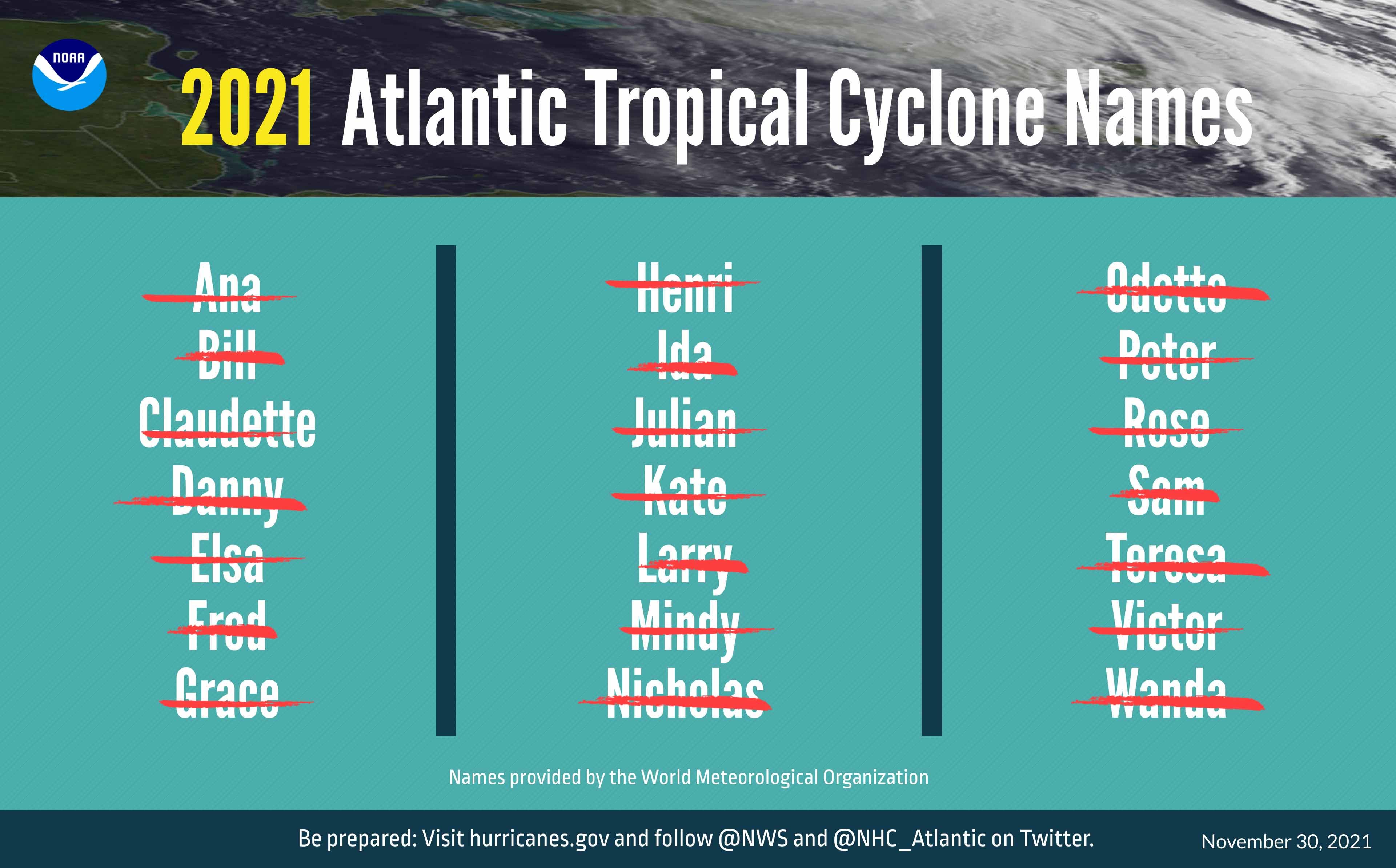
NOAA said this year was the third most active year on record in terms of named storms, it marks the sixth consecutive above-normal Atlantic hurricane season, and this was the first time on record that two consecutive hurricane seasons exhausted the list of 21 storm names.
Scientists attribute the heightened hurricane activity in recent years to the warm phase of the Atlantic Multidecadal Oscillation that began in 1995 and favors more, stronger and longer-lasting storms.
The Atlantic Multidecadal Oscillation is thought to be driven by a combination of internal climate variability and changes over time in small airborne particles, often referred to as aerosols, over the North Atlantic.
However, NOAA weather experts still can't say what part internal climate variability and aerosols played in this year's season. But global warming hasn't been discounted.
The Intergovernmental Panel on Climate Change's Sixth Assessment Report, released in August, projected with high confidence that the global proportion of tropical cyclones that reach very intense (category 4 to 5) levels, along with their peak winds and rainfall rates, are expected to increase with climate warming at the global scale.
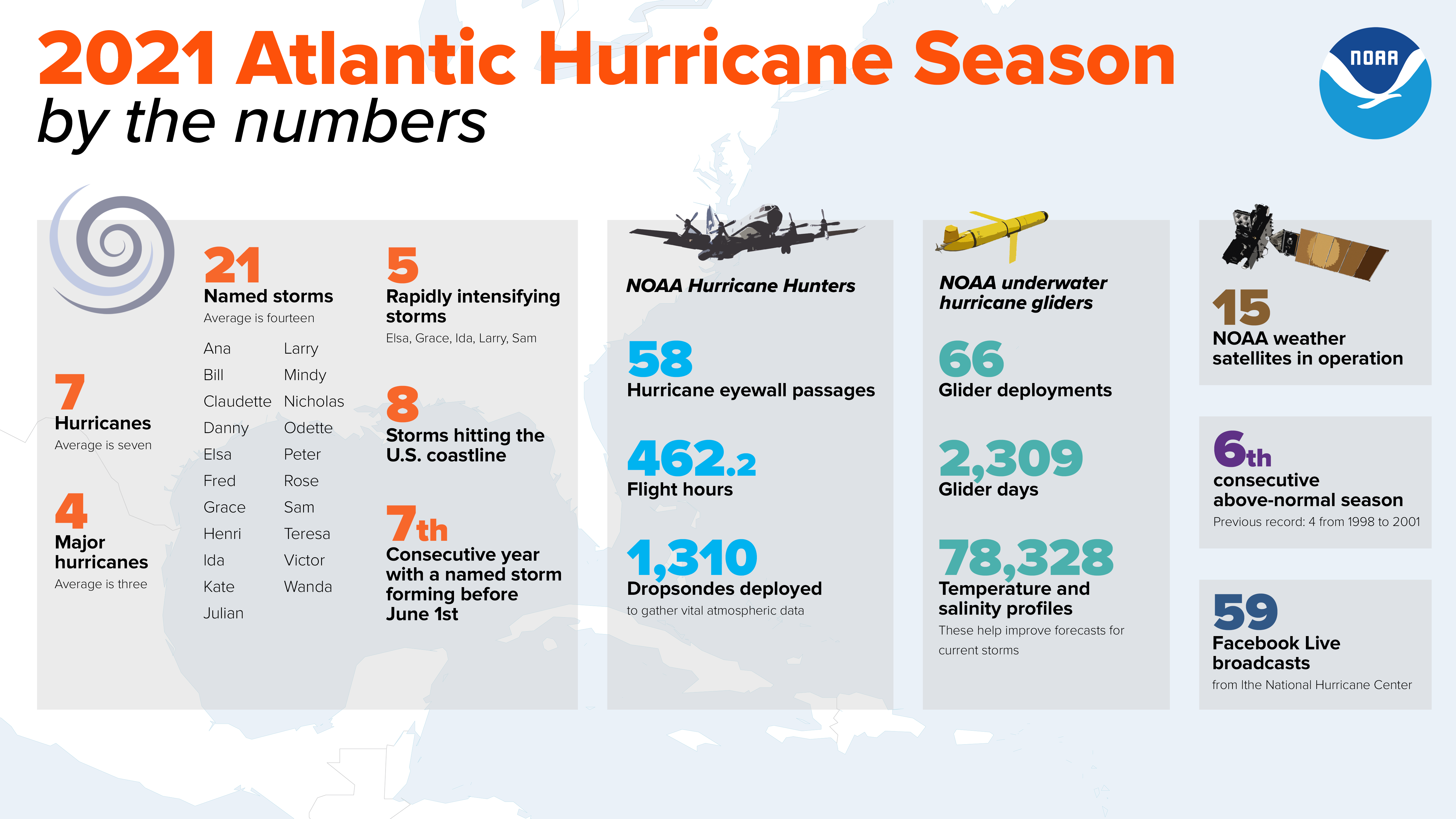
This infographic highlights key facts and statistics from the 2021 Atlantic Hurricane Season.
“The hard-working forecasters at NOAA’s National Weather Service weather and water forecast offices and national centers, along with the National Hurricane Center, provided reliable forecasts and advanced warnings around the clock to safeguard communities in the pathway of destructive storms throughout this active hurricane season,” said National Weather Service Director Louis W. Uccellini. “Their dedication and service are a recognized asset to the nation's resilience to these extreme events.”
This season’s storm activity started early and quickly ramped up, as it was the seventh consecutive year with a named storm forming before the official start to the season on June 1, and held the earliest fifth named storm on record.
As to why, Matthew Rosencrans, lead seasonal hurricane forecaster at NOAA’s Climate Prediction Center, can only speculate.
“Climate factors, which include La Niña, above-normal sea surface temperatures earlier in the season, and above-average West African monsoon rainfall were the primary contributors for this above-average hurricane season," Rosencrans said.
New Technology Means More Accurate Predictions
During the season, NOAA's aircraft flew more than 462 mission hours to forecast and research cyclonic activity. Data collected by these high-flying meteorological laboratories help forecasters make accurate storm predictions and allow hurricane researchers to achieve a better understanding of storm processes, which ultimately improves their forecast models.
Data from these aircraft, NOAA satellites and other sources allowed the National Hurricane Center to accurately forecast Hurricane Ida — which is tied for the fifth-strongest hurricane to ever make landfall in the United States — hitting Louisiana as a major hurricane.
Since the launch of the storm surge warning and new inundation mapping in 2017, there have been 16 U.S. hurricane landfalls, of which seven were major hurricanes. During this period, there are only seven known direct fatalities attributed to storm surge in the United States.
In 2021, only one life was lost due to the storm surge accompanying the eight storms that made landfall.
In the aftermath of Hurricane Ida, NOAA Aircraft flew 32 mission hours collecting aerial damage assessment images to support emergency response efforts at NOAA’s National Ocean Service.
Rosencrans said NOAA’s aerial imagery was an invaluable tool in determining the extent of flood expected and assessing damage to major ports and waterways, coastlines, critical infrastructure and coastal communities.
The 2022 hurricane season will officially begin on June 1. NOAA’s Climate Prediction Center will issue its initial seasonal outlook in May for the June 1, 2022, hurricane season.
Related stories:
Get more local news delivered straight to your inbox. Sign up for free Patch newsletters and alerts.