Neighbor News
America Needs a National Standard for Cannabis-Impaired Driving
As more states move from medical marijuana toward adult-use cannabis markets, the United States faces a growing public-safety problem.

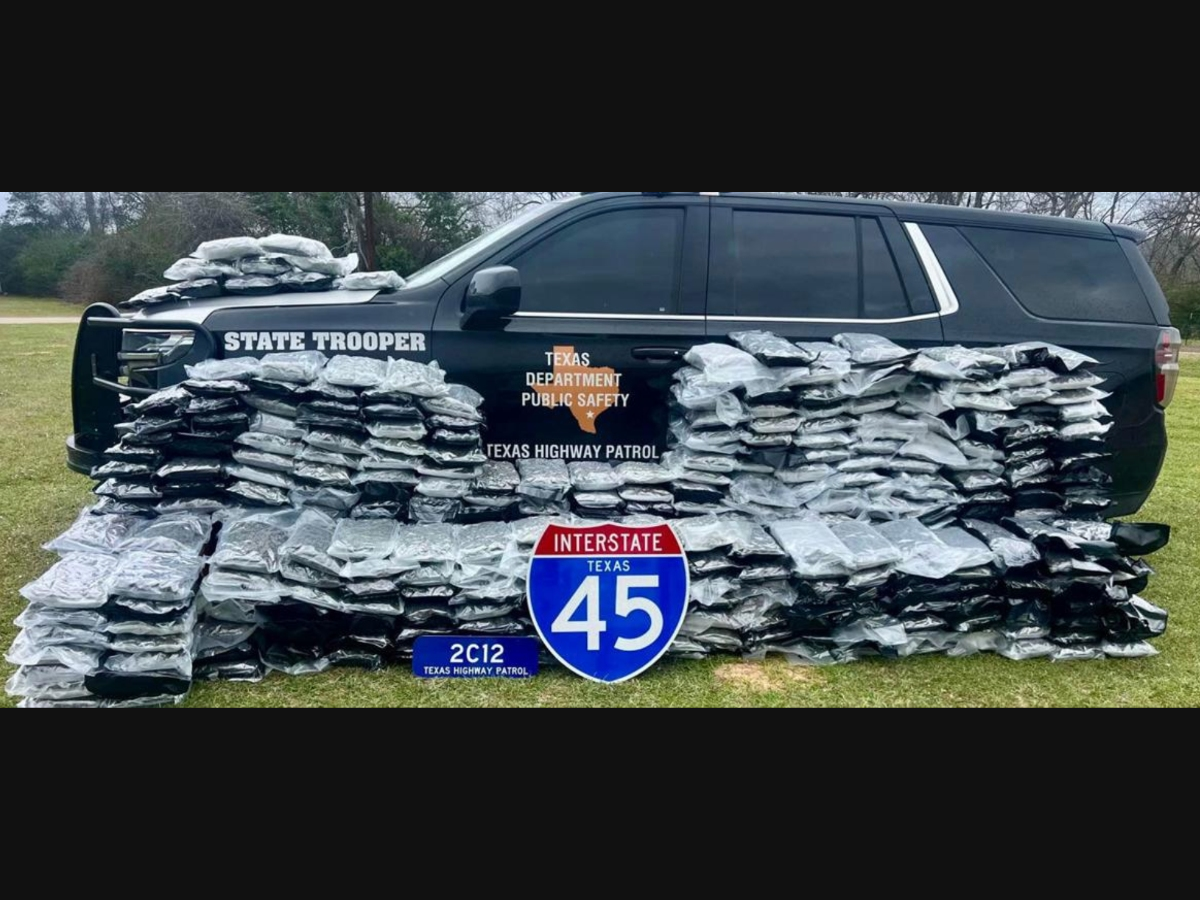
What, exactly, constitutes an unacceptable level of THC for someone operating a motor vehicle?
Unlike alcohol, where a widely recognized blood-alcohol concentration standard provides law enforcement with an objective benchmark, cannabis-impaired driving remains governed by a patchwork of state laws and testing practices. Some states use THC “per se” limits, others use zero-tolerance laws, and others rely primarily on evidence of impairment. NHTSA reports that states with specific THC per-se limits have generally selected thresholds between 1 and 5 nanograms of THC per milliliter of blood, while Colorado uses a 5-ng/mL “reasonable inference” standard.
The problem is that there is currently no scientifically established national THC number equivalent to the 0.08 BAC standard for alcohol.
Find out what's happening in West Palm Beachfor free with the latest updates from Patch.
That distinction matters enormously.
The dangerous question nobody has adequately answered
A driver can legally possess cannabis, legally consume cannabis and, in many circumstances, legally obtain substantial quantities of cannabis through a state medical program. But the legal authority to possess or use cannabis does not answer the separate question of whether that person is safe to operate a 3,000-pound vehicle around children, pedestrians and other motorists.
Find out what's happening in West Palm Beachfor free with the latest updates from Patch.
NHTSA states plainly that driving while impaired by marijuana is illegal throughout the United States and warns that marijuana can slow reaction time, impair judgment and reduce coordination—abilities essential to safe driving.
Yet THC presents a fundamental scientific problem: blood THC concentration does not correlate with impairment nearly as cleanly as BAC correlates with alcohol impairment. NHTSA's congressional report specifically discusses the poor correlation between blood THC concentrations and impairment and the implications for establishing a per-se THC limit.
That does not mean the country should abandon objective testing.
It means the federal government should lead the development of a better objective testing system rather than leaving individual states to create a confusing collection of incompatible standards.
Florida's medical-marijuana system illustrates the problem
Florida provides an especially important case study because its medical-marijuana system is based substantially on physician-authorized supply limits rather than a conventional pharmaceutical-style prescription stating that a patient should consume a precise number of milligrams of THC every day.
Florida law historically authorized physicians to issue certifications within specified supply limits—for example, 70-day supply limits for marijuana, rather than simply writing a conventional daily THC prescription. The state's Medical Marijuana Use Registry remains administered by the Florida Department of Health's Office of Medical Marijuana Use.
That creates an important public-policy distinction:
A patient's authorized cannabis supply is not the same thing as a medically established daily driving-safe dose.
A monthly or multi-week allotment cannot tell a police officer how much THC a person consumed immediately before getting behind the wheel. Nor can possession of a medical authorization establish that a driver is unimpaired at a particular moment.
The same principle applies to recreational marijuana.
Legal possession cannot become a substitute for determining whether somebody is presently capable of safely driving.
Field sobriety tests cannot carry the entire burden
There is another problem.
Police officers can observe behavior, administer standardized field sobriety tests and investigate circumstances surrounding a suspected impaired-driving incident. Those tools remain important.
But relying almost entirely on an officer's observations creates a difficult evidentiary problem when the underlying substance has no universally accepted numerical driving limit.
Imagine two drivers involved in separate traffic stops.
One tests positive for THC.
The other tests positive for alcohol at 0.08 BAC.
The alcohol case has an objective numerical benchmark with decades of legal and scientific infrastructure behind it. The THC case can be far more complicated because THC may remain detectable after the period of acute impairment, particularly in frequent cannabis users.
That does not mean THC-positive drivers should automatically be considered impaired.
It means the country needs a scientifically defensible way to distinguish recent consumption, residual THC and actual impairment.
So what should the national THC limit be?
The honest answer today is:
There is no universally accepted scientific answer.
A national standard should therefore not simply copy the 0.08 alcohol model and arbitrarily declare that 5 ng/mL—or 2 ng/mL—is “the cannabis equivalent.”
Several states already use numbers in that range. NHTSA identifies state THC per-se limits ranging from 1 to 5 ng/mL. But the existence of those laws should not be confused with scientific proof that one particular number represents universal impairment.
The better approach would be for the U.S. Department of Transportation, NHTSA, federal health agencies, toxicology laboratories and independent researchers to establish a national research program designed specifically to determine whether a scientifically defensible threshold—or a combination of measurements—can be established.
If research ultimately supports a numerical threshold, that threshold should become the federal model for states transitioning from medical-only systems to adult-use cannabis.
Which test should be used?
This question is just as important as the number.
Blood
Blood is currently the most useful specimen for measuring THC concentration in the bloodstream, and existing state per-se laws generally refer to blood THC concentrations.
The major problem is that blood THC falls rapidly after smoking while impairment does not necessarily map perfectly onto the measured concentration. Consequently, a blood result is valuable evidence but should not automatically be treated as a perfect measurement of impairment.
Urine
Urine is a poor choice for determining current driving impairment.
Federal DOT workplace testing currently uses urine cutoffs for marijuana metabolites, including a 50-ng/mL initial cutoff and a 15-ng/mL confirmatory cutoff for THCA.
Those are workplace drug-testing thresholds—not legal driving limits.
A positive urine result can demonstrate prior exposure, but it generally cannot tell a police officer that someone is currently too impaired to drive.
Saliva/oral fluid
Oral-fluid testing may be particularly promising for roadside screening because it can detect THC relatively close to the time of consumption.
DOT's existing oral-fluid workplace testing framework uses a 4-ng/mL initial THC cutoff and 2-ng/mL confirmatory cutoff.
Again, those numbers should not be mistaken for a federally established driving limit.
A future national roadside system could potentially use oral fluid as a rapid screening tool, followed by laboratory confirmation and, where appropriate, blood testing.
Hair
Hair should not be the primary test for determining whether somebody is impaired behind the wheel.
Hair testing is much better suited to establishing longer-term exposure than determining whether a driver is impaired at 8:00 p.m. on a particular evening.
A possible national model
Rather than simply declaring “5 ng/mL equals drunk,” federal regulators could develop a layered system:
1. Roadside behavioral evidence
Observed driving behavior, crash circumstances and standardized impairment indicators.
2. Rapid oral-fluid screening
A roadside test capable of identifying recent THC exposure.
3. Laboratory confirmation
A scientifically validated confirmatory test.
4. Blood THC measurement when legally justified
Used when a precise quantitative result is necessary.
5. A federally researched THC threshold or range
Established only after sufficient scientific evidence demonstrates that it has meaningful predictive value for impairment.
6. Enhanced penalties for aggravating circumstances
Particularly when impaired driving involves children, school zones, serious injury or death.
This would be substantially more defensible than simply telling officers to determine everything through field sobriety testing.
Florida should lead—not wait
Florida has an opportunity to become a national leader in this area.
The state has already demonstrated that cannabis regulation requires substantial government oversight through the Department of Health's Medical Marijuana Use Registry. As Florida debates the future of adult-use marijuana, lawmakers should treat highway safety and child protection as separate policy questions from cannabis legalization itself.
The question should not be whether adults have a right to use cannabis.
The question should be:
What protections does society owe everyone else when an adult gets behind the wheel after using it?
That question becomes even more important when children are passengers.
Florida is uniquely positioned to argue that cannabis reform must be accompanied by a comprehensive national impaired-driving framework. Rather than waiting for fifty states to develop fifty different approaches, Florida could call on the federal government to establish a national scientific standard that every state's Department of Motor Vehicles could ultimately adopt.
The objective should not be to punish lawful cannabis users.
It should be to prevent impaired people from driving.
The principle should be simple
The United States already recognizes that the privilege of operating a motor vehicle comes with a responsibility to remain capable of operating that vehicle safely.
Cannabis legalization should not change that principle.
A person should not be able to argue that a large authorized cannabis allotment, a medical-marijuana card or lawful recreational possession establishes that he or she is safe to drive.
At the same time, government should not criminalize a person merely because a test detects THC left over from consumption days earlier.
The country needs a scientifically credible middle ground.
The federal government should fund the research, establish standardized testing protocols, define what constitutes recent THC exposure, determine how quantitative THC results should be interpreted and create a model that states can adopt.
And Florida should be among the states demanding that work happen now.
The ultimate standard should protect the driver, passengers, pedestrians and—most importantly—children sharing America's roads.
The goal should not be a war against cannabis. The goal should be a national standard against impaired driving.
The bottom line on the “nanogram limit”
There is no federally established THC driving limit today comparable to the 0.08 BAC alcohol standard.
State limits currently range approximately from 1 to 5 ng/mL of blood THC, but NHTSA's research indicates that THC concentration does not have the same straightforward relationship with impairment that alcohol concentration has with intoxication.
For that reason, a responsible national policy should not simply declare 5 ng/mL—or any other number—the answer without further scientific validation.
A promising national testing architecture would be oral fluid for roadside screening, laboratory confirmation, and blood testing for quantitative THC measurement when necessary, while explicitly recognizing that urine and hair are poor tools for determining immediate driving impairment.
That is the standard America should be working toward before recreational cannabis becomes normalized without a corresponding national framework for protecting everyone else on the road.