Politics & Government
Georgia Supreme Court To Weigh In On Medical Monitoring Question For Those Exposed To BioLab Plume
Should a court be able to order those responsible to pay for long-term medical monitoring to catch potential symptoms early?

April 22, 2026
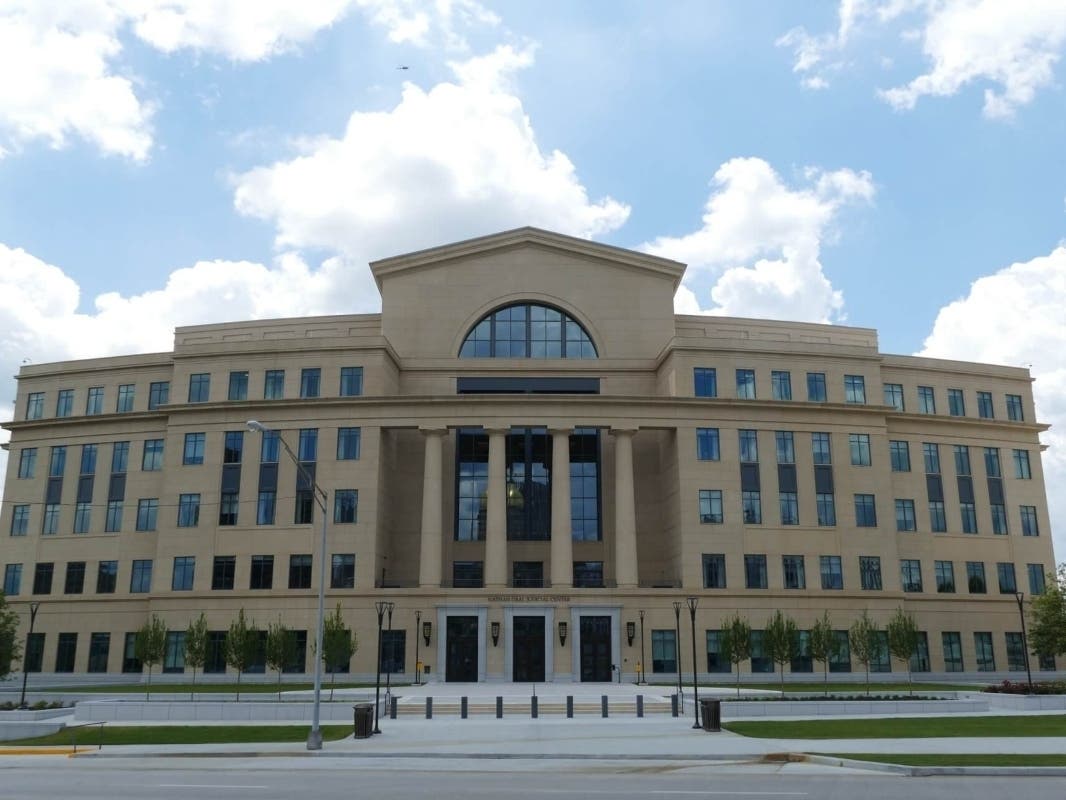
The Georgia Supreme Court heard arguments Tuesday in a case related to the massive cloud of smoke that billowed for weeks from a fire at the BioLab chemical plant in Conyers in 2024
Find out what's happening in Across Georgiafor free with the latest updates from Patch.
The major question before the court: If you’ve been exposed to potentially toxic substances but haven’t gotten sick, should a court be able to order those responsible for the exposure to pay for long-term medical monitoring to catch potential symptoms early?
A federal court has asked Georgia’s justices to answer that question as a separate federal class-action lawsuit moves forward.
Find out what's happening in Across Georgiafor free with the latest updates from Patch.
Attorney Michael Terry, arguing on behalf of a group of residents and companies who say they were exposed to potentially toxic substances, said 90,000 residents were forced to evacuate or shelter in place after the fires.
Attorneys said numerous residents suffered immediate physical symptoms, but many others now live with the fear that they could be at risk for future medical problems.
“In a very real sense, thousands of people continue to live under that cloud, because for them, this is not yesterday’s news, but it’s also tomorrow’s news, next year’s news, next decade’s news,” Terry said. “Because these citizens face an increased risk of serious, even deadly health complications. Their best protection is regular medical monitoring to enable early detection and treatment, and that necessity is a direct result of BioLab’s tortious conduct, and the victims shouldn’t have to pay for it.”
Attorney Michael Eber, arguing for BioLab, said Georgia law has never recognized personal injury liability without a present physical injury and that doing so would be bad for business.
He said this case could involve potentially 2 million people who live within 25 miles of the Conyers plant.
“Given the ubiquity of alleged toxins and pollutants in modern society, allowing that type of claim would generate costly litigation against a wide range of Georgia businesses that employ hundreds of thousands of Georgians,” Eber said. “Because of the far reaching effects of those claims and the complex policy considerations at stake as to whether to recognize it, and if so, how to determine what the elements are, the General Assembly rather than this court should decide whether to recognize medical monitoring.”
In questioning BioLab, Justice Andrew Pinson invoked a 2019 state Supreme Court case, Collins v. Athens Orthopedic Clinic, in which the court ruled that patients whose personal data had been obtained by a hacker had standing to sue even if they had not yet been victims of identity theft.
“It seems like Collins is at least difficult for you because it does seem to rely on — there is a theft of personal information, but the focus is on the substantial risk of later identity theft,” Pinson said.
Eber said in the context of a data breach, there was a “reasonable certainty of that future harm,” a standard he said isn’t met in the BioLab case.
“It’s hard to imagine any toxic substance that would be so dangerous as to cause a likelihood or probability of future injury, but at the same time not dangerous enough to cause any immediate physical harm,” he said.
The Georgia Recorder, an independent, nonprofit news organization, connects public policies to stories of the people and communities affected by them through a steady mix of in-depth reporting, blog posts, and social media updates on the latest news and progressive commentary. The Recorder is part of States Newsroom, a national 501(c)(3) nonprofit supported by grants and a coalition of donors and readers.