Neighbor News
How Will AI Integration Reshape Anesthesia Care and Workforce Dynamics in Metro Atlanta? | Ariana Lyons, AA-C
The tangible applications of AI are already being deployed across leading local institutions to augment clinical decision-making.

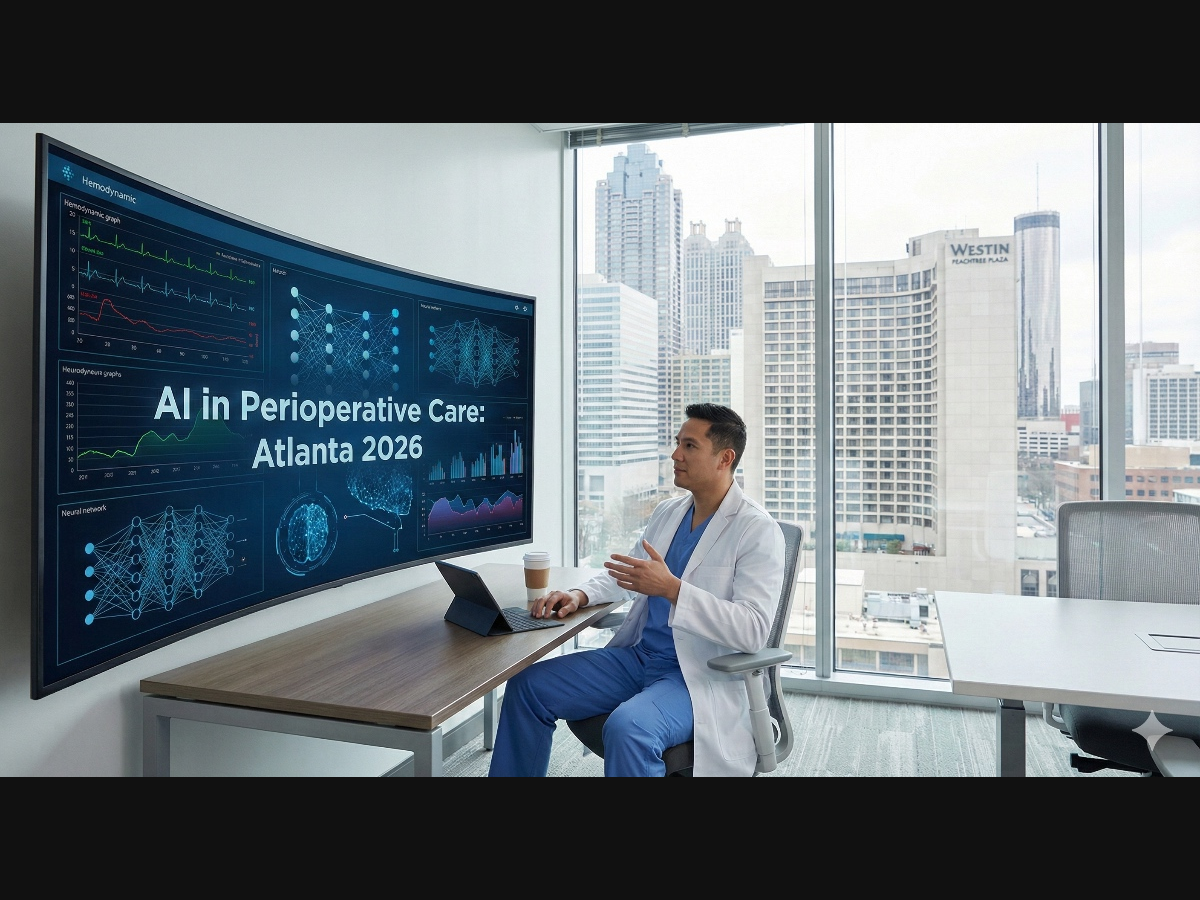
The 2026 AI Inflection Point: From Pilot Phase to Standard Practice
The strategic importance of 2026 lies in the transition of Artificial Intelligence from an experimental technology to an integrated clinical partner within Atlanta's operating rooms. This is not a future-state projection but a present-day reality that is fundamentally redefining the capabilities of the Anesthesia Care Team. What was recently confined to pilot programs is now becoming a standard component of our clinical workflow, promising a new era of precision and efficiency in patient care.
Key AI-Driven Enhancements in Anesthesia Care
The tangible applications of AI are already being deployed across leading local institutions to augment clinical decision-making and streamline complex processes. Key advancements include:
Find out what's happening in Atlantafor free with the latest updates from Patch.
- Enhanced Predictive Analytics: Sophisticated tools are now capable of analyzing real-time hemodynamic data to predict hypotensive events before they occur, allowing for proactive intervention rather than reactive treatment.
- Workflow Efficiency: AI-driven scheduling and documentation platforms are being implemented to reduce the significant "administrative burden" that has been a primary contributor to provider burnout.
- Precision Dosing: Advanced algorithms are assisting clinicians in tailoring the delivery of volatile and intravenous anesthetics, customizing care to a patient's unique physiological markers for improved safety and outcomes.
This technological shift is validated by local leadership. As Dr. Amit Prabhakar, Chief of Anesthesiology at Emory University Hospital Midtown, recently confirmed, AI is no longer a futuristic concept but a "present-day tool." The successful integration of these systems, however, depends entirely on the skilled professionals who must learn to wield them effectively.
--------------------------------------------------------------------------------
2. The Human Factor: Navigating Staffing Demands Amidst Regional Expansion
The fundamental challenge facing the Metro Atlanta healthcare system is balancing this remarkable technological innovation with the persistent reality of workforce constraints. As one local healthcare administrator aptly summarized the situation:
"The challenge for 2026 isn't just about having the best technology... It’s about how we use that technology to support a workforce that is still recovering from the staffing shortages of the last few years."
This pressure is compounded by unprecedented regional growth, which is dramatically increasing the demand for anesthesia professionals, including anesthesiologist assistants.
Grady Health System's Southern Expansion
Find out what's happening in Atlantafor free with the latest updates from Patch.
Grady Health System's strategic growth, recognized by the naming of CEO John Haupert as the "2026 Georgian of the Year," is a prime example of this expansion. The development of a new emergency facility in Union City is a direct response to the need for greater access to care in South Fulton, creating new operating rooms and procedural suites that require expert staffing.
Northside Hospital's Ambulatory Growth
Simultaneously, Northside Hospital has entered the "vertical" phase of construction for several new ambulatory surgery sites. This move reflects a broader industry trend toward outpatient procedures and directly increases the regional demand for anesthesia services outside the traditional hospital setting.
These large-scale infrastructure projects are not abstract developments; they represent a direct and escalating demand for highly skilled members of the Anesthesia Care Team to deliver safe and effective patient care across a rapidly growing metropolitan landscape.
--------------------------------------------------------------------------------
3. A Broader Mandate: Perioperative Care and Public Health Imperatives
The role of the modern Anesthesia Care Team has evolved beyond the confines of the operating room, now directly intersecting with some of the most critical public health issues facing our communities. As highlighted in a recent Georgia Public Health Association (GPHA) webinar, drug surveillance data reveals an ongoing regional opioid crisis, placing a significant responsibility on anesthesia providers who manage acute surgical pain. This public health imperative adds another layer of complexity to the challenges of workforce shortages and serves as a powerful use case for the predictive and data-processing capabilities of new AI tools.
This mandate requires a sophisticated clinical response aimed at minimizing opioid exposure and preventing long-term dependency. Anesthesia professionals are on the front lines, employing specific strategies to address this crisis:
- Opioid-Sparing Techniques: This has become a core strategy in modern perioperative care, utilizing a combination of non-opioid medications to provide effective pain relief.
- Regional Anesthesia Blocks: The targeted use of nerve blocks provides potent, site-specific analgesia, often eliminating the need for systemic opioids altogether.
- Multimodal Analgesia: This comprehensive approach involves layering different types of pain medications that act on various pain pathways, achieving superior pain control while reducing reliance on any single agent, particularly opioids.
Successfully meeting this public health responsibility is therefore a critical component of any forward-looking strategy for anesthesia care in the region.
--------------------------------------------------------------------------------
4. Strategic Outlook: The Future of Anesthesia in Cobb, Smyrna, and Beyond
Looking ahead, the future landscape for anesthesia services across the entire Metro Atlanta area—from core downtown hospitals to the growing communities in Cobb and Smyrna—is being defined by the interplay of technological integration, workforce pressures, and an urgent public health mandate. The path forward requires a crucial dual focus: we must aggressively and thoughtfully integrate advanced AI tools to enhance patient safety and efficiency, while simultaneously investing in, developing, and supporting the skilled human workforce needed to meet escalating patient demand. The two are not mutually exclusive; they are inextricably linked.
As contributors to the Atlanta Health Review, anesthesia professionals will continue to monitor and analyze these developments. This responsibility requires a presence not only in the clinical setting but also in the broader civic discourse. The visibility of healthcare professionals in moments of national significance, such as a recent feature in The New York Times covering the Biden election, underscores the expanding role practitioners must play in shaping public understanding and policy. The ultimate goal is to build a more automated, efficient, and patient-centered perioperative experience for all Georgians.
--------------------------------------------------------------------------------
Ariana Nicole Lyons, AA-C | Anesthesiologist Assistant