Restaurants & Bars
GA Restaurant Industry Flourishing With Dozens Of New Eateries
A snapshot of the restaurant industry, Georgia's third-largest employer, is resilient and has staying power amid economical hurdles.

EDITOR'S NOTE: This story has been edited to correct Jay Bandy's name.
A legacy lives on through Atlanta's TQM Hospitality, a restaurant group that has cemented itself in one of Georgia's most booming industries.
Atlanta's culinary scene is not without trials, but experts say the "wing capital of the world" is doing just fine.
Find out what's happening in Atlantafor free with the latest updates from Patch.
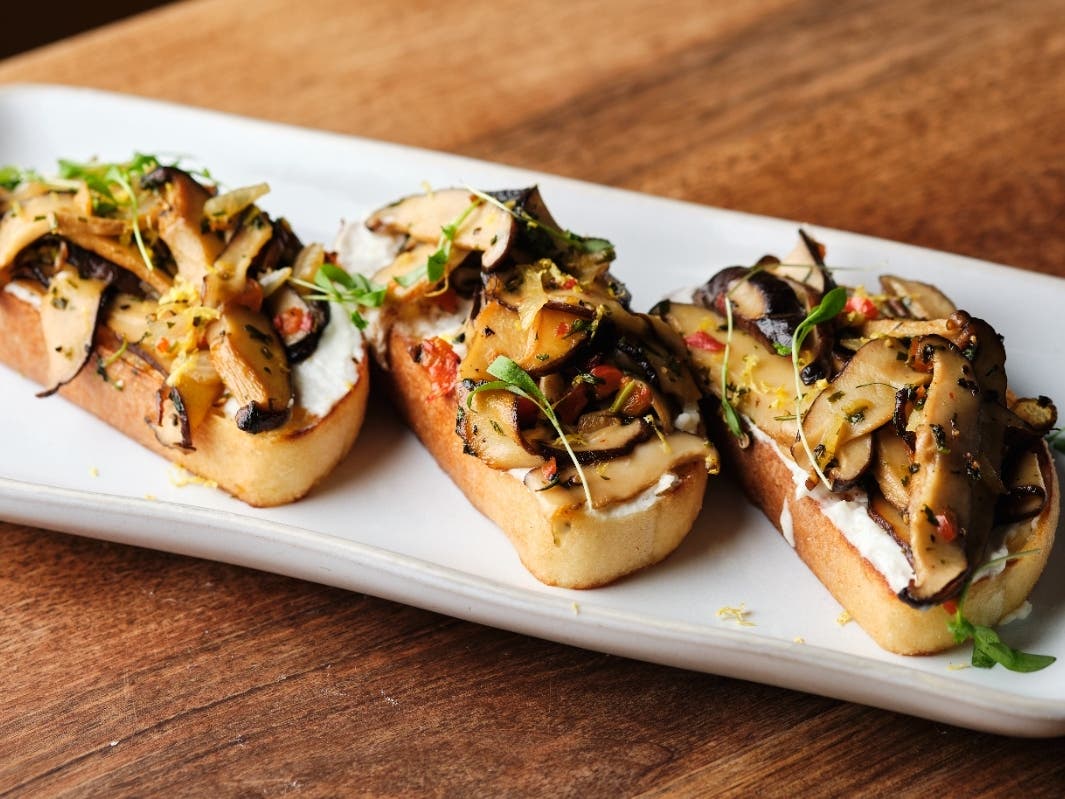
In an era during which metro Atlanta regularly welcomes new restaurants, TQM will open the doors at Amasa Mexican Kitchen this summer in Alpharetta.
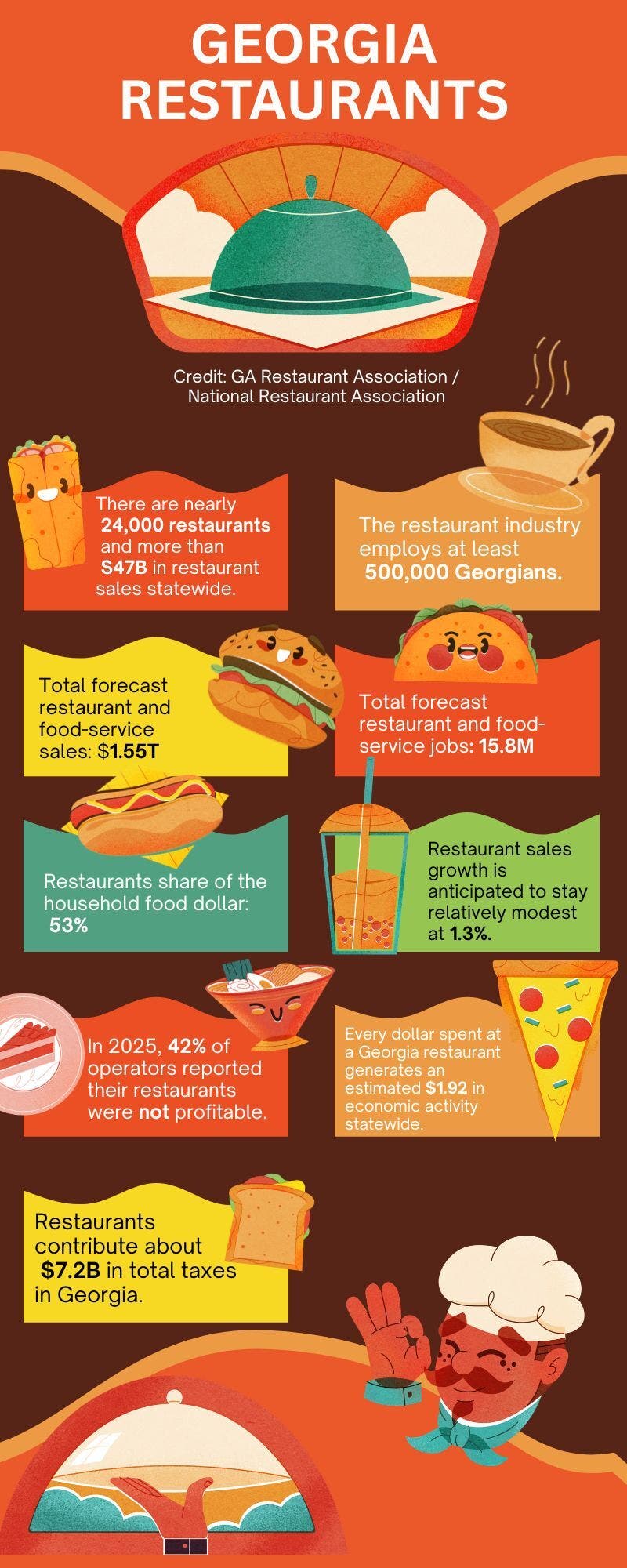
The Baja California-inspired restaurant will join nearly 24,000 existing eateries among Georgia's culinary portfolio while continuing to honor owner Juan Calle's late sister. That's up from about 21,900 open eateries in 2021.
Find out what's happening in Atlantafor free with the latest updates from Patch.
These restaurants are represented by the Georgia Restaurant Association, which prides itself on being an advocate for its clients. The GRA is a backbone for local restaurants and annually honors them with an award ceremony.
RELATED:
Patch spoke with GRA President and CEO Stephanie Fischer, who said the restaurant industry is the third-largest private employer in Georgia.
This is backed by numbers that show more than 500,000 people work in an industry that rakes in at least $47 billion in yearly sales statewide, according to data obtained from Fischer.
"Every dollar spent in restaurants generates about $1.92 in economic impact," she said.
RELATED:
- GA Leaders Speak On SCOTUS Ruling On Trump's Illegal Tariffs
- How New Tariffs Could Impact Prices In GA
- Eggflation Hits Waffle House Amid 50-Cent Surcharge: Reports
- Fires Surpass 700 As 'Worst Drought In 20 Years' Hits GA
Still, operating a restaurant in Georgia comes with hills and valleys.
For example, Goliath Consulting President Jay Bandy said impacts from the long-lasting drought have hit Georgia eateries and could stretch into the remainder of the year.
"Locally-grown produce crops will suffer if the drought continues pushing prices up and quality down," he said.
Between the economic hit from the COVID-19 pandemic, the Trump administration's tariffs and "eggflation," the Georgia restaurant climate has weathered few storms amid rocky waters.
New In The Neighborhood
A memory kept alive, the footprint of TQM Hospitality both honors Juan Calle's late sister and speaks to his stamp on the Atlanta restaurant scene.
A message lasting through time, Atlanta restauranteur Juan Calle's late sister would sign her notes, "Te quiero mucho." In English, the sentiment translates to, "I love you very much."
"It reflects the foundation of our company, which is hospitality rooted in genuine care for people, both our guests and our team," Calle told Patch.
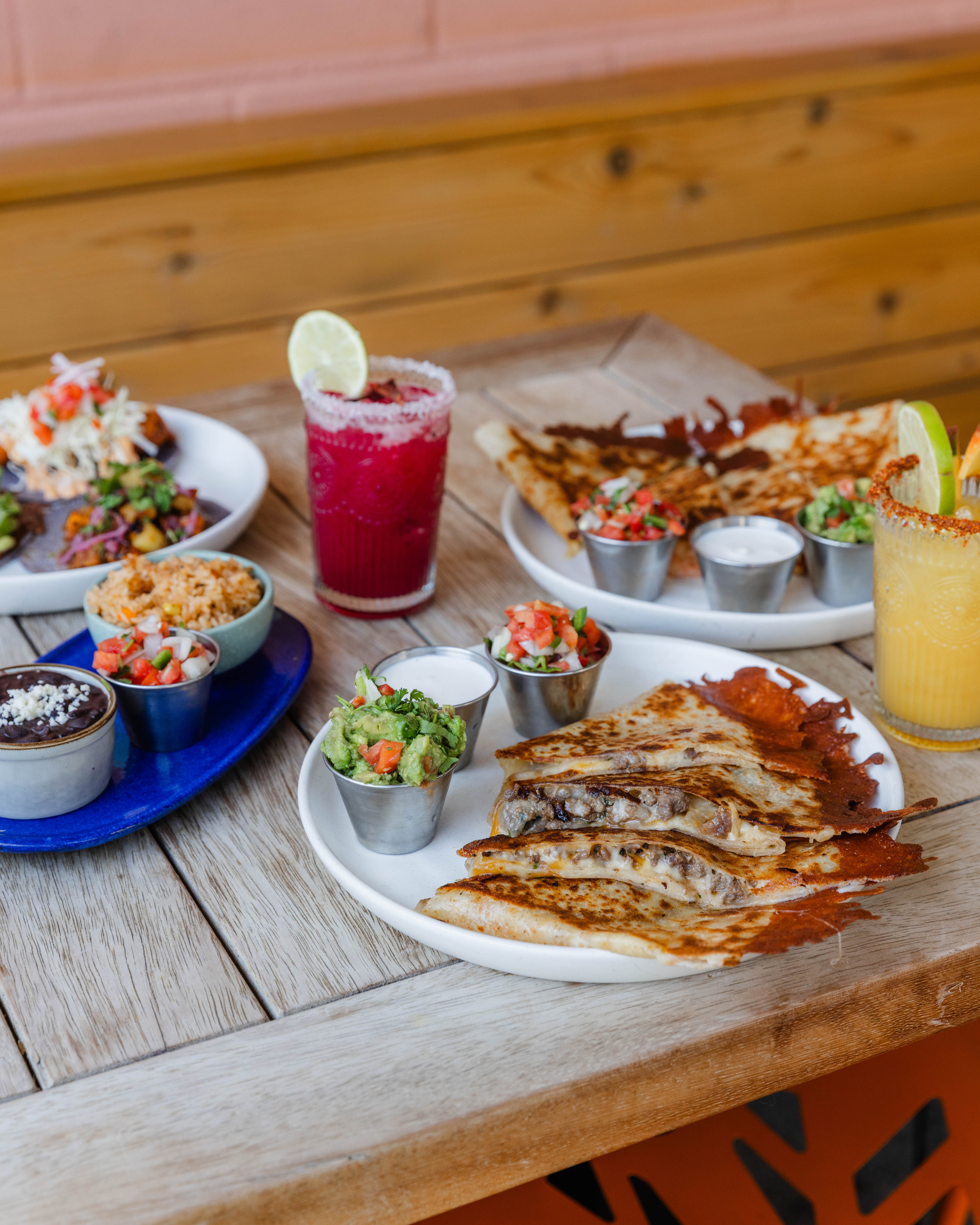
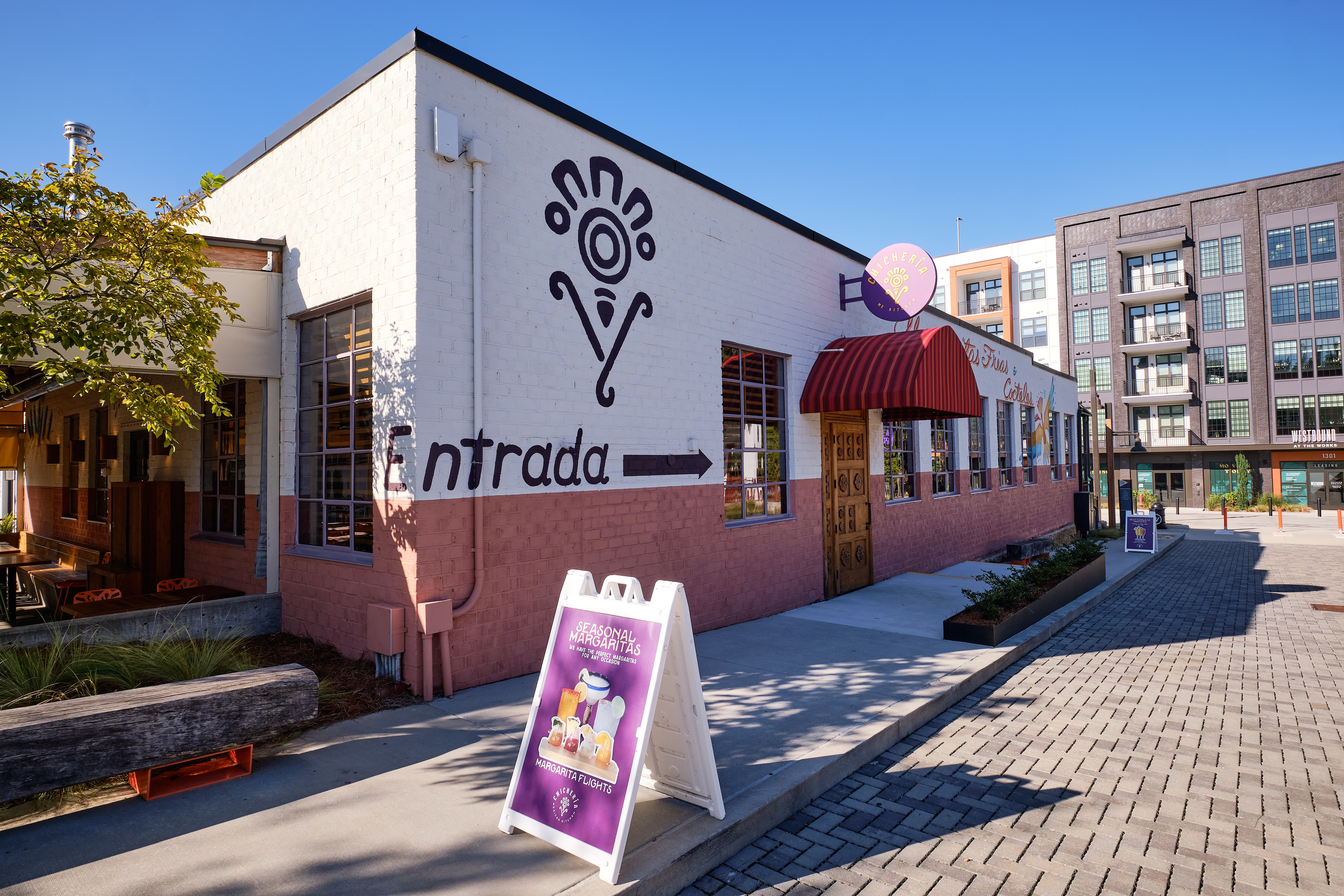
Shortened to TQM, the hospitality group operates Buena Vida Tapas, Chichería Mexican Kitchen and the upcoming eatery, Amasa Mexican Kitchen.
While its sibling Chichería has found a home at Chattahoochee Row in Atlanta, Calle is planning to open Amasa this summer in Alpharetta. Buena Vida sits at North Angier Avenue Northeast in Atlanta.
RELATED: Burgers And Brew: 5 New GA Restaurants Opening In 2026
Calle operated restaurants in metro Atlanta for about 12 years. Amasa, his latest concept, is set to open at City Center, 15 Academy St., Ste. 1E.
“Bringing Amasa to Alpharetta is incredibly exciting for us,” Calle said in a news release. “We’re building on what guests already love about Chichería while introducing new experiences, from our seafood-forward menu to our tequila program and live entertainment. We can’t wait to welcome the community.”
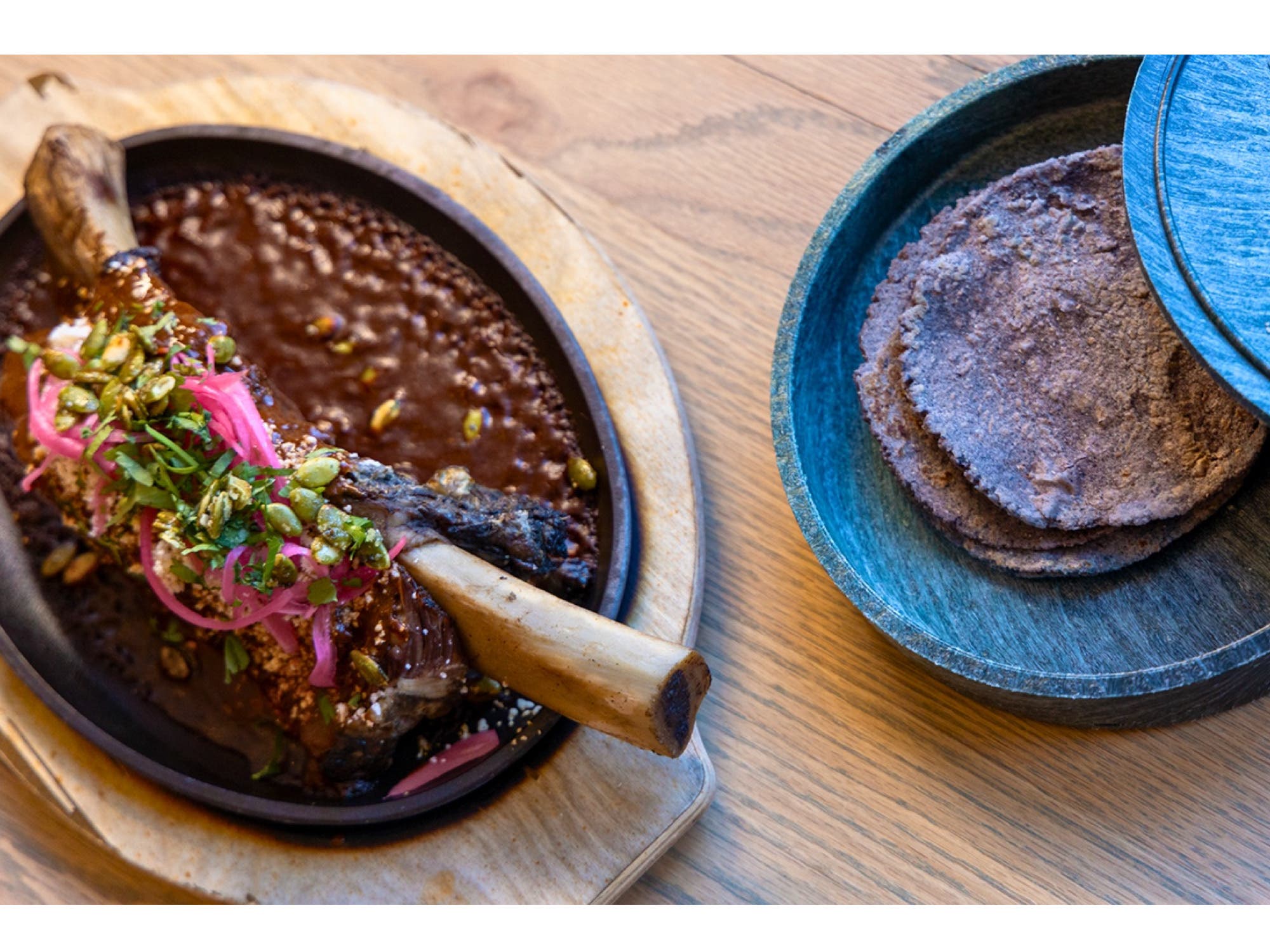
Chichería, a sister to Amasa, is a Baja-inspired Mexican establishment where staff handcrafts organic blue corn tortillas and intertwine coastal flavors.
The vibe at Amasa will promote a social, family-friendly atmosphere while boasting a fully gluten-free menu that features seafood and Mexican style.

Dining In The Peach State
Amasa is just one on a growing list of restaurants that has added its name to Georgia's roster.
In the last year, Georgia has welcomed the following establishments:
- Yava Kitchen and Brewhouse, Cumming
- Koshu Club, Buckhead
- Smash Hit Burgers, Kennesaw
- Station 11, Midtown
- StillFire Brewing, Smyrna
- Unkie's Pizza + Bar, Brookhaven
- Grindhouse Killer Burgers, West Midtown
- Kingston 7 Jamaican Cuisine, Woodstock
- Raising Cane's, Kennesaw
- Dos Caminos, Atlanta
- Cornbread and Butter, Grayson
- Melt Yard, Dallas
- Chubby's Cattle BBQ ATL, Dunwoody
- The Grove at Monday Night Brewing, West Midtown
- Spring 2nd Branch, Marietta
- Arches Brewing, East Point
- Fawn, Decatur
- Omakase Table, Buckhead

'Success Breeds Success'
So, what makes the Atlanta restaurant culture so cherished? Bandy says it's the wings - but, of course, there's more.
His Decatur-based firm helps restaurants with menu development, location search, marketing and provides other operational support. The company works with some of Georgia's most notable eateries, including Hobnob Neighborhood Tavern and Church's Chicken.
Various ethnicities and food types are represented in Atlanta restaurants, Bandy said. Hospitality finds its own identity in the area, separating the metro from the likes of major cities Nashville and Chicago.
This is part of why the local culture is so special, Bandy said.
Additionally, the utilization of multi-use centers, otherwise known as lifestyle centers, are attractive to metro Atlanta restauranteurs because they bring people together for a number of activities.
These include Atlantic Station in Midtown and Halcyon Forsyth in Alpharetta.
The centers offering green space, retailer space and residential and office space are "all the ingredients for a successful restaurant," Bandy said.
"Restaurants are attracted to those because typically in those types of centers, folks do well," he said. "Success kind of breeds success, and that's why you kind of see more of those lifestyle centers."
What Do The Numbers Show?
Restaurants account for $7.2 billion in total taxes and 53 percent of the household food dollar in the nation, according to the GRA, citing the National Restaurant Association.
These culinary gems support supply chains, tourism, small businesses and local communities.
"They don’t just serve neighborhoods—they help drive and define them," Fischer said. "They’re the places where people gather, celebrate milestones and connect—they’re part of what makes Atlanta feel like home."
The restaurants in Georgia not only feed people, they employ them. The NRA predicted there will be 15.8 million restaurant and food-service jobs available this year in the U.S.
Also in the economic forecast is $1.55 trillion in restaurant sales for this year, Fischer said, citing the NRA.
Georgia restaurants now pay above minimum wage to gain and retain qualified candidates, Fischer said.
Georgia's minimum wage is $5.15 per hour, but state labor officials note in some exceptions, the federal $7.25 an hour minimum wage is implemented.
While seemingly optimistic, at 42 percent, less than half of restaurant operators across the nation reported not making a profit in 2025.
"So the margins are very, very thin, and the NRA is expecting a relatively modest increase, or growth, of about 1.3 percent this year," Fischer said. "So, we probably won't see a huge jump in Atlanta or in Georgia of restaurants. Maybe next year, but, we'll continue to monitor that."
Currently, the average restauranteur's profit and loss margin is 3-5 percent, she said.
Food and labor comprise the top two major costs for a restaurant, which are then followed by credit card swipe fees. Rent can also be pricey.
"The margins are tight, so it's important for restaurateurs to really know their business and really understand to tighten your labor costs," Fischer said.
For instance, if a midday shift is slow, minimizing labor and re-focusing on other needed areas can benefit restaurants.
As for owners of multiple establishments, distributing general and administrative costs among the various locations may be valuable.
"Food costs remain significantly higher than pre-pandemic levels," Fischer said. "Margins are tight, and the pressure is real on a daily basis. (The industry is) thriving creatively, but it’s a tough environment to operate in."
The Challenges Of Running A GA Restaurant
The COVID-19 pandemic not only took its toll on the health sector, it hampered the restaurant industry. Third-party deliveries became the era's hero, but experts say restaurants are still rebounding.
Fischer said the food expense is at least 35 percent greater than before the pandemic. She noted 95 percent of operators say food and labor costs are significant hurdles.
"We’re seeing continued growth in new concepts and strong consumer interest in dining out," she said. "At the same time, it’s a highly competitive environment with natural turnover.
Operators are facing real pressure on costs and margins. Atlanta continues to be a major driver of that growth and innovation."
Several restaurants in Georgia shuttered their doors during the COVID-19 pandemic while owners tried to pivot to keep staff, Fischer said.
West Midtown was struck by a bundle of closures about a year-and-a-half ago, Fischer said.
Other affects on the industry could be traffic, real estate and parking.
"It just depends," Fischer said. "We continue to thrive, (but) it's not easy."
Political rumblings indirectly hit Georgia's restaurant industry when customers are no longer able to afford dining out, and instead, opt to cook at home, Bandy said.
Price hikes at the gas pumps, the war in Iran and the recent government shutdown have had implications on the food-service world.
"Everything that's happening right now, the higher gas prices, ... that's taking money away from consumers who could spend it in a restaurant if they wanted to," she said. "So I think that's one thing that restaurant owners need to be aware of, and they are aware of (it)."
Bandy said restaurants are still recovering from tariffs, which caused manufacturing to shift.
"I think government's influence on what happens in the restaurant industry is real," Bandy said. "When you lump those things together, it has an impact."
More people are preparing their meals at home because buying groceries is more inexpensive than spending money at restaurants currently, he said.
"The food away from home is the index between what it costs to eat out and what it costs to eat at home; and when that gap widens, people tend to eat more at home," Bandy said. "We've seen that for the last couple years."
Restaurants are combatting this notion by offering "value-conscious" menus, including weekly or daily specials (i.e., a $5 combo meal at McDonald's).
Fischer said people are dining out, just not as frequently. Nationally, 70 percent of consumers say they would dine out if financially able.
For TQM, Calle said his restaurant group faces more competition, a more "sophisticated" industry and rising consumer expectations.
Customers are more informed than in the past, and "more high-quality concepts" are tapping into the market.
"The increased competition has raised the overall quality of restaurants in Atlanta, which is a positive," he said," but it has also made it harder to stand out and more expensive to operate. It forces operators to be better, which is good long-term, but it’s definitely more challenging."
Price tags would be the obvious concern for restaurant owners, but both Calle and Bandy said there is also a saturation of the same types of eateries.
Specifically, Calle said there is a cluster of Spanish tapas and Mexican restaurant sub-markets in Georgia.
"Atlanta could always benefit from more unique and differentiated concepts," Calle said. "Restaurants that bring something new, whether it’s cuisine, format or experience, tend to stand out. However, we are lucky to have an industry that represents most cuisines around the world."
The overload of restaurants in some metro Atlanta areas makes the market more competitive, Bandy said.
"The closer you get to Atlanta, the more challenging it is," he said.
However, the further away from Atlanta, the less dense and populous. This highlights another obstacle Georgia restaurants face, stagnant growth and location preference.
Particularly in Atlanta, Bandy said trading of property is popular.
"You see restaurants close as much as you see restaurants open," he said.
On the contrary, Fischer said more restaurants are opening than they are closing.
New owners tend to seek locations in the outskirts of what Bandy deemed "the big five" counties. This means property outside of Cobb, Fulton, Gwinnett, Clayton and DeKalb counties are becoming more favorable for new restaurants.
"The local cities and counties outside of the core of Atlanta are more business friendly," he said.
This is because the cost of doing business as it pertains to hourly wages, management wages, taxes and rent is higher in the City of Atlanta, he said.
"You really can't raise prices to offset expenses, so it's really just kind of the financial end of the business that restaurant operators are struggling with - how to maintain profitability and still keep the doors open," Bandy said.
The divide between landlords and restaurants is also challenging if goals do not align, Calle said.
Restauranteurs look for ways to survive these challenges by adjusting menu prices, cutting food-delivery service, conducting portion control or seeking more affordable packaging, Bland said.
Fischer noted restaurants may modify recipes, such as using a lower cut of beef.
"A lot of times it's looking at how you buy and what you buy." Fischer said.
RELATED:
- 'Running Out On A Tab': Viral TikTok Features Atlanta Restaurant
- Safety Of TikTok Star A Concern Since ATL Restaurant Reviews
- TikTok Star Exposes ATL Restaurants For Special Treatment Of Celebs
Shifting Marketing Landscape
Also eating costs is marketing, a decades-old tool that has transitioned onto social media.
Social media now includes the presence of food influencers, digital ads and other features. Metro Atlanta has been the star of several social media food reviews.
Macro-influencers who have a smaller following than others can positively impact local restaurants, Bandy said.
"It helps restaurants reach more guests, but beyond that I think influencers are just part of the marketing puzzle for restaurants to get more reach on social media instead of paid posts (and) boosted posts," he said.
The new form of marketing does not immensely raise costs, but it can shorten funding from other advertising resources.
Bandy said 20 percent of marketing budgets may go toward boosted social media posts or pay for influencers. The funding is extracted from more traditional marketing measures, such as advertising in newspapers.
Seeing Into The Future Of Georgia Restaurants
As for what the Atlanta restaurant scene will look like in the future, Bandy said with a giggle, "Partly cloudy for the next five years."
The overall nature of the restaurant culture will not dramatically change due to competition, he said. New concepts will open, and some old ones will run their course.
But, the good news for consumers is that there are "some exciting things to open in the next few years," Bandy said.
Fischer remains hopeful about the overall culinary future in Georgia.
"I still think that the future looks very positive for our restaurants," she said. "I think that we will continue to have our restaurants grow in numbers. I do believe with everything like Michelin coming about three years ago, and having some Michelin-starred restaurants here in the city have helped bring international accolades to our city. I think our restaurants, and the restaurant industry throughout the country is still set for a positive outlook."
RELATED:
- Sweet Victory: GA Baker Wins Food Network's 'Cookie Challenge'
- Grillin' For 2: GA Man Fulfills Dream, Honors Dad And Wins 'BBQ Brawl'
- 4 GA Restaurants Named Among Top 100 Brunch Spots In US
- The Best Hole-In-The-Wall Joint For Pizza Is This Hidden GA Gem
- You Should Try These GA Restaurants, New Michelin Guide Says
- 6 GA Eateries 'Slurping-ly' Good For Ramen Lovers
- Ice Cream Nachos, Curry Goat Offered At 5 New GA Restaurants
- This Sushi Eatery Named The Best Metro ATL Restaurant, AJC Says
- ATL's Usher Opens Chicken Eatery: 5 New Businesses To Know In GA
- Singer Usher's Mom's BBQ Eatery Among 5 New Restaurants In Metro ATL
- Beer And Chicken: 5 New Restaurants, Relocations To Know In Metro ATL
- Vegan Ice Cream, Airport Eats Offered At 5 New GA Restaurants
- 15+ Eateries Open, 3 Close In GA: Top Restaurant News 2025
- BBQ Shrimp, Fried Birthday Cake Offered At 5 New GA Restaurants
- Raising Cane's Expands GA Footprint With 5 New Locations
- Lamb And Grits: 5 New Restaurants To Know In Georgia
- Wine, Nachos And Burgers: 5 New Restaurants To Know In Metro ATL
- These 5 GA Restaurants 'Define Dining,' New Top 100 Ranking Says
- The Best Places To Eat In GA For 2024: The Ultimate List
Get more local news delivered straight to your inbox. Sign up for free Patch newsletters and alerts.