Politics & Government
A Resident's Perspective: Dirt, Water and More Discussed at Auburn Council’s Monthly Workshop
Auburn is moving forward on planning, renovation and expansion — without debt. Barrow County resident Michael Howington offers a recap of a recent meeting with a brief commentary to follow.
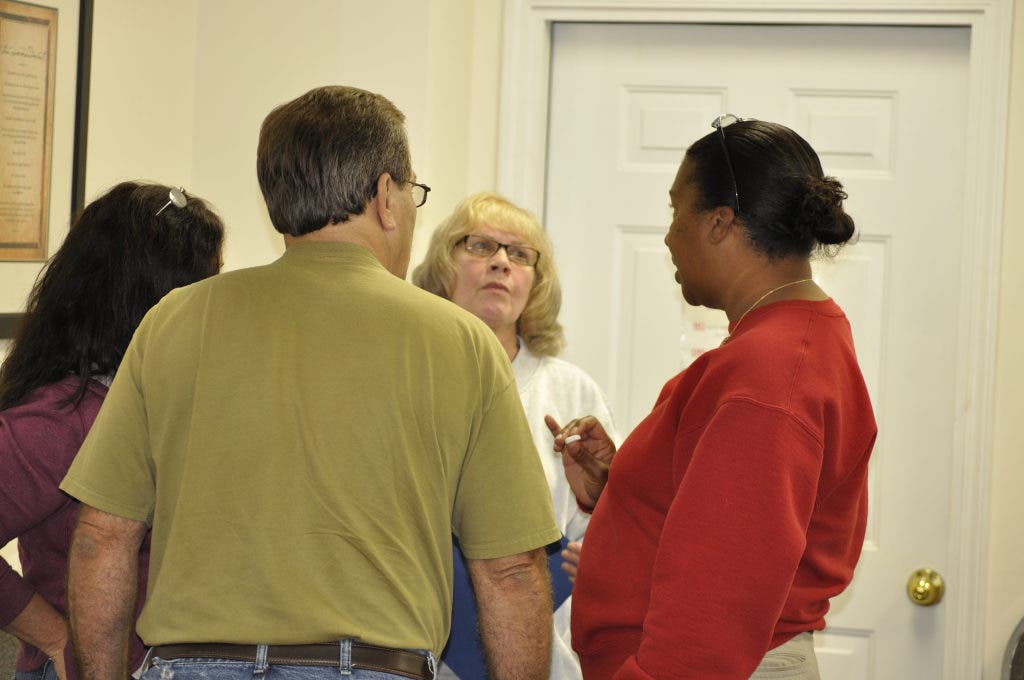
Do you attend city council meetings? Give us your recap and opinion whenever you attend a meeting. E-mail barrow@patch.com for more information.
The conducted a workshop on Thursday, Oct. 20, 2011, and discussed several business items, including capital projects, water insurance and ball field renovations.
Iris Akridge presented proposals sought to engineer solutions for stormwater drain off, affecting resident in two Auburn neighbourhoods.
Find out what's happening in Barrowfor free with the latest updates from Patch.
Residents in Governors Ridge and Sue Lane have logged complaints of severe water run-off damaging their properties. The runoff is coming from the cul-de-sac, a neighbor on a hill and from a bordering neighborhood outside of the city limits. The proposal includes installing new drainage pipes and redirecting the water flow.
The city received sealed bids in September from four companies for the Sue Lane project, specifically to resolve the issues at 204 and 206 Sue Lane. Of the four bids received, Akridge recommended the city award the contract to Fortis Engineering Solutions for $29,729.50. The bid includes the repair and improvements of existing storm drain, materials and labor for repair and replacement of drains and structures. Fortis Engineering was the lowest bid of the four. The project is already funded in the budget and would require no additional revenue collection by the city.
Find out what's happening in Barrowfor free with the latest updates from Patch.
Akridge also made a presentation for the Governor’s Ridge project to address issues surrounding lot numbers 18 and 19. The proposal is to repair, replace and implement an improved system. The existing infrastructure is no longer adequate to handle the excess water. During heavy rains the backyards are transformed into small ponds. Akridge submitted pictures after a recent heavy rain. She met with others at the site in July and on Oct. 5 additional surveys were completed. Akridge met with one resident, Harvey Scott, who was not satisfied with the proposal.
Additional easements are needed from other residents before the work can begin. This project is funded in the current budget requiring no additional revenue collection by the city.
In regard to water, David Hawthorne proposed the council allow the National League of Cities to provide insurance to residents for water repairs. The NLC is the same organization that recently unveiled a low-cost prescription drug program for Auburn residents. These repairs would be the portion of the main line between the meter and house. The proposal includes a cost of $4 to $5 a month and would cover the repair of the line. This insurance would not cover the cost of a replacement to the line. The program would provide a one-hour response to a customer’s request and repairs completed within about 24 hours, generally by a local plumber. The program is administered through Utility Service Partners. The service is available 24/7 to the customers and includes expenses up to $4,000. Though there is an additional expense of $500 for driveway or sidewalk cutting, there are no limits on the number of claims. The focus of the provider is to support the local economy while providing cost-effective insurance for the residents of Auburn for repairs that are the homeowner’s responsibility, not the city’s.
What meeting is complete without a discussion about dirt? Work continues for the Parks Mill project. The city is focused on providing a comprehensive ball field for local residents, traveling teams and other opportunities. Gary Schussler made a proposal that the city adopt a fee structure for the use of the ball field. The proposed fees would be $25 per hour and $15 per hour for nonprofit organizations. A 50 percent deposit and additional fees would be required for concessions. Schussler noted and provided examples for comparable cities and proposed lower fees because the fields are not yet completed.
The council discussed at length the next phases of the project, including dirt. The council agreed with the parks and recreation department that the area used for overflow parking can be improved to minimize damage to vehicles and for future needs for parking. Mayor Linda Blenchinger expressed concerns about parking and planning today for tomorrow’s needs. Two key points emerged in the conversation — the current retention pond and future expansion. Blenchinger and the council verified there would be no future excavations or blasting required for the current plan and potential expansions in the future. The project is currently budgeted and requires no additional revenue generation by the city.
In other business, Chief Paul Nadeu submitted a request that a proposal be adapted to reflect accurate accounting for the $.75 surcharge on pre-paid cellular transactions. These charges are collected by the city specifically for the 911 fund. GMA recommends this change for reporting to the Georgia Department of Revenue. Nadeu explained this was necessary so the revenue is properly distributed to the department.
Other business included discussion on Insurance Service Office updates. City Planner Larry Lucas explained building codes were recently updated and the city needed to update the city’s ISO codes to reflect these changes. Lucas emphasized these ISO ratings were separate from the Fire Code and Compliance.
The city discussed changes to the employee insurance benefits program. The city conducted meetings with department heads and asked employees to complete surveys to obtain a comprehensive input before recommending changes to the council.
Council members also discussed the current project for renovations to the “railroad building.” The city received a recommendation to act as the general contractor for the project. This decision would allow the city to bid out certain portions, such as finishing or electrical work, preferably to local vendors, and complete the project in stages. Further, this allows the city to use existing city resources to offset or minimize the overall costs. Last, with the city as the general contractor, the bond requirement for a general contractor is reduced thus allowing a more competitive bidding system. The goal is to use local contractors whenever possible.
It is my opinion that resients should be active in their local government. The attendance at most city council meetings, by residents, is limited to three to five people. The mayor and city council desire residents’ input and involvement and provide the opportunities as often as possible. The city business discussed at this workshop had a theme — reducing government spending, implementing infrastructure improvements, planning for the immediate needs of the city and working toward the long term vision for the city. This long term vision, led by the mayor, plans for the growth and stability of the city with a focus on the needs of the residents.
Several times in discussing these projects, support of local businesses was mentioned. The city should be commended for remaining fiscally conservative, budgeting for projects properly and not incurring debt to complete these projects. Not many governments can proudly and honestly make the same statement. I do wonder why the city is investing in water drainage on private property. Generally, when there is a water flow issue, the homeowners take the initiative and make the improvements themselves. However, it should be noted that these projects are funded through a general “stormwater” fund and will not require a financial burden, tax increase or the city to incur any debt.