Schools
CRT, Banned Books, Digital Learning Discussed By Kemp, Officials
Gov. Brian Kemp visited Forsyth County Monday to meet with officials and discuss problems currently plaguing students in Georgia.


CUMMING, GA — Nearly two years after the start of the coronavirus pandemic, Georgia's students are starting to return to normal life, including at school. But the past two years have not been easy for many students, which led to a needed discussion on Monday between Georgia Gov. Brian Kemp and other leaders.
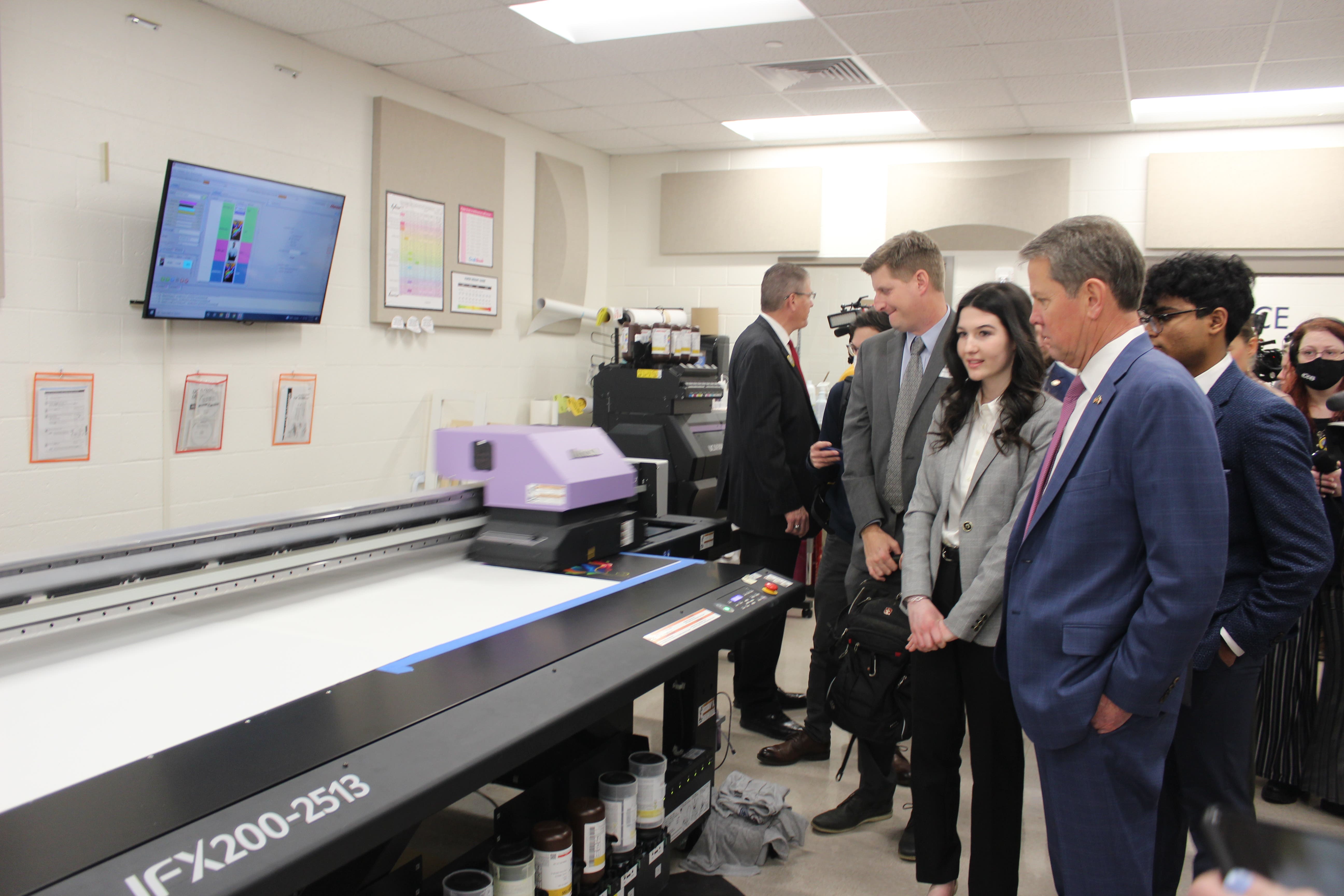
Kemp toured the Alliance Academy for Innovation in Cumming Monday, where he was shown around the school that focuses on career pathways, including aerospace, cybersecurity, healthcare, and more. He was joined by Forsyth Schools Superintendent Jeff Bearden and Georgia Superintendent Richard Woods.
One of the hardest parts of the pandemic for Kemp was making decisions for the state while not interrupting local control.
Find out what's happening in Cummingfor free with the latest updates from Patch.
"I've had a lot of people that wanted me to make lateral decisions during the pandemic, which I didn't do without great thought and consternation, and I did it in a limited way," Kemp said. "The school systems are so different, even in Forsyth, the schools within Forsyth are different. I think the approach we've taken has been a good one. But it's important to realize that you have good, local elected school board members that are making these decisions, and that as parents and people in the community you have to be engaged with what's going on."
Bearden said the district appreciated having flexibility and autonomy when making decisions during the pandemic.
Find out what's happening in Cummingfor free with the latest updates from Patch.
"Once school started back in August 2020, we were able to make decisions based on our local data," Bearden said. "And we decided to keep our schools open but give our parents a choice, too. Do they want their child to learn full time virtual? We made that happen. Did they want their child to learn in a hybrid model? We made that happen. We have been able to keep our schools open throughout. Since August 2020, we've had to close the schools in isolated situations based on our data. And nobody's telling us how to do that. We do that based on the data in Forsyth County Schools."
Another issue that schools often face, and that will be coming up in the legislation this year, are banned books. Bearden said in Forsyth County there are questions from parents about materials available for students to check out from school libraries. The district has a process in place, including a rating system for each book that is accepted into the library's rotation.
"There are so many books available today," he said. "So there's a rating system so we don't have to read every single book that we might put in Forsyth County schools. We rely on this rating system to help determine if certain books are appropriate at certain age levels."
Critical race theory, known as CRT, is another hot topic that will come up in the legislature this year, which Kemp said will become political.
Critical race theory is an academic framework, usually taught in universities, which is based on the idea that racism is embedded in American institutions, creating persistent systemic inequalities for people of color.
Conservative groups and parents latched onto the term nationwide to oppose the teaching of real American history and efforts to increase diversity in institutions.
But Bearden said critical race theory is not a concept taught in Georgia.
"CRT is not part of the Georgia standards," he said. "We don't teach CRT. There's a lot of misinformation out there around that topic. But I don't think there's any school in Georgia that teaches CRT."
After a roundtable discussion with multiple county and state officials, Kemp said schools play a big part in deciding the upcoming budget for the state.
"It makes me feel good about the money that we're putting into [career, technical, and agriculture education] equipment," Kemp said. "The legislature has to put their stamp on the budget, but it's encouraging to hear that they're excited, and they know this money is going to one of our biggest needs in our state, that's our children and also just the workforce."
The students at schools like Alliance Academy get real-world training in high school, which Kemp said is incredible, and joked he probably wouldn't be in politics if he had attended a similar school.
"It was interesting looking at the fields of study here, but it's really where the demand is," he said. "Obviously, anything in health care, doctors, nurses, we need more EMTs. But also criminal justice. We know we need more people in law enforcement and the criminal justice system in today's world. We're addressing that in the budget with free tuition thorough our technical colleges. But also you have to think about cybersecurity. We're leading the country in many ways in cybersecurity in Atlanta and Augusta. It's very encouraging to see they're meeting the demands that are out there."


Get more local news delivered straight to your inbox. Sign up for free Patch newsletters and alerts.