Schools
Georgia Gwinnett Receives $1.6 Million Grant For Sciences
The college will use the National Science Foundation grant to fund a program that teaches STEM to undergraduates.


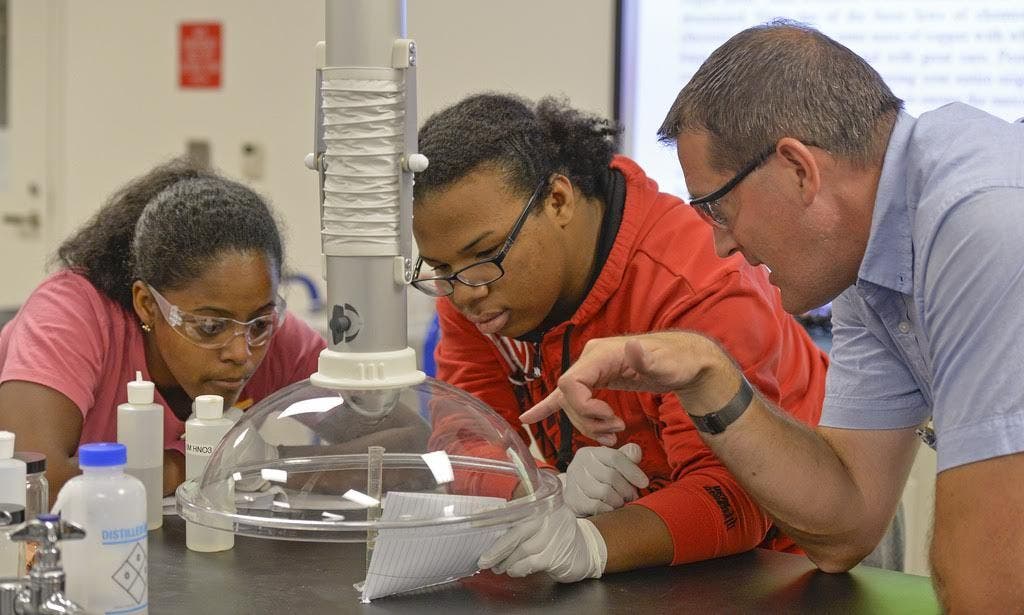
LAWRENCEVILLE, GA — A $1.6 million grant from the National Science Foundation will help Georgia Gwinnett College teach science, technology, engineering and math to its students.
One of the college's largest grants to date, the money will be spread out over four years and help continue, and replicate, a program devised by a GGC dean.
"This important grant recognizes a game-changing curriculum project envisioned by Dr. Thomas Mundie, dean of GGC’s School of Science and Technology," said GGC President Stas Preczewski. "A multi-disciplinary team is making research part of the classroom experience for all science and technology majors from their freshmen through senior years. This is an innovative approach that sets GGC apart, even from most research universities."
Find out what's happening in Lawrencevillefor free with the latest updates from Patch.
Numerous studies show that students who conduct research as undergraduates have greater success with their studies.
That, GGC says, is relevant to the worldwide demand for STEM skills and data from the National Academy of Science showing 25 countries rank higher than the United States in the percentage of undergraduate degrees in science and engineering.
Find out what's happening in Lawrencevillefor free with the latest updates from Patch.
With grant funding from the University System of Georgia Board of Regents, the Science and Technology school conducted a pilot project to develop and implement a 4-year Undergraduate Research and Creative Experiences model that focuses on course-embedded research in the STEM majors.
Surveys taken during the pilot project show improvement in the attitude, and even the grade point averages, of participating STEM students.
As students moved from their freshmen to junior years, 30 percent more said they were likely to choose a STEM career as a result of their research experiences.
"Typically, retention rates tend to be lower in STEM because it is a more difficult field,” said Judy Awong-Taylor, professor of biology and project leader, adding that the course-embedded research "really excites the students. And if you are excited, you tend to stay.”
The NSF grant will allow GGC to continue offering these course-embedded undergraduate research experiences.
With the NSF grant, GGC educators plan to collaborate with faculty from other colleges and universities to recreate the pilot on their campuses and raise the retention rates of their STEM majors, including those in underrepresented groups, such as women and minorities, Awong-Taylor said.
Photo courtesy Georgia Gwinnett College
Get more local news delivered straight to your inbox. Sign up for free Patch newsletters and alerts.