Health & Fitness
The American Dream of Home Ownership - Dead or Alive?
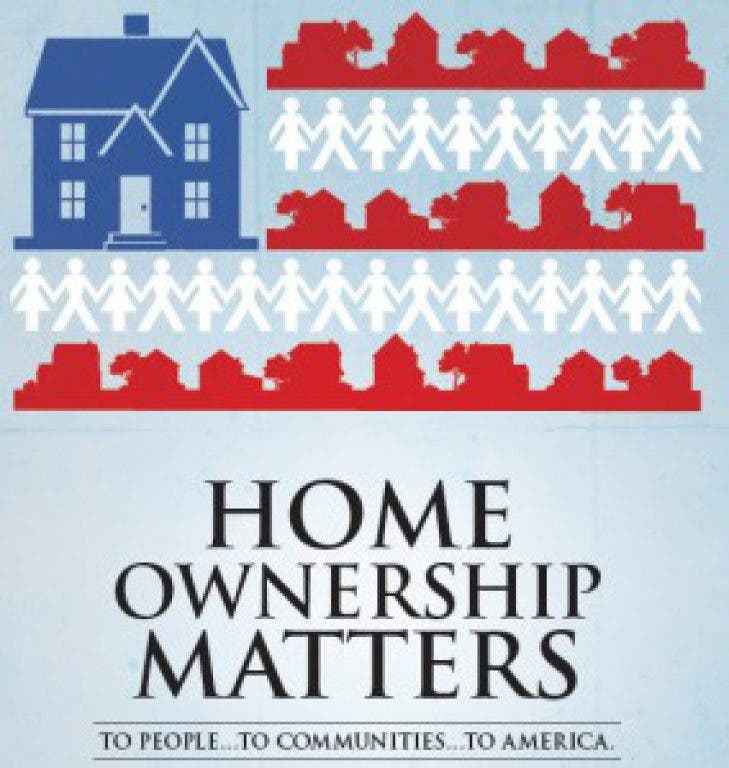
After so much bad news about the housing market, some may believe that the "dream of home ownership" is dead. But, according to a recent survey, the dream is still very much alive.


Have you ever played that little game “dead or alive”? Someone names a famous person and you have to guess whether they are dead or alive. Hey, let's give it a try – Peter Falk, better known as the wrinkled TV detective Columbo – is he dead or alive? What about Ed Asner who played Lou Grant on The Mary Tyler Moore Show? Or Phyllis Diller, the comedienne? Here's a hard one – Abigail van Buren, better known as advice columnist, Dear Abby? OK, how did you do? – Peter Falk: dead, Ed Asner: alive (81), Phyllis Diller: alive (94) and Abigail van Buren: alive (93). I would have bet dollars to doughnuts that Dear Abby had died a long time ago, but I was wrong – she's still alive and kicking.
After all the bad news related to the housing market - shrinking home values, disappearing home equity, foreclosures and tighter lending requirements, a lot of people may believe that the “dream of owning your own home” is dead and gone. But, according to a recent survey, home ownership is still a treasured goal.
The Fall 2011 American Dream Survey by the real estate search and marketing company, Trulia, shows that 70% of those surveyed consider home ownership a part of their American Dream. While the percentages were slightly lower for younger respondents, still 65% of 18 to 34 year-olds say owning your own home is essential to “living the dream.” In the 55-plus age group, a full 76% said they consider home ownership the ideal situation.
Find out what's happening in Loganville-Graysonfor free with the latest updates from Patch.
It appears that there is just something about owning a little piece of real estate that is still very attractive to most people. Maybe it's that you can plant trees and flowers, or that you can change paint colors, or even add a deck or patio without asking your landlord. It's yours and you can, within reason, do what you want with it.
If you share this dream of owning your own home, but haven't yet achieved it, what are you waiting for? You should heed this bit of wisdom – “Success always comes when preparation meets opportunity.” With interest rates in the low 4% range and home values down by 35 to 50%, the opportunity has probably never been better. So, you need to be making the appropriate preparations to meet this fantastic opportunity for home ownership?
Find out what's happening in Loganville-Graysonfor free with the latest updates from Patch.
Where do you start? What should you do first? I suggest that you seriously consider whether you are ready to be a homeowner. While it's a great joy and privilege to live in a home you can call your own, there are also some pretty big responsibilities that come with the territory. If you are a couple, then you should sit down together and have an honest conversation about affordability, responsibility, and stability. Do this before you call a mortgage lender or real estate agent.
By affordability I'm talking about examining your budget to determine how much you can allocate for all costs associated with housing – including mortgage payment, taxes, insurance, utilities, maintenance, repairs, furnishings, etc. Most budgeting experts will tell you that your total housing costs (all categories listed above) should not be more than 40% of gross monthly income (GMI). Your mortgage payment (Principal, Interest, Taxes & Insurance – PITI) should not exceed about 28% to 33% of GMI. Also, your total monthly debt payments, including mortgage (PITI), credit cards, car loans, student loans and any other debts that appear on your credit report, should not be more than 36% of GMI. Part of the reason for all the foreclosures is that mortgage lenders continued to raise these debt-to-income guidelines to unrealistically high levels. During the peak of the housing frenzy from 2003 to 2007, many borrowers were allowed to get loans where their total debts exceeded 50%, 60% or even 70% of their income.
In discussing responsibility you need to think about the time and talents required to maintain the lawn and the house itself. Decide now whether you will be happy watching the “Do-It-Yourself” and “Lawn & Gardening” shows on HGTV. Also, if you buy in a subdivision, you will be joining a community of home owners. This will bring with it a whole new set of responsibilities, as you get to know your Home Owners' Association (HOA) board members.
The term stability refers to two different factors – first, how long do you plan to live in a home that you would buy? If you plan to move within the next couple of years, you might be better off renting. There are “Rent vs. Buy Calculators” that can help you decide which option is best for your particular situation. The second part of stability relates to your family situation. If you're having difficulties in your marriage or with your children, don't buy a home thinking it will “draw you closer together.” On the contrary, buying your first home can be somewhat stressful, and this might not be the right move for a family in turmoil.
If you've considered the affordability, responsibility and stability factors, and feel that you want to pursue The American Dream, then your next step is to contact a real estate professional. I suggest you choose a Realtor, someone who is a member of the National Association of Realtors, because you know they are held to a standard of ethics and conduct by their trade association. Ask around for recommendations from your relatives, friends and co-workers for the name of someone with whom they've had a positive experience.
This is the point at which you should also talk to someone about being prequalified for a home loan. You can use your bank, credit union or a local mortgage broker. There are also online mortgage lenders, but many people like dealing with someone they can meet and talk with in person. This is especially true for first-time buyers. Once again, it's important to get a referral from someone you trust. Talk to more than one potential lender and find someone that you feel comfortable with. You should be able to get basic information on rates, types of loan programs offered and closing costs on your first call.
For the pre-qualification process, you'll need to have some basic information at hand. Some people are hesitant to give this information over the phone and prefer to meet face-to-face with a loan officer. You'll need to provide personal data for yourself, and your spouse, if applicable – including full legal name, birth date, social security number and address. You will also want to know the exact gross monthly income for each of you and the amount of your monthly payments on all of your debts. For credit cards you need to know the minimum required payment for each. With this information, a loan officer should be able to tell you how much monthly payment you should be able to qualify for, and based on the amount of down payment you plan to provide, this will be translated into the maximum purchase price you should be considering.
For example, if your household gross monthly income is $3,500 and you have $425 in total monthly debts, you could qualify for a monthly mortgage payment of $835 ($3,500/mo x 36% = $1,260 - $425 = $835). Based on an FHA loan with a down payment of 3.5% ($4,200) and an interest rate of 4.25% you could purchase a home with a sales price of $120,000. This assumes normal figures for homeowners' insurance ($600/yr), taxes ($1,500/yr) and FHA mortgage insurance premium of $111/mo. A simple rule of thumb says you should purchase a home that is between 2.5 and 3.0 times your gross annual income. In this case the income of $3,500/mo equals $42,000/yr. Using this guideline of 2.5 to 3.0 times the $42,000 would mean a home purchase between $105,000 and $126,000. The $120,000 priced home falls within these parameters.
Of course there are other factors that your mortgage professional will consider when pre-qualifying you. Your credit scores and credit history are of primary importance. Today, without a middle score of at least 620 (in some cases 640 or higher) you'll be hard pressed to qualify for any type of home loan. There are three major credit bureaus – Equifax, Experian and Transunion, and each one provides a score. The middle score is the one numerically in the middle. If your scores are 626, 618 and 680, your middle score is 626. Bankruptcy, foreclosure, collections or public records such as judgments and liens may have serious adverse effects on your ability to obtain credit, regardless of your scores. Your employment history is another big factor in determining your credit-worthiness. Lenders like to see borrowers who have been on the same job for two years. If you have changed jobs within that time-frame it should be because you have moved up to a better job or because the previous employer laid you off or went out of business. If you are straight out of college, and working in the field for which you have a degree, the two year requirement may be waived. If you are self-employed, you'll need proof that you've worked this business for at least two years, and you'll need two years of tax returns. The adjusted gross income for the previous two years will be averaged to determine income.
According to Trulia's American Dream Survey, the biggest hurdle to home ownership for the 18 – 34 age group is saving for a down payment. Five years ago there was an abundance of “No Income, No Asset Loans” that you could get with little more than a decent credit score and a signature. Things have changed, to say the least, but believe it or not, there are still a few loan options that allow for home purchases with very little or no down payment. Most have maximum income guidelines and some have geographic restrictions about where you can buy. Usually, the more persons in your household, the higher the income can be and still qualify. The income limits are actually pretty high, and most young families will fit within the guidelines. Some of the programs are limited to first-time home buyers. In most cases you are considered a first-time buyer if you haven't owned a home in the past 3 years. Others only require that you don't own another home at the time you purchase your new home.
When the American Dream Survey asked people to name the best long term investments, 59% said “owning your own home.” By contrast 52% said retirement account and only 26% said gold. So, remember – the American Dream of home ownership is still alive right here in Walton and Gwinnett Counties. The opportunity is great and the preparation is definitely worth it. As the Chinese proverb says, “The journey of a thousand miles begins with a single step.” Take that first step today. When you're relaxing in that home of your very own, you'll be glad you did.
More about specific loan programs next time.
For more information on this topic, or for specific real estate assistance, contact Charlie at Home Gold Realty 770-815-6028 or charlie5576@gmail.com