Neighbor News
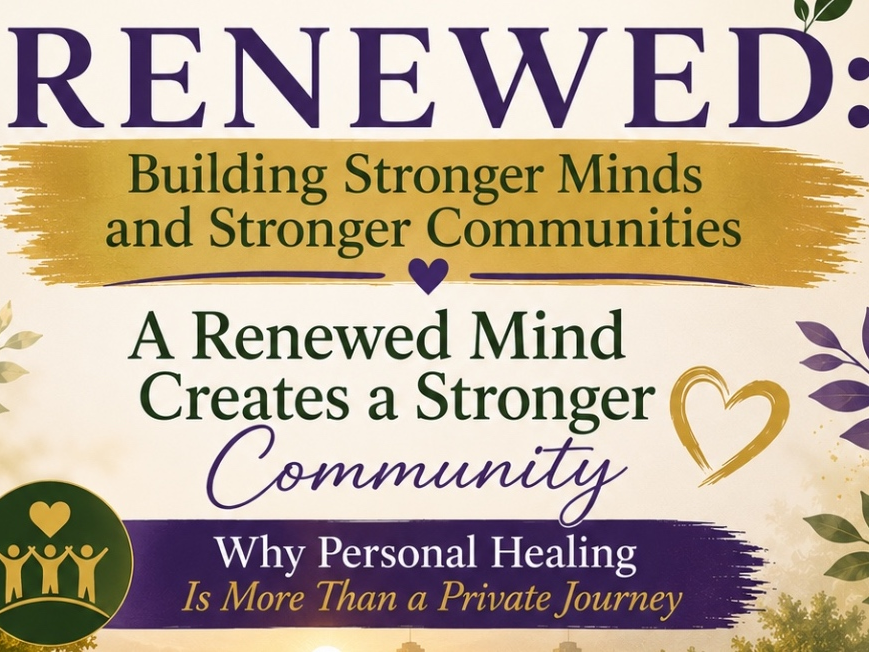
A Renewed Mind Creates a Stronger Community
Why Personal Healing Is More Than a Private Journey

We often think of emotional wellness as a personal journey, a private process of managing stress, healing from difficult experiences, or improving our mental health. While healing certainly begins within us, its impact rarely stays there.
The truth is, our emotional health influences every interaction we have. It affects how we communicate with our families, collaborate with coworkers, engage with neighbors, and participate in our communities. When we are overwhelmed by chronic stress or constantly operating in survival mode, it becomes more difficult to listen well, solve problems thoughtfully, or respond with patience and empathy.
Healthy communities are not built solely through policies, programs, or infrastructure. They are built by people who have the emotional capacity to work together.
Find out what's happening in Mariettafor free with the latest updates from Patch.
The Ripple Effect of Emotional Health
Neuroscience has taught us that chronic stress affects far more than our mood. Prolonged stress can impair concentration, increase emotional reactivity, reduce empathy, and make thoughtful decision-making more difficult. When our nervous systems are constantly on high alert, even minor disagreements can feel like significant threats.
Find out what's happening in Mariettafor free with the latest updates from Patch.
Imagine the difference between two neighborhoods responding to the same challenge. In one, people react from frustration, fear, and exhaustion. Conversations become tense, misunderstandings escalate, and collaboration breaks down. In the other, people approach the issue with curiosity, emotional regulation, and a willingness to listen. They may not agree on every solution, but they remain committed to respectful dialogue and finding common ground.
The challenge is the same. The difference is the emotional health of the people involved.
Emotional Regulation Strengthens Relationships
One of the greatest benefits of emotional wellness is the ability to pause before reacting.
Emotional regulation doesn't mean we never experience anger, disappointment, or frustration. It means we develop the capacity to recognize those emotions without allowing them to control our responses.
This skill is valuable everywhere, in our homes, workplaces, schools, places of worship, and community organizations. When people feel emotionally safe, communication improves. Trust grows. Collaboration becomes easier. Problems are addressed before they become crises.
Healthy relationships create healthy communities.
Empathy Builds Stronger Communities
Communities thrive when people are willing to understand experiences beyond their own. Empathy allows us to ask questions before making assumptions. It helps us recognize that every person carries experiences we may never fully understand.
This doesn't require us to agree on every issue. It requires us to remember that behind every opinion is a human being. Communities become stronger when neighbors choose compassion over contempt and curiosity over judgment. These qualities don't happen by accident. They are developed through intentional emotional growth and self-awareness.
Healing Creates Better Leaders
Whether you lead a business, a classroom, a nonprofit organization, a ministry, or simply your own family, your emotional health shapes your leadership. Leaders who prioritize their own well-being are often better equipped to make thoughtful decisions, navigate conflict, and create environments where others feel valued and respected.
Leadership isn't simply about solving problems. It's about creating the conditions where people can flourish together.
That begins with self-awareness.
Small Choices Have Community Impact
Personal healing doesn't require grand gestures. Sometimes it looks like:
- Taking a deep breath before responding to a difficult conversation.
- Choosing to listen before reacting.
- Setting healthy boundaries to prevent burnout.
- Seeking support instead of carrying every burden alone.
- Extending grace to someone who is having a difficult day.
These seemingly small decisions create ripple effects that extend far beyond our individual lives. Every emotionally healthy interaction contributes to a healthier community culture.
Building Communities That Thrive
As our communities continue to navigate uncertainty, division, and rapid change, emotional wellness is becoming an increasingly important part of community resilience.
When individuals invest in their own healing, they strengthen their ability to build healthier relationships, support their neighbors, engage respectfully in civic life, and work collaboratively toward shared goals. Personal wellness is never just personal. It becomes part of the foundation upon which stronger families, organizations, and communities are built.
Healthy communities begin with healthy minds.
When we intentionally care for our emotional well-being, we don't just improve our own quality of life, we help create communities where people can communicate with respect, lead with empathy, solve problems collaboratively, and flourish together. In a time when many communities are searching for lasting solutions, investing in emotional health may be one of the most meaningful places to begin.
About the Author
Dr. Crystal M. Consonery is a Neuro-Resilience Strategist, Brain Health & Wellness Educator, Faith-Based Counselor, and Trauma-Informed Coach. She is the founder of Reclaim Wellness Institute and the Metamorphosis Leadership & Community Development Institute, where she equips individuals, leaders, and communities with practical strategies to strengthen resilience, improve emotional well-being, and cultivate whole-person wellness. She lives in West Cobb County and is passionate about helping communities thrive through education, leadership, and healthy living.
Healthy minds build healthy families. Healthy families build healthy communities.