Community Corner
The Troubling Case of Leo M. Frank
There is nothing simple about Marietta's most infamous story. Read the first in a three-part series on the case.
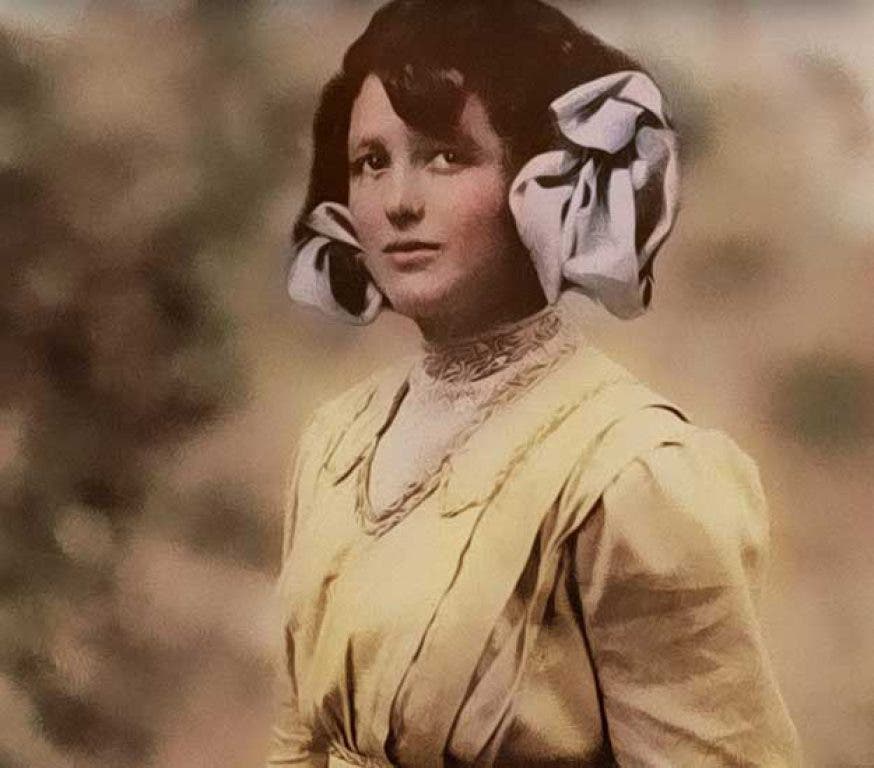


Since I have been writing the “Marietta History Files,” I have intentionally steered clear of one particular topic: the lynching of Leo M. Frank.
My avoidance has not stemmed from a lack of interest. On the contrary: No other story in Marietta history captures my interest more than this one. Instead, I have avoided it because, while it is still very pertinent to us today, the real case is far more complicated than the one held in the popular imagination.
It is also a sensitive subject: To a certain extent, it deals with anti-Semitism. It led directly to the formation of both the Anti-Defamation League and the “second incarnation” of the Ku Klux Klan (not to equate the two, by any means). The story also implicates the recent ancestors of people living in and around Marietta today, some of whom have been publicly named in recent years.
Find out what's happening in Mariettafor free with the latest updates from Patch.
If this were not enough reason to tread softly, there is also the great number of armchair Leo Frank historians who eagerly read anything written on the subject, ready to point out inaccuracies or omissions and to challenge any writer’s interpretation of the facts. And while most professional historians agree that Frank’s conviction in the murder of was a miscarriage of justice, the matter of his guilt or innocence has still not been settled to the satisfaction of all interested—a fact that gives any potential detractors plenty of ammunition.
And so, having stated all of this, and reminded my readers that any brief treatment of this subject must involve certain omissions and simplifications, I would like to present, in three parts, the troubling case of Mr. Leo M. Frank.
Find out what's happening in Mariettafor free with the latest updates from Patch.
For those new to the subject, Leo Frank was convicted in 1913 of killing Mary Phagan, a 13-year-old worker at the National Pencil Company in Atlanta, where Frank was superintendant. Mary, whose family was from Marietta, was last seen on April 26, 1913—a Saturday and Confederate Memorial Day. She stopped off at work on her way to the parade in order to collect her wages from Frank. He was the last person to admit to have seen her alive.
In the predawn hours of the next morning, Newt Lee, the plant’s night watchman, discovered Mary’s body in the factory basement. She was completely covered in soot, which blanketed the basement floor, to such an extent that the police who responded had difficulty determining her race. Her dress had been pulled up around her knees. There was some signs that she had been raped, and she had been strangled with a length of twine.
Near the victim’s head, in a pile of rubbish, officers found two notes, presumably written by the victim herself (although everyone soon realized that this was absurd). Among other things, the notes stated that the “night witch” had done this to her. Interpreting “night witch” to mean “night watchman." Newt Lee exclaimed, “Boss! That’s me!” He was taken into custody on suspicion, although he was later released.
As Frank was the superintendant, investigators naturally wanted to speak to him right away. They tried phoning his house at 4 a.m. but received no answer, a fact they would later decide was suspicious. After sunrise, they called on the Frank residence in person, asking Frank to come with them to the factory. Frank seemed nervous; as detective John Black would later say “his voice was hoarse and trembling and nervous and excited. He looked to me like he was pale…He seemed to be nervous in handling his collar. He could not get his tie tied, and he talked very rapid.” When asked if he knew who Mary Phagan was, he said that he did not.
News of the murder hit the streets quickly, as did public outrage. Newspapers such as the Georgian and the Constitution followed the investigation closely, often engaging in “yellow journalism,” and kept the public enthralled.
By May 1, Atlanta police had two principal suspects: Leo Frank and Jim Conley. The latter, an African-American who had done odd jobs around the factory, was arrested after he had been seen trying to wash a red stain out of a blue work shirt. Police never recovered the shirt, and Conley claimed that the stain had been rust. Under police interrogation, Conley changed his story several times. Although he claimed at first to be illiterate, it was soon determined that, not only could he write, but that his idiosyncratic spelling matched that of the murder notes. At this point, Conley confessed to having written them, but with a twist: He claimed that he had done so on the orders of Leo Frank. According to Conley, Frank had killed Mary Phagan on the third floor of the pencil factory when she resisted his sexual advances. He had then enlisted Conley’s aid in moving the body to the basement. Conley said that Frank had left him with orders to burn the body in the furnace, which he obviously failed to do.
This, along with Frank’s nervous behavior and certain small inconsistencies in his statements, led to formal charges being filed. On May 24, a grand jury returned an indictment against Leo Frank for murder. Jim Conley was charged as an accessory. The trial began on July 28.
This is the point at which the facts of the case and popular imagination about the case, or what I like to call “Leo Frank mythology,” begin to diverge.
If my readers will indulge me, I will explain further in next weeks' column.