Neighbor News
What If We Measured Success by Peace Instead of Productivity?
A healthier community begins with healthier people.

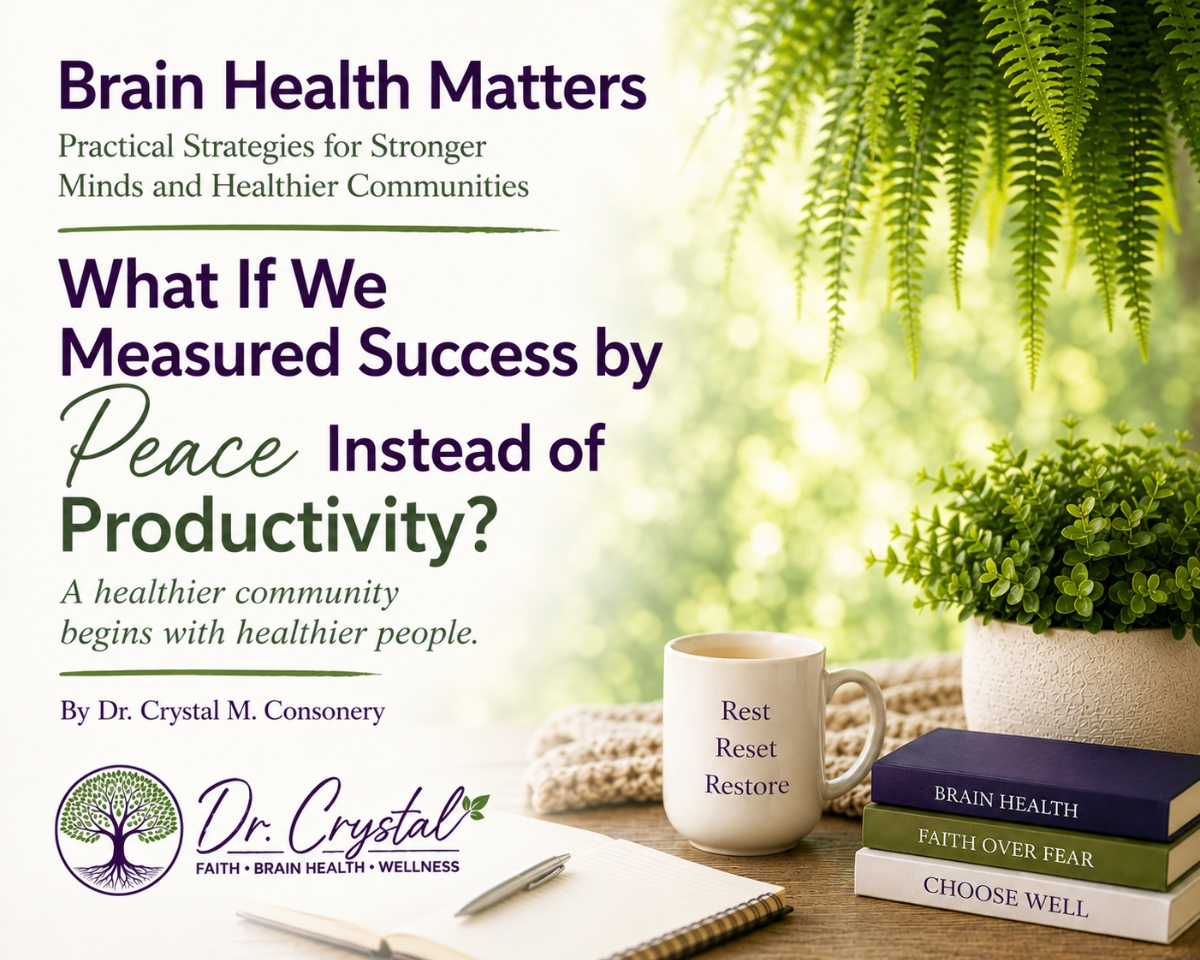
By Dr. Crystal M. Consonery
As July comes to a close, many of us are already looking ahead. Students are preparing to return to school. Teachers are organizing classrooms. Parents are adjusting schedules. Churches are planning fall ministries. Businesses are preparing for another busy season.
There is a familiar rhythm to this time of year. The pace begins to accelerate. Calendars fill. Expectations increase. The quiet moments of summer begin to fade.
Find out what's happening in Mariettafor free with the latest updates from Patch.
Before we jump into another busy season, I'd like to ask one simple question: What if we measured success differently?
Instead of asking, "How much did I accomplish?" What if we asked, "How well did I care for my mind, my relationships, and my community?"
Find out what's happening in Mariettafor free with the latest updates from Patch.
That single shift has the potential to change not only our lives but the communities we call home.
Redefining Success
Our culture often celebrates people who are constantly busy.
We admire full calendars. Long work hours. Packed schedules. The ability to juggle countless responsibilities. Productivity certainly has its place.
Communities depend on dedicated teachers, healthcare professionals, first responders, business owners, volunteers, ministry leaders, and countless others who faithfully serve every day. But productivity without restoration eventually comes at a cost. When we constantly operate without recovery, our ability to think clearly, communicate effectively, and respond with patience begins to decline.
The goal isn't to do less. The goal is to live well while doing meaningful work.
Peace Is More Than a Feeling
When people hear the word peace, they often imagine the absence of conflict.
But from a brain health perspective, peace also reflects a state in which our minds and bodies are better able to respond thoughtfully instead of reacting impulsively. When we intentionally create healthy rhythms of sleep, movement, meaningful relationships, reflection, and recovery, we strengthen our capacity to handle everyday stress.
·We become more patient.
·More focused.
·More emotionally resilient.
These qualities don't benefit only us. They influence every interaction we have.
Healthy People Strengthen Communities
Think about all the places where your daily interactions matter.
Your family.
Your workplace.
Your child's school.
Your neighborhood.
Your place of worship.
The grocery store.
Volunteer organizations.
Community events.
Every day we influence the emotional climate of the spaces we enter.
·A calm conversation can ease tension.
·A patient response can prevent conflict.
·A thoughtful leader can strengthen an entire team.
·A caring neighbor can remind someone they are not alone.
Healthy communities are rarely built through one major event. They're built through thousands of ordinary moments where people choose kindness, patience, wisdom, and compassion.
Small Habits Create Lasting Change
One of the most encouraging things we know about the brain is that lasting change often begins with small, consistent habits. You don't have to transform your life overnight. Instead, choose one practice you can carry into the coming months.
You might decide to:
- Begin each morning with five quiet minutes before looking at your phone.
- Take a short walk several times each week.
- Eat one meal each day without distractions.
- Practice gratitude before going to bed.
- Schedule regular time with family or friends.
- Turn off unnecessary notifications for part of your evening.
Simple habits practiced consistently often create the greatest long-term impact.
Looking Ahead
As our community prepares for a new season, my hope is that we don't simply return to busyness. I hope we return with greater intentionality.
That we protect our peace.
That we strengthen our relationships.
That we care for our brains as faithfully as we care for our calendars.
Because when individuals become healthier... Families become stronger. Schools become more supportive. Workplaces become more productive. Neighborhoods become more connected. Communities become more resilient. That's the kind of future worth building together.
Brain Health Tip of the Week
Your brain grows through healthy routines, not occasional bursts of motivation.
Consistent sleep, regular movement, meaningful relationships, and intentional moments of recovery help strengthen emotional resilience and improve your ability to manage stress.
Small daily habits often create the greatest lifelong results.
Reflection Question
As you prepare for the next season, what is one healthy rhythm you want to carry with you?
What simple habit could help you become more present, more resilient, and more connected with the people around you?
I'd love to hear your thoughts in the comments.
About the Author
Dr. Crystal M. Consonery is a Neuro-Resilience Strategist, Brain Health & Wellness Educator, Faith-Based Counselor, and Trauma-Informed Coach. She is the founder of Reclaim Wellness Institute and the Metamorphosis Leadership & Community Development Institute, where she equips individuals, leaders, and communities with practical strategies to strengthen resilience, improve emotional well-being, and cultivate whole-person wellness. She lives in West Cobb County and is passionate about helping communities thrive through education, leadership, and healthy living.
Healthy minds build healthy families. Healthy families build healthy communities.