Neighbor News
Why Summer Is the Perfect Time to Reset Your Brain
A Brain Health Perspective for Cobb County Families

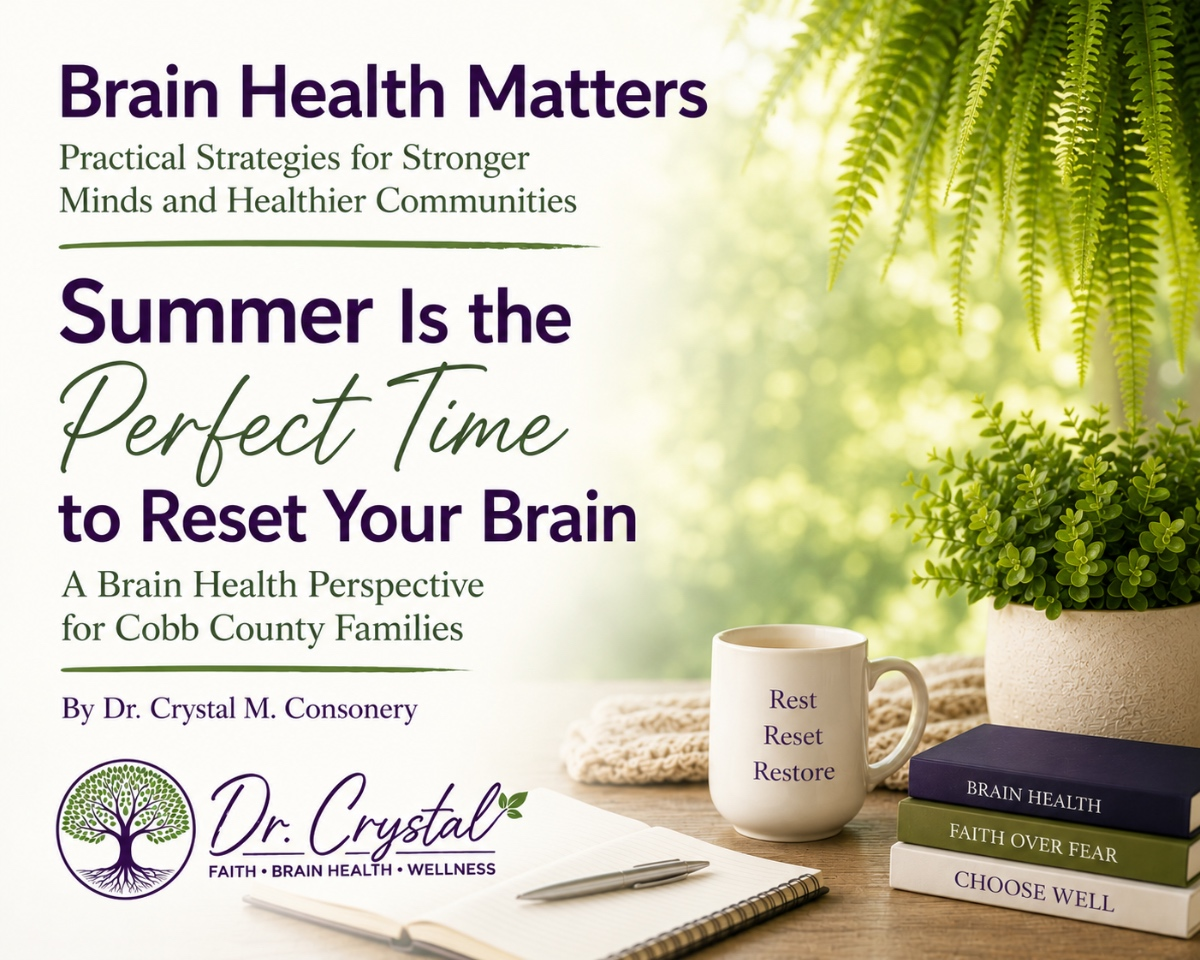
By Dr. Crystal M. Consonery
Summer often brings a welcome change of pace. Children are out of school. Families take vacations. Community pools fill with laughter. Backyard cookouts, neighborhood gatherings, and evening walks become part of our weekly routines.
Yet for many people, summer isn't necessarily less busy.
Find out what's happening in Mariettafor free with the latest updates from Patch.
Parents juggle camps and childcare. Professionals continue managing demanding workloads. Caregivers remain responsible for loved ones. Ministry leaders begin planning for the fall. Business owners prepare for another busy season.
The calendar may look different, but the pressure often remains the same.
Find out what's happening in Mariettafor free with the latest updates from Patch.
What if we viewed summer as more than a change in schedule? What if we viewed it as an opportunity to reset not just physically, but mentally and emotionally?
Your Brain Needs Recovery
One of the greatest misconceptions about productivity is the belief that our brains are designed for constant output. They aren't.
Every day your brain manages thousands of decisions, processes countless pieces of information, regulates emotions, solves problems, and helps you navigate relationships at home, work, and throughout the community. That's remarkable. But it also requires recovery. When we ignore our need for rest, our brains begin sending signals that something is out of balance.
You may notice yourself becoming:
- More forgetful than usual
- Easily irritated
- Mentally exhausted
- Less patient with others
- Easily distracted
- Less motivated
- Overwhelmed by decisions that once seemed simple
These experiences don't necessarily mean something is wrong. Sometimes they're simply reminders that your brain has been working overtime.
Why Slowing Down Matters
Throughout my work as a Brain Health Educator, I often remind people that rest is not the absence of productivity. Rest is one of the things that makes healthy productivity possible. When we intentionally slow down, our brains have an opportunity to process information, restore mental energy, strengthen learning, and improve emotional regulation.
Have you ever solved a problem while taking a walk?
Remembered something important while sitting quietly?
Thought of a creative idea while driving home?
Those moments aren't accidents. They're examples of what happens when we give our minds space to breathe.
Small Changes Make a Big Difference
The good news is that you don't need a two-week vacation to support your brain. Small, intentional habits practiced consistently can have a meaningful impact.
Here are five simple ways to reset your brain this summer:
1. Start Your Morning Without Your Phone
Before checking email or social media, spend a few quiet minutes stretching, praying, reading, or simply enjoying your morning.
Beginning the day with calm rather than constant information helps set the tone for healthier thinking.
2. Take a Daily Walk
Walking isn't just good for your heart.
It increases blood flow to the brain, supports emotional well-being, and often improves creativity and problem-solving.
Our community offers wonderful opportunities to get outside, whether that's walking through your neighborhood, visiting a local park, or exploring one of Cobb County's beautiful trails.
3. Practice Intentional Breathing
When life becomes stressful, our breathing often becomes shallow without us realizing it.
·Pause several times each day.
·Take a slow breath in.
·Exhale even more slowly.
This simple habit can help calm your nervous system and improve your ability to respond thoughtfully rather than react emotionally.
4. Create Moments of Quiet
We're surrounded by constant noise, phones, televisions, podcasts, and notifications. Try spending just ten minutes each day without any of them. You may be surprised how much clearer your thinking becomes.
5. Prioritize Connection
Healthy relationships are one of the greatest protective factors for emotional well-being.
·Share a meal with family.
·Call a friend.
·Visit a neighbor.
Spend time with people who encourage and support you. Connection strengthens resilience.
Healthy Individuals Build Healthy Communities
As someone who is passionate about community wellness, I believe resilient communities begin with resilient people. When individuals care for their emotional and mental well-being, families become stronger. When families are stronger, neighborhoods become healthier. Healthy communities aren't built overnight.
They're built one conversation...
One healthy habit...
One act of kindness...
And one intentional choice at a time.
This summer, instead of asking, "How much can I get done?" Consider asking, "How well am I caring for the mind God has entrusted to me?"
The answer may not only improve your own well-being, it may positively influence everyone around you.
Brain Health Tip of the Week
Your brain thrives on healthy rhythms.
Regular sleep, movement, hydration, meaningful relationships, and intentional moments of rest all contribute to better focus, emotional regulation, and resilience.
Small habits practiced consistently often produce the greatest long-term results.
Reflection Question
As we move through this summer, what is one healthy rhythm you can begin this week that will strengthen your mind, reduce stress, and help you become more present with the people you love?
I'd love to hear your thoughts in the comments.
About the Author
Dr. Crystal M. Consonery is a Neuro-Resilience Strategist, Brain Health & Wellness Educator, Faith-Based Counselor, and Trauma-Informed Coach. She is the founder of Reclaim Wellness Institute and the Metamorphosis Leadership & Community Development Institute, where she equips individuals, leaders, and communities with practical strategies to strengthen resilience, improve emotional well-being, and cultivate whole-person wellness. She lives in West Cobb County and is passionate about helping communities thrive through education, leadership, and healthy living.