Community Corner
Dog Owners Asked To 'Bag And Bin It' Near Chattahoochee River
During the fall, 37 new dog waste bins were installed throughout the Chattahoochee River National Recreation Area.


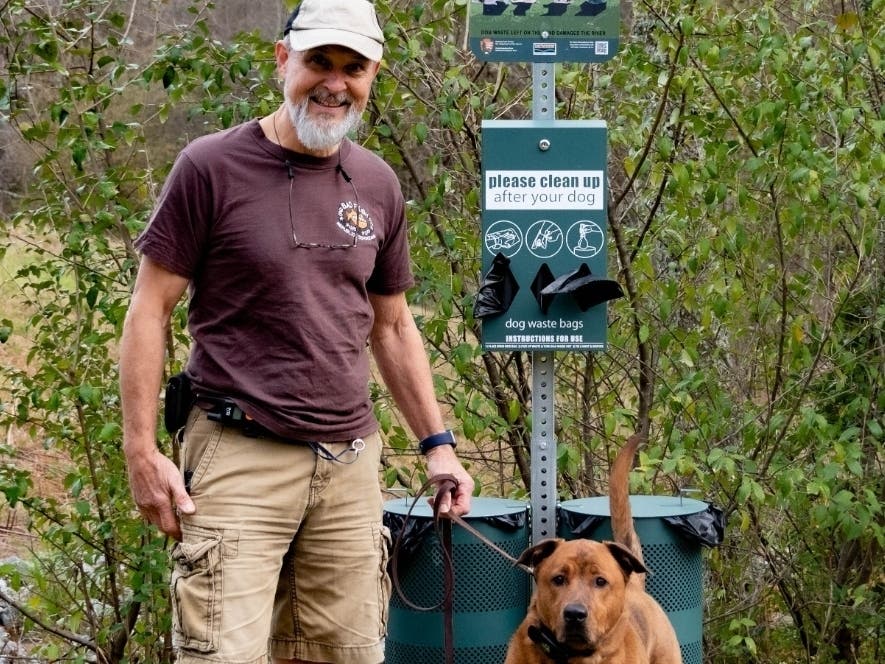
CHATTAHOOCHEE RIVER, GA — During the fall, 37 new dog waste bins funded by the Chattahoochee National Park Conservancy and the National Park Service were installed throughout the Chattahoochee River National Recreation Area.
Chattahoochee National Park Conservancy is the official Friends group for the Chattahoochee River National Recreation Area and provides funding and volunteers to support the park’s initiatives and resources. The new dog waste bins replaced 20 previous bins and added 17 to encourage visitors to “Bag and Bin It.” Bins can now be found in all 15 Chattahoochee River National Recreation Area park units, with additional bins in high-use areas.
The volume and distribution of dog waste and bags left on the ground has increased as more people seek to spend time outdoors in the Chattahoochee River National Recreation Area during the COVID-19 pandemic. The new dog waste bins include free waste bags and disposal bins to encourage visitors to properly dispose of their dog’s waste at the park.
Find out what's happening in Roswellfor free with the latest updates from Patch.
“The installation of 37 new dog waste bins will address the issue of dog waste and bags being left in the park by providing better access to proper disposal,” said Phillip Hodges, Chattahoochee National Park Conservancy board president. “What we need now is for dog owners to do their part.”
Three million people visit the Chattahoochee River National Recreation Area every year, and many of them are dog-walkers. Although dog waste bins were already located in multiple park units, many visitors do not use them. Some owners either leave their dog’s waste behind on the trails or in other public areas, or they pick up after their pets and then leave the bags along the trails, in bushes, and next to trees rather than disposing of them in the designated waste bins.
Find out what's happening in Roswellfor free with the latest updates from Patch.
This waste represents a public health threat on land and in the water and degrades natural and cultural resources, in addition to being unsightly. Dog waste contains deadly bacteria that enters the ecosystem and the water supply. The U.S. Geological Survey, National Park Service and the U.S. EPA conducted a multi-year study to investigate patterns in microbial source tracking marker concentrations of possible sources within the national park, finding that dogs are a primary contributor of fecal contamination in the Chattahoochee River within the national park. In addition to the Chattahoochee River providing 70 percent of the drinking water for metro Atlanta, high bacteria levels in the river can result in advisories for human contact recreation such as kayaking, fishing, and swimming.
In 2017, Chattahoochee National Park Conservancy and National Park Service recognized the increasing need to address the ongoing issue of dog waste in the Chattahoochee River National Recreation Area.
Looking for a fresh perspective, Chattahoochee National Park Conservancy reached out to Atlanta’s Miami Ad School about a potential campaign. The school’s Strategic Planning Bootcamp class was tasked to raise awareness of the importance of proper disposal of dog waste and to motivate dog owners to pick up after their pets.
Student creative teams surveyed park visitors and created campaigns to address the issue. Survey results indicated that more bins were needed but, more importantly, the majority of dog owners were not aware that dog waste could be harmful to the park, the watershed, and the river. Many believed that it was good for the environment to leave the waste in a “natural area” as fertilizer, not realizing that the fecal material damages plants and contaminates the watershed.
Others were surprised to learn that even if the bags are biodegradable, the dog waste will still enter the ground or nearby water sources and thus requires proper disposal in designated waste bins. The teams determined better access to waste bins and public education on impacts to the park were needed, presenting their campaigns and recommendations to the Chattahoochee National Park Conservancy board and Chattahoochee River National Recreation Area staff. The winning campaign, with colorful illustrations reminiscent of retro-styled National Park Service park posters, features the tag line “Lead the Pack - Bag and Bin It.”
“We wanted to make [dog owners] feel like part of the solution instead of part of the problem. Help them lead the pack,” said Max Mager, a copywriter on the Miami Ad School’s winning team.
“This project is the culmination of three years of work by CNPC, CRNRA and students from the Miami Ad School studying the issue of how we might reduce inappropriate dog waste in the park and in the Chattahoochee River,” Hodges said. “We truly hope the dogs’ humans will get on board with the program and reduce unhealthy and unsightly dog waste in the park and river.”
For more information on this program or how to join, donate, or volunteer with Chattahoochee National Park Conservancy, visit chatthoocheeparks.org or email info@chattahoocheeparks.org.
Get more local news delivered straight to your inbox. Sign up for free Patch newsletters and alerts.