Crime & Safety
Former LSU Student Found Guilty For Death Of Roswell Native
Roswell native Max Gruver died in 2017 from fraternity hazing. A former LSU student was found guilty of negligent homicide for his death.


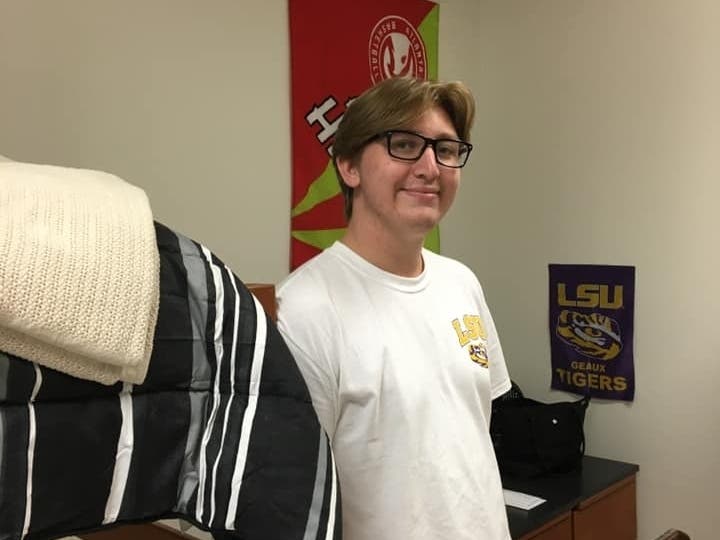
ROSWELL, GA — Two years after Roswell native Max Gruver died after an apparent fraternity hazing event, members of his fraternity are being sentenced for his death.
The East Baton Rouge District Attorney's Office said Matthew Naquin, who prosecutors say is primarily responsible for Gruver's death, was found guilty of negligent homicide. He faces up to five years in prison, with sentencing scheduled for Oct. 16, CNN reported.
Naquin's lawyer maintains his client's innocence, and said Gruver "could have left at any time."
Find out what's happening in Roswellfor free with the latest updates from Patch.
Additionally, CNN reported that four students were indicted in 2018 on charges stemming from the incident.
"While nothing can make up for the fact that Max is gone and nothing can bring him back, we are glad that justice has been served," the Max Gruver Foundation wrote on Facebook. "We also wanted to give a special thanks to the Baton Rouge District Attorney's office for all of their hard work on this case. We love and miss our Max more than we can put into words."
Find out what's happening in Roswellfor free with the latest updates from Patch.
Gruver, a freshman at the university, was taken from a fraternity house to Our Lady of the Lake Hospital on Sept. 14, 2017 where he died shortly after arriving.
Gruvern was a pledge of Phi Delta Theta and his death was investigated as a possible hazing incident. Gruver graduated from Blessed Trinity Catholic High School and was majoring in political journalism at LSU.
Reports show that Gruver was called to the fraternity house to participate in "Bible Study," where pledges were asked questions about the fraternity and forced to chug alcohol if they answered incorrectly.
Gruver became highly intoxicated, officials said, so he was laid down on a couch. By the next morning at 9 a.m., his pulse was weak and others could not tell if he was breathing. By noon, he was pronounced dead at a local hospital.
The coroner's office ruled Gruver's death accidental and caused by "acute alcohol intoxication with aspiration." His blood alcohol level was 0.495 percent at the time of his death, the coroner said to CNN.
Results from a preliminary autopsy showed Gruver suffered "marked cerebral and pulmonary edema," or swelling, and blood and urine tests conducted at the hospital show "highly elevated blood alcohol level" and the presence of THC in the student's urine.
At the time, LSU suspended all Greek activities following the death.
The Phi Delta Theta headquarters also said it was investigating Gruver's death, and suspended the LSU chapter's operations while the case is ongoing. Days later, the LSU's charter was revoked by the national organization, CNN reported.
"First and foremost, our thoughts and prayers are with the entire Gruver family, and all who knew Maxwell, during this very difficult time," Bob Biggs, executive vice president and CEO at Phi Delta Theta General Headquarters, said in a 2017 statement.
Biggs added officials at the headquarters cooperated with the campus's probe, as well as with law enforcement personnel.
"We're committed to investigating this situation thoroughly," Biggs continued. "The chapter and any individuals who are found to have violated our policies will be held accountable."
Get more local news delivered straight to your inbox. Sign up for free Patch newsletters and alerts.