Neighbor News
Sugar Bowl Fun in New Orleans
The Dawgs tangle with Fighting Irish. Where to Go, Where to Eat, What to See.

Bulldog & Fightin’ Irish Fans: A New Orleans Itenerary
“Josie Arlington,” revealed Richard Lewis, “was one of the wealthiest madams in Storyville, [and] has a beautiful tomb in Metairie Cemetery. A red light was often seen to shine through the stained glass in the back of her mausoleum, and of course much paranormal speculation ensued. It was later found to be from a red light atop a radio tower miles away.”
Find out what's happening in Stone Mountain-Lithoniafor free with the latest updates from Patch.
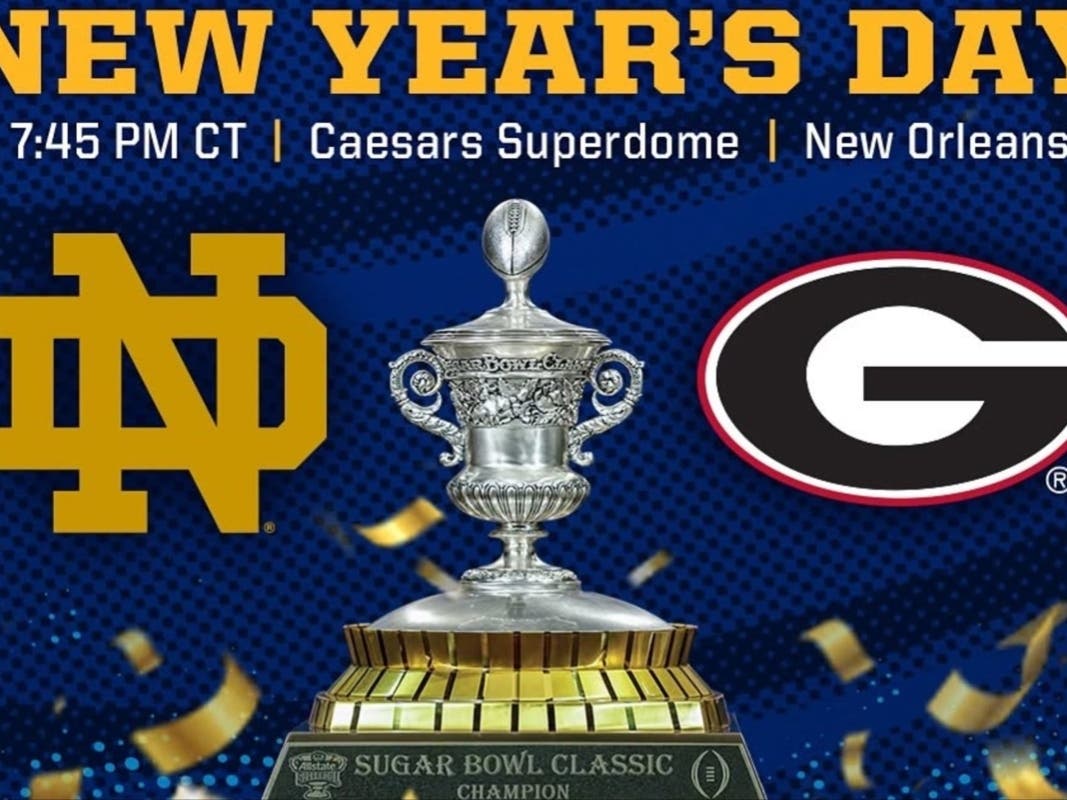
Richard Lewis, my trusted source for all things Southern, provided some recommendations for Georgia Bulldog fans traveling to his favorite city New Orleans for the Sugar Bowl showdown with Georgia vs. Notre Dame. “Visions of gumbo and good times [should be] dancing in your head.”
Lewis, an LSU fellow, offered a short course on how best to enjoy your stay. “Knowing what to do and where to go, coupled with a Georgia win, will have you shouting Lessaiz le bon temps rouller! as you sashay down Bourbon Street,” he advises, “but blend in with the locals – as much as your red-and-black wardrobe will allow – and do New Orleans like a New Orleanian.”
Find out what's happening in Stone Mountain-Lithoniafor free with the latest updates from Patch.
Here’s how:
An excellent resource is the New Orleans Tourism website: neworleans.com. It’s got a ton of content, but check out it’s Insider Blog. It’s got tips on great wintertime activities, where to find the best gumbo, cool music venues, cozy bars, and neighborhood restaurants. If you want the authentic New Orleans experience, start there.
Getting Around: New Orleans is unconventional in nearly every way – including layout. It’s called “The Crescent City” because it fronts a hairpin bend in the Mississippi River. And forget about direction. For example, the bridge across the river to the West Bank goes due east. The city’s main artery is Canal Street, which turns into Canal Boulevard at “the cemeteries.” Standing at the foot of Canal Street with your back to the river, The French Quarter is to the right, beyond which is the now-trendy Bywater neighborhood. The Central Business District is to your left, and farther on is the Garden District, and Uptown. Mid-City is straight ahead out Canal Street, and the Lakefront is at the end of Canal Boulevard. Study a map before you go, and you’ve won half the fight.
“The famous New Orleans streetcars,” Lewis observed, “are an attraction in themselves and a great way to get around the city. The heralded St. Charles line through the Garden District is the oldest continually operating streetcar line in the world. The system can connect you to lots of prime destinations and restaurants. One-day and three-day passes are available for hop-on/hop-off riding. NewOrleans.com has a great primer on how and where to ride. Check it out, then hop aboard.”
What To Do
The St. Charles line runs along the avenue of the same name, beneath a canopy of live oaks (where keen eyes may spot random Mardi Gras beads hanging like Christmas ornaments). Grand mansions line the route, some antebellum. It’s walking distance to Magazine Street, where a full day can be spent ducking in and out of fabulous boutiques and cool cafes. Don’t miss Creole Creamery, the favorite ice cream of New Orleanians. Audubon Zoo is about a 1.3 mile walk from the streetcar line but is such a worthwhile experience.
The Canal Street line ends at the cemeteries – vast cities of the dead. Because the city is predominantly Catholic, and because of a high water table, most burials are in above-ground crypts and mausolea. Hop off and take a short walk to historic Metairie Cemetery. Here is where the old wealth of New Orleans lies in jaw-dropping vaults, some with Tiffany stained glass windows. Book a tour through saveourcemeteries.org (proceeds help preserve these historic places).
The French Quarter
It is the big tourist hangout of New Orleans, with a mix of manufactured-for-tourists stuff along with great, authentic Old New Orleans traditions. Forget Bourbon Street, with its greasy/sleazy Big Easy strip joints and voodoo shops. Nearly every other street is far better. At Jackson Square the Louisiana State Museum has two facilities flanking historic St. Louis Cathedral. The museum has a large display on Hurricane Katrina, including Fats Domino’s ruined piano, plus Napoleon’s Death Mask, and a portrait of the beautiful Voodoo priestess Marie Leveau.
Pirate’s Alley is just around the corner and features The Faulkner House Bookstore where the namesake playwright once lived and where you can purchase First Edition, signed books by Hemingway, Capote, Fitzgerald and many others. (This is a browser’s paradise.)
Jackson Square is also home to canvas and performance artists. Hop aboard the steamboat Natchez for a fun river excursion and tour. Cool shopping can be found along Royal Street and French Quarter side streets.
One building on the fringe of the Quarter has a distinct Georgia connection. The two-story structure at 400 North Rampart was once the recording studio of Cosimo Matassa. It was here that Fats Domino recorded The Fat Man, considered by many to be the first true Rock & Roll record. In 1955, Georgia’s favorite son Little Richard recorded his first big hit, Tutti Frutti here. Richard had been screaming and banging the piano at French Quarter clubs and caught the ear of Matassa, who brought him in with Fats Domino’s band – and the rest is history. It’s now a combination gift shop, snowball stand, and laundromat called The Lost Sock.
Cast your ear to the wind and you may hear the familiar strains of New Orleans jazz. The coolest place to experience authentic, traditional Crescent City jazz is Preservation Hall on St. Peter Street. The dank, seedy old room seems a hundred years old but opened in 1961. Open your eyes and ears and you are transported to the world of Jellyroll Morton and Louis Armstrong. Reserve tickets online at Preservationhall.com. The steamboat Natchez offers nightly jazz cruises with dinner options featuring the famous Dukes of Dixieland.
Food and Drinks
For good gumbo, take the Canal Street streetcar to Mandina’s a native favorite since 1932, or Liuzza’s by the Track for local atmosphere. You can get a po-boy almost anywhere but for absolute old-time authenticity go to Domilise’s on Annunciation Street. It’s been churning out great po-boys since 1918. Parkway Bakery and Poor Boys (that’s where the name “po-boy” comes from) in Mid-City serves vast crowds every day. Happy patrons have included Barack and Michelle Obama. Note: if you want lettuce, tomato, and mayonnaise on your po-boy, no matter where you get it, say “dressed.”
The other signature sandwich of New Orleans is the muffuletta (pronounced moof-a-lotta by old time locals). The sandwich is a large, round, seeded Italian bun brushed on the inside with olive oil and filled with salami, ham, mortadella, provolone, and Swiss – topped with olive salad. Again, you can get great muffalettas all over New Orleans, but go where it was invented in 1906 – the Central Grocery in the French Quarter.
Fine dining in New Orleans is hard to define – since nearly all the city’s food is fine as hell. In the French Quarter, Galatoire’s, Arnaud’s, and Antoine’s have served New Orleanians for generations, while the Garden District’s Commander’s Palace once had a young chef named Emeril Lagasse. Dress codes may be in order at these places, so, for one night, ditch the red and black jackets and sweaters. Dooky Chase’s is a comfortable place with a legacy like no other New Orleans restaurant. Here, the family of the late Chef Leah Chase continues to serve the very best authentic Crescent City cuisine.
Beer, wine, and whiskey flow like the Mighty Mississippi in New Orleans – and we pray that you moderate your intake. Yes, it is a touristy joint, but one of the best places to get maximum liquor for your dollar is at Pat O’Brien’s, just a few doors down from Preservation Hall on St. Peter Street. Its famous Hurricane is delicious – and potent. A few blocks away is The Napoleon House, famous for its Pimm’s Cup. At the Monteleone Hotel, the Carousel Bar sets the room spinning as New Orleans’ only rotating bar since 1949. The Roosevelt Hotel’s Sazerac Bar, has served its namesake-and the city’s official cocktail-far longer than anyone alive can remember.
But please take note: Like in any big city, inebriated and disoriented out-of-towners can be easy prey for unethcial whores or worse. Stay streetwise and at least moderately sober and you’ll be fine.
And this is important: With two huge fan-bases in town, New Orleans will be overrun. Make dining reservations (where available) and buy attraction and event tickets now!
Lagniappe:
Read “A Confederacy of Dunces.” The Pulitzer winning book is a primer for appreciating New Orleans lore.
Enjoy Barbecued Shrimp and Turtle Soup at Pascal’s Manale Restaurant in the Garden District.
Visit Yvonne Lafleur, buy your wife a new, expensive outfit, a bottle of Yvonne’s seductive perfume and enjoy Champagne while the ladies shop.
Ride the Streetcar.
Enjoy cocktails at The Sazerac in the Roosevelt Hotel.
Enjoy breakfast at Mother’s: Eggs, Biscuits, Tasso, Grits with Debris.
Give $20 to a Street Preacher on Canal Street. “Makes you feel real good!”